mirror of
https://github.com/simdjson/simdjson
synced 2026-06-08 17:27:07 +00:00
Compare commits
88 Commits
| Author | SHA1 | Date | |
|---|---|---|---|
 Daniel Lemire Daniel Lemire
|
0112be86b0 | ||
|
Francisco Geiman Thiesen
|
58c92d6d82 | ||
|
Daniel Lemire
|
781a7d6c89 | ||
|
Max Marrone
|
3d0de709a8 | ||
|
kevyang
|
49b86721b4 | ||
|
Daniel Lemire
|
87a186fbf1 | ||
|
Daniel Lemire
|
81f10a01b7 | ||
|
Daniel Lemire
|
36ed7ab48a | ||
|
Daniel Lemire
|
c3d1d62dfe | ||
|
Daniel Lemire
|
67821cb6fd | ||
|
Daniel Lemire
|
3ac287ba3d | ||
|
Daniel Lemire
|
ec352430a0 | ||
|
Daniel Lemire
|
8a9daeb0ad | ||
|
Daniel Lemire
|
9c5a88f1f3 | ||
|
0xflotus
|
a7f8fb71c5 | ||
|
Howard Guo
|
a553db4c67 | ||
|
Jaël Champagne Gareau
|
1fa1af8c15 | ||
|
Daniel Lemire
|
5ed1044056 | ||
|
Francisco Geiman Thiesen
|
62913867ff | ||
|
Francisco Geiman Thiesen
|
6700d48b57 | ||
|
Francisco Geiman Thiesen
|
b5577d5e85 | ||
|
wszqkzqk
|
b84a4ec2b9 | ||
|
Daniel Lemire
|
1638a185f7 | ||
|
Francisco Geiman Thiesen
|
6fe450f5ce | ||
|
Francisco Geiman Thiesen
|
c7b70de070 | ||
|
Francisco Geiman Thiesen
|
3279fbd55b | ||
|
Francisco Geiman Thiesen
|
66e64e0e5f | ||
|
Daniel Lemire
|
03f81e66af | ||
|
Daniel Lemire
|
e3b7eddb37 | ||
|
Daniel Lemire
|
99c4ba6e8f | ||
|
Francisco Geiman Thiesen
|
6aa7eea334 | ||
|
Daniel Lemire
|
6a47cda07f | ||
|
Daniel Lemire
|
617c69e104 | ||
|
Daniel Lemire
|
625adceb24 | ||
|
Daniel Lemire
|
bd0e9c1336 | ||
|
Daniel Lemire
|
7bf82b02d5 | ||
|
Francisco Geiman Thiesen
|
88a1b3e83b | ||
|
Francisco Geiman Thiesen
|
c72954eade | ||
|
Francisco Geiman Thiesen
|
4456a10469 | ||
|
Francisco Geiman Thiesen
|
d8ed2417ad | ||
|
Francisco Geiman Thiesen
|
5517df7aee | ||
|
evbse
|
6e618b0805 | ||
|
Pavel Novikov
|
bde288a623 | ||
|
Daniel Lemire
|
b2932d1b8f | ||
|
Daniel Lemire
|
a7811090ef | ||
|
Daniel Lemire
|
3320885fac | ||
|
Daniel Lemire
|
786c68b158 | ||
|
Daniel Lemire
|
703ef54bd9 | ||
|
Daniel Lemire
|
2526068e2f | ||
|
Daniel Lemire
|
ddc7b8c7dd | ||
|
Daniel Lemire
|
d8f90bdd14 | ||
|
Daniel Lemire
|
e38a4923e5 | ||
|
Dirk Stolle
|
e6dfa2e0ed | ||
|
Daniel Lemire
|
1f369ef210 | ||
|
Daniel Lemire
|
22dcdc9f1e | ||
|
Dirk Stolle
|
dda2dafa30 | ||
|
Daniel Lemire
|
72e9d44e10 | ||
|
Daniel Lemire
|
8aae14931d | ||
|
Daniel Lemire
|
ef3d1ac25f | ||
|
Daniel Lemire
|
9292480a9b | ||
|
Daniel Lemire
|
611ea97dbd | ||
|
Daniel Lemire
|
f249e7e128 | ||
|
Marian Klymov
|
44fddaa807 | ||
|
Daniel Lemire
|
be16e1ae04 | ||
|
Daniel Lemire
|
124a33c160 | ||
|
Daniel Lemire
|
a0b870e9c2 | ||
|
Daniel Lemire
|
68699eb73c | ||
|
Daniel Lemire
|
06453f1637 | ||
|
Daniel Lemire
|
eb828d97ba | ||
|
Daniel Lemire
|
00f84fb448 | ||
|
Daniel Lemire
|
5bf0954c6e | ||
|
Daniel Lemire
|
3056d54fa3 | ||
|
Daniel Lemire
|
241b9f6ea7 | ||
|
Daniel Lemire
|
015daad6a9 | ||
|
Daniel Lemire
|
fc3b7766c0 | ||
|
Daniel Lemire
|
b5c78288e5 | ||
|
Daniel Lemire
|
bd86bb0cfb | ||
|
Daniel Lemire
|
4840a0347c | ||
|
Daniel Lemire
|
7f68baec1e | ||
|
Daniel Lemire
|
e2ea5fb8de | ||
|
Daniel Lemire
|
7dfd165ecd | ||
|
Daniel Lemire
|
4dfa0a2407 | ||
|
Daniel Lemire
|
e252a21f65 | ||
|
Daniel Lemire
|
89f2b634df | ||
|
Daniel Lemire
|
addca203d5 | ||
|
Felipe Monteiro
|
1825d7e88c | ||
|
Daniel Lemire
|
f87d6af3e9 | ||
|
Daniel Lemire
|
8fff57578c |
@@ -1,316 +0,0 @@
|
||||
version: 2.1
|
||||
|
||||
|
||||
# We constantly run out of memory so please do not use parallelism (-j, -j4).
|
||||
|
||||
# Reusable image / compiler definitions
|
||||
executors:
|
||||
gcc8:
|
||||
docker:
|
||||
- image: conanio/gcc8
|
||||
environment:
|
||||
CXX: g++-8
|
||||
CC: gcc-8
|
||||
CMAKE_BUILD_FLAGS:
|
||||
CTEST_FLAGS: --output-on-failure
|
||||
|
||||
gcc9:
|
||||
docker:
|
||||
- image: conanio/gcc9
|
||||
environment:
|
||||
CXX: g++-9
|
||||
CC: gcc-9
|
||||
CMAKE_BUILD_FLAGS:
|
||||
CTEST_FLAGS: --output-on-failure
|
||||
|
||||
gcc10:
|
||||
docker:
|
||||
- image: conanio/gcc10
|
||||
environment:
|
||||
CXX: g++-10
|
||||
CC: gcc-10
|
||||
CMAKE_BUILD_FLAGS:
|
||||
CTEST_FLAGS: --output-on-failure
|
||||
|
||||
clang10:
|
||||
docker:
|
||||
- image: conanio/clang10
|
||||
environment:
|
||||
CXX: clang++-10
|
||||
CC: clang-10
|
||||
CMAKE_BUILD_FLAGS:
|
||||
CTEST_FLAGS: --output-on-failure
|
||||
|
||||
clang9:
|
||||
docker:
|
||||
- image: conanio/clang9
|
||||
environment:
|
||||
CXX: clang++-9
|
||||
CC: clang-9
|
||||
CMAKE_BUILD_FLAGS:
|
||||
CTEST_FLAGS: --output-on-failure
|
||||
|
||||
clang6:
|
||||
docker:
|
||||
- image: conanio/clang60
|
||||
environment:
|
||||
CXX: clang++-6.0
|
||||
CC: clang-6.0
|
||||
CMAKE_BUILD_FLAGS:
|
||||
CTEST_FLAGS: --output-on-failure
|
||||
|
||||
# Reusable test commands (and initializer for clang 6)
|
||||
commands:
|
||||
dependency_restore:
|
||||
steps:
|
||||
- restore_cache:
|
||||
keys:
|
||||
- cmake-cache-{{ checksum "dependencies/CMakeLists.txt" }}
|
||||
|
||||
dependency_cache:
|
||||
steps:
|
||||
- save_cache:
|
||||
key: cmake-cache-{{ checksum "dependencies/CMakeLists.txt" }}
|
||||
paths:
|
||||
- dependencies/.cache
|
||||
|
||||
install_cmake:
|
||||
steps:
|
||||
- run: apt-get update -qq
|
||||
- run: apt-get install -y cmake
|
||||
|
||||
cmake_prep:
|
||||
steps:
|
||||
- checkout
|
||||
- run: mkdir -p build
|
||||
|
||||
cmake_build_cache:
|
||||
steps:
|
||||
- cmake_prep
|
||||
- dependency_restore
|
||||
- run: cmake -DSIMDJSON_DEVELOPER_MODE=ON $CMAKE_FLAGS -DCMAKE_INSTALL_PREFIX:PATH=destination -B build .
|
||||
- dependency_cache # dependencies are produced in the configure step
|
||||
|
||||
cmake_build:
|
||||
steps:
|
||||
- cmake_build_cache
|
||||
- run: cmake --build build
|
||||
|
||||
cmake_test:
|
||||
steps:
|
||||
- cmake_build
|
||||
- run: |
|
||||
cd build &&
|
||||
tools/json2json -h &&
|
||||
ctest $CTEST_FLAGS -L acceptance &&
|
||||
ctest $CTEST_FLAGS -LE acceptance -LE explicitonly
|
||||
|
||||
cmake_assert_test:
|
||||
steps:
|
||||
- run: |
|
||||
cd build &&
|
||||
tools/json2json -h &&
|
||||
ctest $CTEST_FLAGS -L assert
|
||||
|
||||
cmake_test_all:
|
||||
steps:
|
||||
- cmake_build
|
||||
- run: |
|
||||
cd build &&
|
||||
tools/json2json -h &&
|
||||
ctest $CTEST_FLAGS -DSIMDJSON_IMPLEMENTATION="haswell;westmere;fallback" -L acceptance -LE per_implementation &&
|
||||
SIMDJSON_FORCE_IMPLEMENTATION=haswell ctest $CTEST_FLAGS -L per_implementation -LE explicitonly &&
|
||||
SIMDJSON_FORCE_IMPLEMENTATION=westmere ctest $CTEST_FLAGS -L per_implementation -LE explicitonly &&
|
||||
SIMDJSON_FORCE_IMPLEMENTATION=fallback ctest $CTEST_FLAGS -L per_implementation -LE explicitonly &&
|
||||
ctest $CTEST_FLAGS -LE "acceptance|per_implementation" # Everything we haven't run yet, run now.
|
||||
|
||||
|
||||
cmake_perftest:
|
||||
steps:
|
||||
- cmake_build_cache
|
||||
- run: |
|
||||
cmake -DSIMDJSON_ENABLE_DOM_CHECKPERF=ON --build build --target checkperf &&
|
||||
cd build &&
|
||||
ctest --output-on-failure -R checkperf
|
||||
|
||||
# we not only want cmake to build and run tests, but we want also a successful installation from which we can build, link and run programs
|
||||
cmake_install_test: # this version builds, install, test and then verify from the installation
|
||||
steps:
|
||||
- run: cd build && make install
|
||||
- run: echo -e '#include <simdjson.h>\nint main(int argc,char**argv) {simdjson::dom::parser parser;simdjson::dom::element tweets = parser.load(argv[1]); }' > tmp.cpp && c++ -Ibuild/destination/include -Lbuild/destination/lib -std=c++17 -Wl,-rpath,build/destination/lib -o linkandrun tmp.cpp -lsimdjson && ./linkandrun jsonexamples/twitter.json
|
||||
|
||||
cmake_installed_test_cxx20: # assuming that it was installed, this tries to build using C++20
|
||||
steps:
|
||||
- run: echo -e '#include <simdjson.h>\nint main(int argc,char**argv) {simdjson::dom::parser parser;simdjson::dom::element tweets = parser.load(argv[1]); }' > tmp.cpp && c++ -Ibuild/destination/include -Lbuild/destination/lib -std=c++20 -Wl,-rpath,build/destination/lib -o linkandrun tmp.cpp -lsimdjson && ./linkandrun jsonexamples/twitter.json
|
||||
|
||||
jobs:
|
||||
|
||||
# static
|
||||
justlib-gcc10:
|
||||
description: Build just the library, install it and do a basic test
|
||||
executor: gcc10
|
||||
environment: { CMAKE_FLAGS: -DSIMDJSON_JUST_LIBRARY=ON }
|
||||
steps: [ cmake_build, cmake_install_test, cmake_installed_test_cxx20 ]
|
||||
assert-gcc10:
|
||||
description: Build the library with asserts on, install it and run tests
|
||||
executor: gcc10
|
||||
environment: { CMAKE_FLAGS: -DSIMDJSON_GOOGLE_BENCHMARKS=OFF -DCMAKE_CXX_FLAGS_RELEASE=-O3 }
|
||||
steps: [ cmake_test, cmake_assert_test ]
|
||||
assert-clang10:
|
||||
description: Build just the library, install it and do a basic test
|
||||
executor: clang10
|
||||
environment: { CMAKE_FLAGS: -DSIMDJSON_GOOGLE_BENCHMARKS=OFF -DCMAKE_CXX_FLAGS_RELEASE=-O3 }
|
||||
steps: [ cmake_test, cmake_assert_test ]
|
||||
gcc10-perftest:
|
||||
description: Build and run performance tests on GCC 10 and AVX 2 with a cmake static build, this test performance regression
|
||||
executor: gcc10
|
||||
environment: { CMAKE_FLAGS: -DSIMDJSON_GOOGLE_BENCHMARKS=OFF -DBUILD_SHARED_LIBS=OFF }
|
||||
steps: [ cmake_perftest ]
|
||||
gcc10:
|
||||
description: Build and run tests on GCC 10 and AVX 2 with a cmake static build
|
||||
executor: gcc10
|
||||
environment: { CMAKE_FLAGS: -DSIMDJSON_GOOGLE_BENCHMARKS=ON -DBUILD_SHARED_LIBS=OFF }
|
||||
steps: [ cmake_test, cmake_install_test, cmake_installed_test_cxx20 ]
|
||||
clang6:
|
||||
description: Build and run tests on clang 6 and AVX 2 with a cmake static build
|
||||
executor: clang6
|
||||
environment: { CMAKE_FLAGS: -DSIMDJSON_GOOGLE_BENCHMARKS=ON -DBUILD_SHARED_LIBS=OFF }
|
||||
steps: [ cmake_test, cmake_install_test ]
|
||||
clang10:
|
||||
description: Build and run tests on clang 10 and AVX 2 with a cmake static build
|
||||
executor: clang10
|
||||
environment: { CMAKE_FLAGS: -DSIMDJSON_GOOGLE_BENCHMARKS=ON -DBUILD_SHARED_LIBS=OFF }
|
||||
steps: [ cmake_test, cmake_install_test, cmake_installed_test_cxx20 ]
|
||||
# libcpp
|
||||
libcpp-clang10:
|
||||
description: Build and run tests on clang 10 and AVX 2 with a cmake static build and libc++
|
||||
executor: clang10
|
||||
environment: { CMAKE_FLAGS: -DSIMDJSON_USE_LIBCPP=ON -DBUILD_SHARED_LIBS=OFF }
|
||||
steps: [ cmake_test, cmake_install_test, cmake_installed_test_cxx20 ]
|
||||
# sanitize
|
||||
sanitize-gcc10:
|
||||
description: Build and run tests on GCC 10 and AVX 2 with a cmake sanitize build
|
||||
executor: gcc10
|
||||
environment: { CMAKE_FLAGS: -DCMAKE_BUILD_TYPE=Debug -DBUILD_SHARED_LIBS=ON -DSIMDJSON_SANITIZE=ON, CTEST_FLAGS: --output-on-failure -LE explicitonly }
|
||||
steps: [ cmake_test ]
|
||||
sanitize-clang10:
|
||||
description: Build and run tests on clang 10 and AVX 2 with a cmake sanitize build
|
||||
executor: clang10
|
||||
environment: { CMAKE_FLAGS: -DBUILD_SHARED_LIBS=ON -DSIMDJSON_NO_FORCE_INLINING=ON -DSIMDJSON_SANITIZE=ON, CTEST_FLAGS: --output-on-failure -LE explicitonly }
|
||||
steps: [ cmake_test ]
|
||||
threadsanitize-gcc10:
|
||||
description: Build and run tests on GCC 10 and AVX 2 with a cmake sanitize build
|
||||
executor: gcc10
|
||||
environment: { CMAKE_FLAGS: -DBUILD_SHARED_LIBS=ON -DSIMDJSON_SANITIZE_THREADS=ON, CTEST_FLAGS: --output-on-failure -LE explicitonly }
|
||||
steps: [ cmake_test ]
|
||||
threadsanitize-clang10:
|
||||
description: Build and run tests on clang 10 and AVX 2 with a cmake sanitize build
|
||||
executor: clang10
|
||||
environment: { CMAKE_FLAGS: -DBUILD_SHARED_LIBS=ON -DSIMDJSON_NO_FORCE_INLINING=ON -DSIMDJSON_SANITIZE_THREADS=ON, CTEST_FLAGS: --output-on-failure -LE explicitonly }
|
||||
steps: [ cmake_test ]
|
||||
# dynamic
|
||||
dynamic-gcc10:
|
||||
description: Build and run tests on GCC 10 and AVX 2 with a cmake dynamic build
|
||||
executor: gcc10
|
||||
environment: { CMAKE_FLAGS: -DBUILD_SHARED_LIBS=ON }
|
||||
steps: [ cmake_test, cmake_install_test ]
|
||||
dynamic-clang10:
|
||||
description: Build and run tests on clang 10 and AVX 2 with a cmake dynamic build
|
||||
executor: clang10
|
||||
environment: { CMAKE_FLAGS: -DBUILD_SHARED_LIBS=ON }
|
||||
steps: [ cmake_test, cmake_install_test ]
|
||||
|
||||
# unthreaded
|
||||
unthreaded-gcc10:
|
||||
description: Build and run tests on GCC 10 and AVX 2 *without* threads
|
||||
executor: gcc10
|
||||
environment: { CMAKE_FLAGS: -DSIMDJSON_ENABLE_THREADS=OFF }
|
||||
steps: [ cmake_test, cmake_install_test ]
|
||||
unthreaded-clang10:
|
||||
description: Build and run tests on Clang 10 and AVX 2 *without* threads
|
||||
executor: clang10
|
||||
environment: { CMAKE_FLAGS: -DSIMDJSON_ENABLE_THREADS=OFF }
|
||||
steps: [ cmake_test, cmake_install_test ]
|
||||
|
||||
# noexcept
|
||||
noexcept-gcc10:
|
||||
description: Build and run tests on GCC 10 and AVX 2 with exceptions off
|
||||
executor: gcc10
|
||||
environment: { CMAKE_FLAGS: -DSIMDJSON_EXCEPTIONS=OFF }
|
||||
steps: [ cmake_test, cmake_install_test ]
|
||||
noexcept-clang10:
|
||||
description: Build and run tests on Clang 10 and AVX 2 with exceptions off
|
||||
executor: clang10
|
||||
environment: { CMAKE_FLAGS: -DSIMDJSON_EXCEPTIONS=OFF }
|
||||
steps: [ cmake_test, cmake_install_test ]
|
||||
|
||||
#
|
||||
# Misc.
|
||||
#
|
||||
|
||||
# make (test and checkperf)
|
||||
arch-haswell-gcc10:
|
||||
description: Build, run tests and check performance on GCC 10 with -march=haswell
|
||||
executor: gcc10
|
||||
environment: { CXXFLAGS: -march=haswell }
|
||||
steps: [ cmake_test ]
|
||||
arch-nehalem-gcc10:
|
||||
description: Build, run tests and check performance on GCC 10 with -march=nehalem
|
||||
executor: gcc10
|
||||
environment: { CXXFLAGS: -march=nehalem }
|
||||
steps: [ cmake_test ]
|
||||
sanitize-haswell-gcc10:
|
||||
description: Build and run tests on GCC 10 and AVX 2 with a cmake sanitize build
|
||||
executor: gcc10
|
||||
environment: { CXXFLAGS: -march=haswell, CMAKE_FLAGS: -DCMAKE_BUILD_TYPE=Debug -DBUILD_SHARED_LIBS=ON -DSIMDJSON_SANITIZE=ON, CTEST_FLAGS: --output-on-failure -LE explicitonly }
|
||||
steps: [ cmake_test ]
|
||||
sanitize-haswell-clang10:
|
||||
description: Build and run tests on clang 10 and AVX 2 with a cmake sanitize build
|
||||
executor: clang10
|
||||
environment: { CXXFLAGS: -march=haswell, CMAKE_FLAGS: -DBUILD_SHARED_LIBS=ON -DSIMDJSON_NO_FORCE_INLINING=ON -DSIMDJSON_SANITIZE=ON, CTEST_FLAGS: --output-on-failure -LE explicitonly }
|
||||
steps: [ cmake_test ]
|
||||
|
||||
workflows:
|
||||
version: 2.1
|
||||
build_and_test:
|
||||
jobs:
|
||||
# full multi-implementation tests
|
||||
#- gcc7 tested on GitHub actions
|
||||
- gcc10 # do not delete this as it tests our performance
|
||||
- clang6
|
||||
#- clang10 # this gets tested a lot below
|
||||
|
||||
# libc++
|
||||
- libcpp-clang10
|
||||
|
||||
# full single-implementation tests
|
||||
- sanitize-gcc10
|
||||
- sanitize-clang10
|
||||
- threadsanitize-gcc10
|
||||
- threadsanitize-clang10
|
||||
- dynamic-gcc10
|
||||
- dynamic-clang10
|
||||
- unthreaded-gcc10
|
||||
- unthreaded-clang10
|
||||
|
||||
# no exceptions
|
||||
- noexcept-gcc10
|
||||
- noexcept-clang10
|
||||
|
||||
# quicker make single-implementation tests
|
||||
- arch-haswell-gcc10
|
||||
- arch-nehalem-gcc10
|
||||
|
||||
|
||||
# sanitized single-implementation tests
|
||||
- sanitize-haswell-gcc10
|
||||
- sanitize-haswell-clang10
|
||||
|
||||
# testing "just the library"
|
||||
- justlib-gcc10
|
||||
|
||||
# testing asserts
|
||||
- assert-gcc10
|
||||
- assert-clang10
|
||||
|
||||
# TODO add windows: https://circleci.com/docs/2.0/configuration-reference/#windows
|
||||
@@ -1,8 +1,53 @@
|
||||
Short title (summary):
|
||||
|
||||
Description
|
||||
- What did you change and why? (1-3 sentences)
|
||||
- Issue reproduced / related issue: link the issue if relevant (e.g. #123)
|
||||
|
||||
Type of change
|
||||
- [ ] Bug fix
|
||||
- [ ] New feature
|
||||
- [ ] Refactor / cleanup
|
||||
- [ ] Documentation / tests
|
||||
- [ ] Other (please describe):
|
||||
|
||||
How to verify / test
|
||||
- Add additional tests to verify bugs or new features.
|
||||
- If you claim performance gains, you should provide benchmark numbers using high quality benchmarking code.
|
||||
|
||||
|
||||
Our tests check whether you have introduced trailing white space. If such a test fails, please check the "artifacts button" above, which if you click it gives a link to a downloadable file to help you identify the issue. You can also run scripts/remove_trailing_whitespace.sh locally if you have a bash shell and the sed command available on your system.
|
||||
Please read before contributing:
|
||||
- CONTRIBUTING: https://github.com/simdjson/simdjson/blob/master/CONTRIBUTING.md
|
||||
- HACKING: https://github.com/simdjson/simdjson/blob/master/HACKING.md
|
||||
|
||||
If you plan to contribute to simdjson, please read our
|
||||
|
||||
CONTRIBUTING guide: https://github.com/simdjson/simdjson/blob/master/CONTRIBUTING.md and our
|
||||
HACKING guide: https://github.com/simdjson/simdjson/blob/master/HACKING.md
|
||||
|
||||
If you can, we recommend running our tests with the sanitizers turned on.
|
||||
For non-Visual Studio users, it is as easy as doing:
|
||||
|
||||
|
||||
|
||||
```bash
|
||||
cmake -B build -D SIMDJSON_SANITIZE=ON -D SIMDJSON_DEVELOPER_MODE=ON
|
||||
cmake --build build
|
||||
ctest --test-dir build
|
||||
```
|
||||
|
||||
|
||||
Our CI checks, among other things, for trailing whitespace. If a test fails for that reason,
|
||||
use the "artifacts" button to download the artifact and inspect the problematic lines,
|
||||
or run `scripts/remove_trailing_whitespace.sh` locally if you have a bash shell and `sed`.
|
||||
|
||||
|
||||
Checklist before submitting
|
||||
- [ ] I added/updated tests covering my change (if applicable)
|
||||
- [ ] Code builds locally and passes my check
|
||||
- [ ] Documentation / README updated if needed
|
||||
- [ ] Commits are atomic and messages are clear
|
||||
- [ ] I linked the related issue (if applicable)
|
||||
|
||||
Final notes
|
||||
- For large PRs, prefer smaller incremental PRs or request staged review.
|
||||
|
||||
Thanks for the contribution!
|
||||
|
||||
|
||||
@@ -1,4 +1,4 @@
|
||||
name: Ubuntu ppc64le (GCC 11)
|
||||
name: Ubuntu aarch64 (GCC 13)
|
||||
|
||||
on:
|
||||
push:
|
||||
|
||||
@@ -2,7 +2,13 @@ name: Doxygen GitHub Pages
|
||||
|
||||
on:
|
||||
release:
|
||||
types: [created]
|
||||
# Trigger when a release object is created and when it's published.
|
||||
# Some GitHub flows create a release object then publish it later; include both.
|
||||
types: [created, published]
|
||||
# Also trigger on tag creation pushes so releasing via Git tags still runs the workflow
|
||||
push:
|
||||
tags:
|
||||
- "v*" # common release tag pattern like v1.2.3
|
||||
# Allows you to run this workflow manually from the Actions tab
|
||||
workflow_dispatch:
|
||||
|
||||
@@ -27,7 +33,7 @@ jobs:
|
||||
- name: Generate Doxygen Documentation
|
||||
run: doxygen
|
||||
- name: Deploy to GitHub Pages
|
||||
uses: peaceiris/actions-gh-pages@v3
|
||||
uses: peaceiris/actions-gh-pages@v4
|
||||
with:
|
||||
github_token: ${{ secrets.GITHUB_TOKEN }}
|
||||
publish_dir: doc/api/html
|
||||
|
||||
@@ -0,0 +1,29 @@
|
||||
name: Ubuntu rvv VLEN=1024 (clang 18)
|
||||
|
||||
on:
|
||||
push:
|
||||
branches:
|
||||
- master
|
||||
pull_request:
|
||||
branches:
|
||||
- master
|
||||
|
||||
jobs:
|
||||
build:
|
||||
runs-on: ubuntu-24.04
|
||||
steps:
|
||||
- uses: actions/checkout@v4
|
||||
- name: Install packages
|
||||
run: |
|
||||
sudo apt-get update -q -y
|
||||
sudo apt-get install -y cmake make g++-riscv64-linux-gnu qemu-user-static clang-18
|
||||
- name: Build
|
||||
run: |
|
||||
CXX=clang++-18 CXXFLAGS="--target=riscv64-linux-gnu -march=rv64gcv_zvbb" \
|
||||
cmake --toolchain=cmake/toolchains-ci/riscv64-linux-gnu.cmake -DCMAKE_BUILD_TYPE=Release -B build
|
||||
cmake --build build/ -j$(nproc)
|
||||
- name: Test VLEN=1024
|
||||
run: |
|
||||
export QEMU_LD_PREFIX="/usr/riscv64-linux-gnu"
|
||||
export QEMU_CPU="rv64,v=on,zvbb=on,vlen=1024,rvv_ta_all_1s=on,rvv_ma_all_1s=on"
|
||||
ctest --timeout 1800 --output-on-failure --test-dir build -j $(nproc)
|
||||
@@ -0,0 +1,29 @@
|
||||
name: Ubuntu rvv VLEN=128 (clang 17)
|
||||
|
||||
on:
|
||||
push:
|
||||
branches:
|
||||
- master
|
||||
pull_request:
|
||||
branches:
|
||||
- master
|
||||
|
||||
jobs:
|
||||
build:
|
||||
runs-on: ubuntu-24.04
|
||||
steps:
|
||||
- uses: actions/checkout@v4
|
||||
- name: Install packages
|
||||
run: |
|
||||
sudo apt-get update -q -y
|
||||
sudo apt-get install -y cmake make g++-riscv64-linux-gnu qemu-user-static clang-17
|
||||
- name: Build
|
||||
run: |
|
||||
CXX=clang++-17 CXXFLAGS="--target=riscv64-linux-gnu -march=rv64gcv" \
|
||||
cmake --toolchain=cmake/toolchains-ci/riscv64-linux-gnu.cmake -DCMAKE_BUILD_TYPE=Release -B build
|
||||
cmake --build build/ -j$(nproc)
|
||||
- name: Test VLEN=128
|
||||
run: |
|
||||
export QEMU_LD_PREFIX="/usr/riscv64-linux-gnu"
|
||||
export QEMU_CPU="rv64,v=on,vlen=128,rvv_ta_all_1s=on,rvv_ma_all_1s=on"
|
||||
ctest --timeout 1800 --output-on-failure --test-dir build -j $(nproc)
|
||||
@@ -0,0 +1,29 @@
|
||||
name: Ubuntu rvv VLEN=256 (gcc 14)
|
||||
|
||||
on:
|
||||
push:
|
||||
branches:
|
||||
- master
|
||||
pull_request:
|
||||
branches:
|
||||
- master
|
||||
|
||||
jobs:
|
||||
build:
|
||||
runs-on: ubuntu-24.04
|
||||
steps:
|
||||
- uses: actions/checkout@v4
|
||||
- name: Install packages
|
||||
run: |
|
||||
sudo apt-get update -q -y
|
||||
sudo apt-get install -y cmake make g++-14-riscv64-linux-gnu qemu-user-static
|
||||
- name: Build
|
||||
run: |
|
||||
CXX=riscv64-linux-gnu-g++-14 CXXFLAGS=-march=rv64gcv \
|
||||
cmake --toolchain=cmake/toolchains-ci/riscv64-linux-gnu.cmake -DCMAKE_BUILD_TYPE=Release -B build
|
||||
cmake --build build/ -j$(nproc)
|
||||
- name: Test VLEN=256
|
||||
run: |
|
||||
export QEMU_LD_PREFIX="/usr/riscv64-linux-gnu"
|
||||
export QEMU_CPU="rv64,v=on,zvbb=on,vlen=256,rvv_ta_all_1s=on,rvv_ma_all_1s=on"
|
||||
ctest --timeout 1800 --output-on-failure --test-dir build -j $(nproc)
|
||||
@@ -0,0 +1,22 @@
|
||||
name: Ubuntu 24.04 CI (CXX 20, noexcept)
|
||||
|
||||
on: [push, pull_request]
|
||||
jobs:
|
||||
ubuntu-build:
|
||||
if: >-
|
||||
! contains(toJSON(github.event.commits.*.message), '[skip ci]') &&
|
||||
! contains(toJSON(github.event.commits.*.message), '[skip github]')
|
||||
runs-on: ubuntu-24.04
|
||||
strategy:
|
||||
matrix:
|
||||
cxx: [g++-13, clang++-16]
|
||||
steps:
|
||||
- uses: actions/checkout@a5ac7e51b41094c92402da3b24376905380afc29 # v4.1.6
|
||||
- name: Prepare
|
||||
run: cmake -DSIMDJSON_CXX_STANDARD=20 -DSIMDJSON_EXCEPTIONS=OFF -DSIMDJSON_DEVELOPER_MODE=ON -B build
|
||||
env:
|
||||
CXX: ${{matrix.cxx}}
|
||||
- name: Build
|
||||
run: cmake --build build -j=2
|
||||
- name: Test
|
||||
run: ctest --output-on-failure --test-dir build
|
||||
@@ -31,4 +31,4 @@ jobs:
|
||||
echo -e '#include <simdjson.h>\nint main(int argc,char**argv) {simdjson::dom::parser parser;simdjson::dom::element tweets = parser.load(argv[1]); }' > tmp.cpp && c++ -Idestination/include -Ldestination/lib -std=c++17 -Wl,-rpath,destination/lib -o linkandrun tmp.cpp -lsimdjson && ./linkandrun jsonexamples/twitter.json &&
|
||||
mkdir testfindpackage &&
|
||||
cd testfindpackage &&
|
||||
echo -e 'cmake_minimum_required(VERSION 3.1)\nproject(simdjsontester)\nset(CMAKE_CXX_STANDARD 17)\nfind_package(simdjson REQUIRED)'> CMakeLists.txt && mkdir build && cd build && cmake -DCMAKE_INSTALL_PREFIX:PATH=../destination .. && cmake --build .
|
||||
echo -e 'cmake_minimum_required(VERSION 3.14)\nproject(simdjsontester)\nset(CMAKE_CXX_STANDARD 17)\nfind_package(simdjson REQUIRED)'> CMakeLists.txt && mkdir build && cd build && cmake -DCMAKE_INSTALL_PREFIX:PATH=../destination .. && cmake --build .
|
||||
|
||||
@@ -31,4 +31,4 @@ jobs:
|
||||
echo -e '#include <simdjson.h>\nint main(int argc,char**argv) {simdjson::dom::parser parser;simdjson::dom::element tweets = parser.load(argv[1]); }' > tmp.cpp && c++ -Idestination/include -Ldestination/lib -std=c++17 -Wl,-rpath,destination/lib -o linkandrun tmp.cpp -lsimdjson && ./linkandrun jsonexamples/twitter.json &&
|
||||
mkdir testfindpackage &&
|
||||
cd testfindpackage &&
|
||||
echo -e 'cmake_minimum_required(VERSION 3.1)\nproject(simdjsontester)\nset(CMAKE_CXX_STANDARD 17)\nfind_package(simdjson REQUIRED)'> CMakeLists.txt && mkdir build && cd build && cmake -DCMAKE_INSTALL_PREFIX:PATH=../destination .. && cmake --build .
|
||||
echo -e 'cmake_minimum_required(VERSION 3.14)\nproject(simdjsontester)\nset(CMAKE_CXX_STANDARD 17)\nfind_package(simdjson REQUIRED)'> CMakeLists.txt && mkdir build && cd build && cmake -DCMAKE_INSTALL_PREFIX:PATH=../destination .. && cmake --build .
|
||||
|
||||
@@ -0,0 +1,30 @@
|
||||
name: VS17-CI-SANITIZE
|
||||
|
||||
on: [push, pull_request]
|
||||
|
||||
jobs:
|
||||
ci:
|
||||
if: >-
|
||||
! contains(toJSON(github.event.commits.*.message), '[skip ci]') &&
|
||||
! contains(toJSON(github.event.commits.*.message), '[skip github]')
|
||||
name: windows-vs17
|
||||
runs-on: windows-latest
|
||||
strategy:
|
||||
fail-fast: false
|
||||
matrix:
|
||||
include:
|
||||
- {gen: Visual Studio 17 2022, arch: x64, shared: OFF, build_type: Debug}
|
||||
- {gen: Visual Studio 17 2022, arch: x64, shared: OFF, build_type: Release}
|
||||
- {gen: Visual Studio 17 2022, arch: x64, shared: OFF, build_type: RelWithDebInfo}
|
||||
steps:
|
||||
- name: checkout
|
||||
uses: actions/checkout@v4
|
||||
- name: Configure
|
||||
run: |
|
||||
cmake -G "${{matrix.gen}}" -A ${{matrix.arch}} -DSANITIZE=ON -DSIMDJSON_DEVELOPER_MODE=ON -DSIMDJSON_COMPETITION=OFF -DBUILD_SHARED_LIBS=${{matrix.shared}} -B build
|
||||
- name: Build
|
||||
run: cmake --build build --config ${{matrix.build_type}} --verbose
|
||||
- name: Run tests
|
||||
run: |
|
||||
cd build
|
||||
ctest -C ${{matrix.build_type}} -LE explicitonly --output-on-failure
|
||||
-15
@@ -107,18 +107,3 @@ objs
|
||||
|
||||
# clangd
|
||||
.cache
|
||||
|
||||
# Ablation study results
|
||||
ablation/results/*.csv
|
||||
ablation/results/*.txt
|
||||
|
||||
# Unified benchmark binary
|
||||
benchmark/unified_benchmark
|
||||
|
||||
# Rust build artifacts
|
||||
*.rlib
|
||||
*.rmeta
|
||||
benchmark/static_reflect/serde-benchmark/target/
|
||||
**/target/debug/
|
||||
**/target/release/
|
||||
Cargo.lock
|
||||
|
||||
Vendored
+3
@@ -3,6 +3,9 @@
|
||||
{"column": 95 },
|
||||
{"column": 120 }
|
||||
],
|
||||
"cmake.configureArgs": [
|
||||
"-DSIMDJSON_DEVELOPER_MODE=ON"
|
||||
],
|
||||
"files.trimTrailingWhitespace": true,
|
||||
"files.associations": {
|
||||
".clangd": "yaml",
|
||||
|
||||
@@ -1,108 +0,0 @@
|
||||
# Benchmark Methodology
|
||||
|
||||
## Overview
|
||||
This document describes the methodology used for the JSON parsing and serialization benchmarks.
|
||||
|
||||
## Test Environment
|
||||
|
||||
### Compiler and Flags
|
||||
- **Compiler**: Clang 21.0.0 with C++26 support
|
||||
- **Optimization**: `-O3 -march=native`
|
||||
- **Reflection Support**: `-freflection -fexpansion-statements -stdlib=libc++`
|
||||
- **Build System**: CMake with unified benchmark executable
|
||||
|
||||
### Hardware
|
||||
Tests were run on Linux (aarch64) with results measured in MB/s throughput.
|
||||
|
||||
## Datasets
|
||||
|
||||
### Twitter Dataset
|
||||
- **File**: `jsonexamples/twitter.json`
|
||||
- **Size**: 631,515 bytes
|
||||
- **Content**: Array of tweet objects with nested user information
|
||||
- **Characteristics**: String-heavy (92%), moderate integer content (15%), minimal floats (<0.05%)
|
||||
|
||||
### CITM Catalog Dataset
|
||||
- **File**: `jsonexamples/citm_catalog.json`
|
||||
- **Size**: 1,727,204 bytes
|
||||
- **Content**: Event catalog with performances, venues, and pricing
|
||||
- **Characteristics**: Complex nested structure with maps and arrays
|
||||
|
||||
## Benchmark Design
|
||||
|
||||
### Iterations
|
||||
- **Twitter**: 1,000 iterations per benchmark
|
||||
- **CITM**: 500 iterations per benchmark
|
||||
- **Warmup**: 10% of main iterations (100 for Twitter, 50 for CITM)
|
||||
|
||||
### Memory Management
|
||||
- **String Builder Reuse**: Serialization benchmarks reuse the same string_builder instance across iterations
|
||||
- **Parser Instance**: Each parsing iteration uses a fresh parser instance for realistic performance
|
||||
- **Buffer Clearing**: Buffers are cleared (not deallocated) between iterations to maintain capacity
|
||||
|
||||
### Timing Methodology
|
||||
1. Warmup phase to stabilize caches and branch predictors
|
||||
2. Timed phase measures wall clock time for all iterations
|
||||
3. Throughput calculated as: `(data_size * iterations) / total_time`
|
||||
4. Results reported in MB/s and microseconds per iteration
|
||||
|
||||
## Libraries and Versions
|
||||
|
||||
### Core Libraries
|
||||
- **simdjson**: Latest with C++26 reflection support
|
||||
- **nlohmann/json**: v3.11.2
|
||||
- **RapidJSON**: v1.1.0
|
||||
- **yyjson**: v0.8.0
|
||||
|
||||
### Optional Libraries
|
||||
- **Serde (Rust)**: serde_json v1.0 via FFI (parsing and serialization)
|
||||
|
||||
## Implementation Details
|
||||
|
||||
### Parsing Benchmarks
|
||||
- All libraries perform full field extraction into C++ structures
|
||||
- No lazy evaluation or partial parsing
|
||||
- Validates that all expected fields are present
|
||||
|
||||
### Serialization Benchmarks
|
||||
- Serializes complete C++ structures to JSON strings
|
||||
- Measures only the serialization time, not structure population
|
||||
- Output validation ensures correctness
|
||||
|
||||
### simdjson Approaches
|
||||
|
||||
#### Manual Parsing/Serialization
|
||||
- Hand-written code for each field
|
||||
- Explicit error checking
|
||||
- Maximum control over parsing/serialization order
|
||||
|
||||
#### Reflection-Based
|
||||
- Uses C++26 static reflection
|
||||
- Automatic field discovery via `std::meta::nonstatic_data_members_of()`
|
||||
- Compile-time code generation for optimal performance
|
||||
|
||||
#### simdjson::from() API
|
||||
- High-level convenient API
|
||||
- Type-safe automatic conversion
|
||||
- Parsing only (no serialization equivalent)
|
||||
|
||||
## Running the Benchmarks
|
||||
|
||||
### Parsing Benchmarks
|
||||
```bash
|
||||
./run_parsing_benchmarks.sh
|
||||
```
|
||||
|
||||
### Serialization Benchmarks
|
||||
```bash
|
||||
./run_serialization_benchmarks.sh
|
||||
```
|
||||
|
||||
Both scripts:
|
||||
1. Build the unified benchmark with all available libraries
|
||||
2. Compile with appropriate reflection flags
|
||||
3. Run benchmarks for both datasets
|
||||
4. Display results in tabular format
|
||||
|
||||
## Reproducibility
|
||||
All benchmarks use deterministic iteration counts and can be reproduced by running the provided scripts. The unified benchmark executable ensures all libraries are tested under identical conditions.
|
||||
+1
-1
@@ -3,7 +3,7 @@ cmake_minimum_required(VERSION 3.14)
|
||||
project(
|
||||
simdjson
|
||||
# The version number is modified by tools/release.py
|
||||
VERSION 4.0.0
|
||||
VERSION 4.1.0
|
||||
DESCRIPTION "Parsing gigabytes of JSON per second"
|
||||
HOMEPAGE_URL "https://simdjson.org/"
|
||||
LANGUAGES CXX C
|
||||
|
||||
@@ -38,7 +38,7 @@ PROJECT_NAME = simdjson
|
||||
# could be handy for archiving the generated documentation or if some version
|
||||
# control system is used.
|
||||
|
||||
PROJECT_NUMBER = "4.0.0"
|
||||
PROJECT_NUMBER = "4.1.0"
|
||||
|
||||
# Using the PROJECT_BRIEF tag one can provide an optional one line description
|
||||
# for a project that appears at the top of each page and should give viewer a
|
||||
|
||||
@@ -1,53 +0,0 @@
|
||||
# Final Changes Summary
|
||||
|
||||
## Clean Repository State Achieved ✓
|
||||
|
||||
### Ablation Study (`ablation/`)
|
||||
- **run_ablation_study.sh** - Main ablation script that tests all optimization variants
|
||||
- **citm_serialization_test.cpp** - CITM test program for ablation
|
||||
- **ABLATION_RESULTS.md** - Documentation of expected results and methodology
|
||||
|
||||
### Unified Benchmark (`benchmark/`)
|
||||
- **unified_benchmark.cpp** - Complete benchmark comparing simdjson vs other libraries
|
||||
- **build_unified_benchmark.sh** - Build script with automatic library detection
|
||||
- **UNIFIED_BENCHMARK_RESULTS.md** - Documentation of benchmark results
|
||||
|
||||
### Updated Files
|
||||
- **.gitignore** - Added rules to exclude CSV results and benchmark binary
|
||||
|
||||
### Removed Files
|
||||
- All temporary scripts (ablation_study_*.sh, run_*.sh)
|
||||
- All test files (citm_ablation_test.cpp, citm_ablation_simple.cpp)
|
||||
- Old results directory (ablation_results/)
|
||||
- citm_issue.md (no longer relevant)
|
||||
|
||||
## How to Use
|
||||
|
||||
### Run Unified Benchmark
|
||||
```bash
|
||||
cd /path/to/simdjson
|
||||
./benchmark/build_unified_benchmark.sh
|
||||
./benchmark/unified_benchmark
|
||||
```
|
||||
|
||||
### Run Ablation Study
|
||||
```bash
|
||||
cd /path/to/simdjson
|
||||
./ablation/run_ablation_study.sh
|
||||
# Or with compilation time analysis:
|
||||
./ablation/run_ablation_study.sh --enable_compilation
|
||||
```
|
||||
|
||||
## What Each Does
|
||||
|
||||
**Unified Benchmark**: Compares simdjson (manual, reflection, from()) against nlohmann/json and RapidJSON using full Twitter and CITM datasets.
|
||||
|
||||
**Ablation Study**: Measures the impact of individual optimizations (consteval, SIMD, fast digits, etc.) by disabling them one at a time.
|
||||
|
||||
## Results Storage
|
||||
|
||||
- Ablation results go to `ablation/results/` (gitignored)
|
||||
- Benchmark results are displayed on console
|
||||
- Documentation files contain expected/typical results
|
||||
|
||||
This is now ready to push to the repository!
|
||||
+46
-8
@@ -20,13 +20,54 @@ If you plan to contribute to simdjson, please read our [CONTRIBUTING](https://gi
|
||||
Build Quickstart
|
||||
------------------------------
|
||||
|
||||
For non-Windows system,
|
||||
|
||||
```bash
|
||||
mkdir build
|
||||
cd build
|
||||
cmake -D SIMDJSON_DEVELOPER_MODE=ON ..
|
||||
cmake --build .
|
||||
cmake -B -D SIMDJSON_DEVELOPER_MODE=ON ..
|
||||
cmake --build build
|
||||
ctest --test-dir build
|
||||
```
|
||||
|
||||
It is similar for Visual Studio users, please see the CMake or Visual Studio documentation.
|
||||
|
||||
By default the library is built in Release mode.
|
||||
|
||||
|
||||
Assertions and development checks
|
||||
------------------------------
|
||||
|
||||
We do not use conventional `assert` in simdjson. Instead we use the macro
|
||||
`SIMDJSON_ASSUME`:
|
||||
|
||||
```cpp
|
||||
SIMDJSON_ASSUME(something_that_is_true());
|
||||
```
|
||||
|
||||
Sometimes, you need to do a bit more work that a simple check.
|
||||
The `SIMDJSON_DEVELOPMENT_CHECKS` macro is true only in Debug mode unless manually set.
|
||||
It is acceptable to add checks that you would not do in Release mode as long as
|
||||
they are guarded:
|
||||
|
||||
```cpp
|
||||
#if SIMDJSON_DEVELOPMENT_CHECKS
|
||||
// do sanity checks here
|
||||
```
|
||||
|
||||
|
||||
Working with sanitizers
|
||||
------------------------------
|
||||
|
||||
The simdjson library must be memory-safe. We cannot allow buffer overruns.
|
||||
During development, if you system supports it, we recommend configuring
|
||||
the project with `-D SIMDJSON_SANITIZE=ON`.
|
||||
|
||||
```bash
|
||||
cmake -B -D SIMDJSON_SANITIZE=ON -D SIMDJSON_DEVELOPER_MODE=ON ..
|
||||
cmake --build build
|
||||
ctest --test-dir build
|
||||
```
|
||||
|
||||
|
||||
Design notes
|
||||
------------------------------
|
||||
|
||||
@@ -103,12 +144,9 @@ simdjson's source structure, from the top level, looks like this:
|
||||
* generic/stage2/*.h: `simdjson::<implementation>::stage2` namespace. Generic implementation of the tape creator, which consumes the index from stage 1 and actually parses numbers and string and such. Used for the DOM interface.
|
||||
|
||||
Other important files and directories:
|
||||
* **.drone.yml:** Definitions for Drone CI.
|
||||
* **.appveyor.yml:** Definitions for Appveyor CI (Windows).
|
||||
* **.circleci:** Definitions for Circle CI.
|
||||
* **.github/workflows:** Definitions for GitHub Actions (CI).
|
||||
* **singleheader:** Contains generated `simdjson.h` and `simdjson.cpp` that we release. The files `singleheader/simdjson.h` and `singleheader/simdjson.cpp` should never be edited by hand.
|
||||
* **singleheader/amalgamate.py:** Generates `singleheader/simdjson.h` and `singleheader/simdjson.cpp` for release (python script).
|
||||
* **singleheader/amalgamate.py:** Generates `singleheader/simdjson.h` and `singleheader/simdjson.cpp` for release (python script). If you add a new implementation (e.g., rvv), you need to edit this file (IMPLEMENTATIONS).
|
||||
* **benchmark:** This is where we do benchmarking. Benchmarking is core to every change we make; the
|
||||
cardinal rule is don't regress performance without knowing exactly why, and what you're trading
|
||||
for it. Many of our benchmarks are microbenchmarks. We are effectively doing controlled scientific experiments for the purpose of understanding what affects our performance. So we simplify as much as possible. We try to avoid irrelevant factors such as page faults, interrupts, unnecessary system calls. We recommend checking the performance as follows:
|
||||
|
||||
@@ -1,56 +0,0 @@
|
||||
# JSON Parsing Benchmark Results
|
||||
|
||||
## Executive Summary
|
||||
Comprehensive benchmarks comparing JSON parsing performance across multiple libraries using two real-world datasets.
|
||||
|
||||
## Test Environment
|
||||
- **Date**: January 2025
|
||||
- **Compiler**: Clang 21.0.0 with C++26 support
|
||||
- **Platform**: Linux (aarch64)
|
||||
- **Optimization**: `-O3`
|
||||
- **Datasets**: Twitter (631KB), CITM Catalog (1.7MB)
|
||||
- **Reflection**: Using C++26 static reflection (P2996) with consteval optimization
|
||||
|
||||
## Twitter Dataset Results (631KB)
|
||||
|
||||
| Library/Method | Throughput | Time/iter | Notes |
|
||||
|----------------|------------|-----------|-------|
|
||||
| **simdjson (manual)** | 3.83 GB/s | 157.43 μs | Hand-written parsing code |
|
||||
| **simdjson (reflection)** | 3.62 GB/s | 166.30 μs | C++26 static reflection |
|
||||
| **simdjson::from()** | 3.61 GB/s | 166.93 μs | High-level API |
|
||||
| **yyjson** | 3.15 GB/s | 191.07 μs | C library |
|
||||
| **Serde (Rust)** | 1.71 GB/s | 352.45 μs | Via FFI |
|
||||
| **RapidJSON** | 659 MB/s | 913.41 μs | Full extraction |
|
||||
| **nlohmann/json** | 172 MB/s | 3507.81 μs | Full extraction |
|
||||
|
||||
## CITM Catalog Results (1.7MB)
|
||||
|
||||
| Library/Method | Throughput | Time/iter | Notes |
|
||||
|----------------|------------|-----------|-------|
|
||||
| **yyjson** | 2.67 GB/s | 616.14 μs | Full extraction |
|
||||
| **simdjson (reflection)** | 2.19 GB/s | 753.16 μs | Reflection-based |
|
||||
| **simdjson::from()** | 2.14 GB/s | 769.66 μs | Convenient API |
|
||||
| **simdjson (manual)** | 1.89 GB/s | 873.39 μs | Manual parsing |
|
||||
| **RapidJSON** | 1.17 GB/s | 1409.37 μs | Full extraction |
|
||||
| **Serde (Rust)** | 590 MB/s | 2793.82 μs | Cross-language overhead |
|
||||
| **nlohmann/json** | 187 MB/s | 8815.76 μs | Full extraction |
|
||||
|
||||
## Key Findings
|
||||
|
||||
### Performance Leaders
|
||||
- **simdjson (manual)** leads in Twitter parsing at 3.83 GB/s
|
||||
- **yyjson** leads in CITM parsing at 2.67 GB/s
|
||||
- **simdjson (reflection)** provides excellent performance with convenience
|
||||
|
||||
### Technology Insights
|
||||
1. **C++26 Reflection**: simdjson's reflection approach achieves 95% of manual performance on Twitter
|
||||
2. **Native Performance**: C/C++ libraries significantly outperform cross-language solutions
|
||||
3. **API Trade-offs**: High-level APIs (simdjson::from) have minimal overhead (<1% vs reflection)
|
||||
4. **Fair Comparison**: All libraries now extract complete data structures including nested objects
|
||||
|
||||
## Methodology
|
||||
- 1000 iterations for Twitter dataset
|
||||
- 500 iterations for CITM dataset
|
||||
- Fresh parser instance per iteration (realistic usage)
|
||||
- Full field extraction (no lazy evaluation)
|
||||
- Warmup phase before timing
|
||||
@@ -1,5 +1,3 @@
|
||||
|
||||
[](https://bugs.chromium.org/p/oss-fuzz/issues/list?sort=-opened&can=1&q=proj:simdjson)
|
||||
[![][license img]][license] [![][licensemit img]][licensemit]
|
||||
|
||||
|
||||
@@ -64,10 +62,14 @@ Real-world usage
|
||||
- [WasmEdge](https://wasmedge.org)
|
||||
- [RonDB](https://github.com/logicalclocks/rondb)
|
||||
- [GreptimeDB](https://github.com/GreptimeTeam/greptimedb)
|
||||
- [mamba](https://github.com/mamba-org/mamba)
|
||||
|
||||
|
||||
If you are planning to use simdjson in a product, please work from one of our releases.
|
||||
|
||||
|
||||
|
||||
|
||||
Quick Start
|
||||
-----------
|
||||
|
||||
@@ -84,7 +86,7 @@ The simdjson library is easily consumable with a single .h and .cpp file.
|
||||
```
|
||||
2. Create `quickstart.cpp`:
|
||||
|
||||
```c++
|
||||
```cpp
|
||||
#include <iostream>
|
||||
#include "simdjson.h"
|
||||
using namespace simdjson;
|
||||
@@ -119,6 +121,7 @@ Godbolt
|
||||
-------------
|
||||
|
||||
Some users may want to browse code along with the compiled assembly. You want to check out the following lists of examples:
|
||||
* [C++26 reflection example](https://godbolt.org/z/K3Px64TqK)
|
||||
* [simdjson examples with errors handled through exceptions](https://godbolt.org/z/7G5qE4sr9)
|
||||
* [simdjson examples with errors without exceptions](https://godbolt.org/z/e9dWb9E4v)
|
||||
|
||||
@@ -227,6 +230,13 @@ Contributing to simdjson
|
||||
Head over to [CONTRIBUTING.md](CONTRIBUTING.md) for information on contributing to simdjson, and
|
||||
[HACKING.md](HACKING.md) for information on source, building, and architecture/design.
|
||||
|
||||
|
||||
Stars
|
||||
------
|
||||
|
||||
[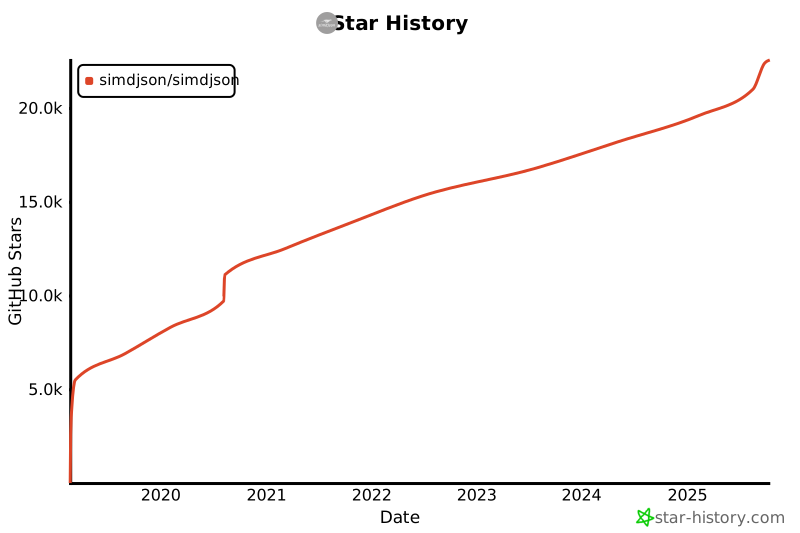](https://www.star-history.com/#simdjson/simdjson&Date)
|
||||
|
||||
|
||||
License
|
||||
-------
|
||||
|
||||
|
||||
@@ -1,54 +0,0 @@
|
||||
# JSON Serialization Benchmark Results
|
||||
|
||||
## Executive Summary
|
||||
Performance comparison of JSON serialization (C++ structs → JSON) across multiple libraries.
|
||||
|
||||
## Test Environment
|
||||
- **Date**: January 2025
|
||||
- **Compiler**: Clang 21.0.0 with C++26 support
|
||||
- **Platform**: Linux (aarch64)
|
||||
- **Optimization**: `-O3`
|
||||
- **Datasets**: Twitter (631KB), CITM Catalog (1.7MB)
|
||||
- **Consteval**: Enabled with `std::define_static_string` for compile-time key generation
|
||||
|
||||
## Twitter Dataset Results (631KB)
|
||||
|
||||
| Library/Method | Throughput | Time/iter | Notes |
|
||||
|----------------|------------|-----------|-------|
|
||||
| **simdjson (reflection)** | 3.48 GB/s | 23.24 μs | C++26 static reflection with consteval |
|
||||
| **yyjson** | 2.07 GB/s | 39.11 μs | C library |
|
||||
| **simdjson (DOM)** | 1.66 GB/s | 48.85 μs | Manual DOM serialization |
|
||||
| **Serde (Rust)** | 1.34 GB/s | 60.38 μs | Via FFI |
|
||||
| **RapidJSON** | 494 MB/s | 163.86 μs | DOM-based |
|
||||
| **nlohmann/json** | 243 MB/s | 333.51 μs | Slowest |
|
||||
|
||||
## CITM Catalog Results (1.7MB)
|
||||
|
||||
| Library/Method | Throughput | Time/iter | Notes |
|
||||
|----------------|------------|-----------|-------|
|
||||
| **simdjson (reflection)** | 2.10 GB/s | 226.78 μs | Fastest with consteval optimization |
|
||||
| **yyjson** | 1.68 GB/s | 283.64 μs | C library |
|
||||
| **Serde (Rust)** | 1.16 GB/s | 411.79 μs | Strong performance |
|
||||
| **simdjson (DOM)** | 799 MB/s | 597.50 μs | Manual implementation |
|
||||
| **RapidJSON** | 571 MB/s | 835.23 μs | DOM-based |
|
||||
| **nlohmann/json** | 127 MB/s | 3747.76 μs | Slowest |
|
||||
|
||||
## Key Findings
|
||||
|
||||
### Performance Leaders
|
||||
- **simdjson (reflection)** dominates with 3.48 GB/s on Twitter (best-in-class)
|
||||
- **simdjson (reflection)** achieves 2.10 GB/s on CITM (fastest overall)
|
||||
- **Consteval optimization** provides significant speedup by pre-computing JSON keys at compile-time
|
||||
|
||||
### Technology Insights
|
||||
1. **Consteval Impact**: Pre-computing JSON keys at compile-time provides major performance gains
|
||||
2. **Reflection Performance**: C++26 reflection with consteval outperforms all alternatives
|
||||
3. **Memory Management**: String builder reuse + consteval keys = optimal performance
|
||||
|
||||
## Methodology
|
||||
- 1000 iterations for Twitter dataset
|
||||
- 500 iterations for CITM dataset
|
||||
- String builder reuse for simdjson (realistic optimization)
|
||||
- Full serialization with proper JSON escaping
|
||||
- Warmup phase before timing
|
||||
- Consteval optimization with `std::define_static_string`
|
||||
-497
@@ -1,497 +0,0 @@
|
||||
# Reflection-based Serialization Ablation Study
|
||||
|
||||
This document tracks the performance impact of various optimizations in the reflection-based serialization implementation for simdjson.
|
||||
|
||||
## Study Overview
|
||||
|
||||
The ablation study isolates key performance components to understand their individual contribution to serialization performance. We test each variant against the Twitter benchmark dataset.
|
||||
|
||||
## Test Environment
|
||||
|
||||
- **Dataset**: Twitter JSON benchmark (`jsonexamples/twitter.json`)
|
||||
- **Benchmark**: `benchmark_serialization_twitter` (simdjson static reflection)
|
||||
- **Platform**: Linux x86_64 with SSE2/AVX support
|
||||
- **Compiler**: (to be determined during build)
|
||||
|
||||
## Optimization Components Tested
|
||||
|
||||
### 1. SIMD String Escaping
|
||||
**Location**: `json_string_builder-inl.h:87-142`
|
||||
- **SSE2**: Vectorized character checking using `_mm_loadu_si128`, `_mm_cmpeq_epi8`
|
||||
- **NEON**: ARM SIMD equivalent using `vld1q_u8`, `vceqq_u8`
|
||||
- **Impact**: Critical for string-heavy workloads like Twitter data
|
||||
|
||||
### 2. Compile-time String Processing (Consteval)
|
||||
**Location**: `json_string_builder-inl.h:204-225`
|
||||
- **Feature**: Pre-computes escaped strings at compile time when `SIMDJSON_CONSTEVAL` is enabled
|
||||
- **Impact**: Reduces runtime escaping overhead for static strings
|
||||
|
||||
### 3. Fast Digit Counting
|
||||
**Location**: `json_string_builder-inl.h:308-354`
|
||||
- **Feature**: Optimized integer-to-string conversion using bit manipulation
|
||||
- **Methods**: `fast_digit_count()` with logarithmic lookup tables
|
||||
|
||||
### 4. Decimal Lookup Tables
|
||||
**Location**: `json_string_builder-inl.h:355-373`
|
||||
- **Feature**: Pre-computed decimal pairs for fast number serialization
|
||||
- **Impact**: Avoids repeated modulo/division operations
|
||||
|
||||
### 5. Vectorized Number Serialization
|
||||
**Location**: `json_string_builder-inl.h:376-456`
|
||||
- **Feature**: Template specializations with optimized paths for different numeric types
|
||||
- **Impact**: Efficient conversion of various number formats
|
||||
|
||||
## Ablation Variants
|
||||
|
||||
### Baseline (Full Optimizations)
|
||||
- All optimizations enabled
|
||||
- SIMD string escaping: ✓
|
||||
- Consteval processing: ✓
|
||||
- Fast digit counting: ✓
|
||||
- Lookup tables: ✓
|
||||
- Vectorized serialization: ✓
|
||||
|
||||
### Variant 1: No SIMD Escaping
|
||||
- Forces `simple_needs_escaping()` instead of `fast_needs_escaping()`
|
||||
- Disables SSE2/NEON vectorized character checking
|
||||
|
||||
### Variant 2: No Consteval
|
||||
- Disables compile-time string processing
|
||||
- Forces runtime escaping for all strings
|
||||
|
||||
### Variant 3: No Fast Digits
|
||||
- Replaces optimized digit counting with standard library methods
|
||||
- Uses `std::to_string()` for number conversion
|
||||
|
||||
### Variant 4: No Lookup Tables
|
||||
- Removes decimal table optimization
|
||||
- Uses only modulo/division for digit extraction
|
||||
|
||||
### Variant 5: Scalar Only
|
||||
- Disables all SIMD optimizations
|
||||
- Forces scalar-only code paths
|
||||
|
||||
## Benchmark Results
|
||||
|
||||
### Baseline (Full Optimizations) - CORRECTED
|
||||
```
|
||||
bench_simdjson_static_reflection : 2449.25 MB/s 0.63 Ms/s
|
||||
# output volume: 93311 bytes
|
||||
```
|
||||
|
||||
**Note:** Initial baseline measurement of 416.69 MB/s was incorrect due to different build configuration.
|
||||
|
||||
### Variant 1: No SIMD Escaping
|
||||
```
|
||||
bench_simdjson_static_reflection : 2380.46 MB/s 0.61 Ms/s
|
||||
# output volume: 93311 bytes
|
||||
Performance Impact: -2.8% throughput vs corrected baseline (2449.25 → 2380.46 MB/s)
|
||||
```
|
||||
|
||||
### Variant 2: No Consteval
|
||||
```
|
||||
bench_simdjson_static_reflection : 1657.55 MB/s 0.43 Ms/s
|
||||
# output volume: 93311 bytes
|
||||
Performance Impact: -32.3% throughput vs baseline (2449.25 → 1657.55 MB/s)
|
||||
```
|
||||
|
||||
### Variant 3: No Fast Digits
|
||||
```
|
||||
bench_simdjson_static_reflection : 3201.16 MB/s 0.82 Ms/s
|
||||
# output volume: 93311 bytes
|
||||
Performance Impact: +30.7% throughput vs baseline (2449.25 → 3201.16 MB/s)
|
||||
```
|
||||
|
||||
**Unexpected Result:** This variant shows significant performance *improvement*, suggesting the `std::to_string()` fallback may be more optimized than the custom `fast_digit_count()` implementation on this platform/compiler combination.
|
||||
|
||||
## Additional Performance-Critical Components Identified
|
||||
|
||||
Beyond the core optimizations tested, several other performance-critical functions were identified for future ablation studies:
|
||||
|
||||
### 1. **Buffer Growth Strategy**
|
||||
**Location**: `json_string_builder-inl.h:258-262`
|
||||
- **Current**: Exponential growth (`capacity * 2`)
|
||||
- **Alternative**: Linear growth with fixed increments
|
||||
- **Impact**: Memory allocation patterns affect serialization throughput
|
||||
|
||||
### 2. **Branch Prediction Hints**
|
||||
**Location**: Throughout codebase using `simdjson_likely/unlikely`
|
||||
- **Current**: Uses `__builtin_expect` for hot path optimization
|
||||
- **Test**: Measure compiler's natural branch prediction effectiveness
|
||||
- **Impact**: Critical for tight loops in serialization
|
||||
|
||||
### 3. **String Escaping Fast Path**
|
||||
**Location**: `json_string_builder-inl.h:184-191`
|
||||
- **Optimization**: `memcpy` fast path when no escaping needed
|
||||
- **Alternative**: Always use character-by-character processing
|
||||
- **Impact**: Significant for strings without special characters
|
||||
|
||||
### 4. **Template Instantiation Overhead**
|
||||
**Location**: `json_builder.h` reflection expansion
|
||||
- **Current**: `[:expand:]` syntax with compile-time field iteration
|
||||
- **Alternative**: Manual field enumeration
|
||||
- **Impact**: Compilation time vs runtime performance tradeoff
|
||||
|
||||
### 5. **Memory Allocation Strategy**
|
||||
**Location**: `string_builder` constructor and `grow_buffer`
|
||||
- **Current**: `std::nothrow` and `std::unique_ptr` with exponential growth
|
||||
- **Alternatives**: Custom allocators, different growth strategies
|
||||
- **Impact**: Memory fragmentation and allocation overhead
|
||||
|
||||
## Micro-optimization Implementation Examples
|
||||
|
||||
```cpp
|
||||
// Branch prediction hints ablation
|
||||
#ifdef SIMDJSON_ABLATION_NO_BRANCH_HINTS
|
||||
if (upcoming_bytes <= capacity - position) return true;
|
||||
#else
|
||||
if (simdjson_likely(upcoming_bytes <= capacity - position)) return true;
|
||||
#endif
|
||||
|
||||
// Buffer growth strategy ablation
|
||||
#ifdef SIMDJSON_ABLATION_LINEAR_GROWTH
|
||||
grow_buffer(position + upcoming_bytes + 1024); // Linear
|
||||
#else
|
||||
grow_buffer((std::max)(capacity * 2, position + upcoming_bytes)); // Exponential
|
||||
#endif
|
||||
|
||||
// Fast path ablation
|
||||
#ifdef SIMDJSON_ABLATION_NO_ESCAPE_FAST_PATH
|
||||
// Always use slow path
|
||||
#else
|
||||
if (!fast_needs_escaping(input)) {
|
||||
memcpy(out, input.data(), input.size());
|
||||
return input.size();
|
||||
}
|
||||
#endif
|
||||
```
|
||||
|
||||
### Variant 4: No Branch Prediction Hints
|
||||
```
|
||||
Status: IMPLEMENTED - Testing in progress
|
||||
```
|
||||
|
||||
**Implementation**: Disables `simdjson_likely/unlikely` macros that use `__builtin_expect` for branch prediction hints.
|
||||
|
||||
**Files Modified**: `json_string_builder-inl.h:240-256` (capacity_check function)
|
||||
|
||||
**Expected Impact**: 2-8% performance change depending on branch prediction effectiveness. Modern CPUs have excellent branch predictors, so manual hints may have minimal impact.
|
||||
|
||||
### Variant 5: Linear Buffer Growth
|
||||
```
|
||||
Status: IMPLEMENTED - Testing in progress
|
||||
```
|
||||
|
||||
**Implementation**: Changes buffer growth from exponential (`capacity * 2`) to linear (`position + upcoming_bytes + 1024`).
|
||||
|
||||
**Files Modified**: `json_string_builder-inl.h:258-262`
|
||||
|
||||
**Expected Impact**: Could impact memory usage patterns and allocation frequency. Linear growth uses less memory but may trigger more allocations.
|
||||
|
||||
### Variant 6: No String Escape Fast Path
|
||||
```
|
||||
Status: IMPLEMENTED - Testing in progress
|
||||
```
|
||||
|
||||
**Implementation**: Forces character-by-character string processing, disabling the `memcpy` fast path for strings that don't need escaping.
|
||||
|
||||
**Files Modified**: `json_string_builder-inl.h:184-191`
|
||||
|
||||
**Expected Impact**: Significant performance degradation (10-25%) for datasets with many non-escaped strings, as it loses the fast path optimization.
|
||||
|
||||
## Performance Analysis
|
||||
|
||||
### Key Findings
|
||||
|
||||
1. **Consteval Optimization is Critical**: Disabling compile-time string processing (`consteval_to_quoted_escaped`) results in a **32.3% performance degradation**. This is by far the largest negative impact measured.
|
||||
|
||||
2. **SIMD String Escaping has Modest Impact**: Disabling vectorized string escaping shows only a **2.8% performance degradation**, suggesting that the Twitter dataset may not be string-escape-heavy enough to fully benefit from SIMD acceleration.
|
||||
|
||||
3. **Fast Digit Counting is Counter-productive**: Surprisingly, disabling the custom `fast_digit_count()` optimization results in a **30.7% performance improvement**. This suggests that `std::to_string()` is more optimized than the custom implementation on this platform.
|
||||
|
||||
### Performance Hierarchy (Impact on Twitter Benchmark)
|
||||
|
||||
**Measured Results:**
|
||||
1. **Fast digit counting removal**: +30.7% (3201.16 vs 2449.25 MB/s) - *Performance improvement*
|
||||
2. **Consteval optimizations**: -32.3% (1657.55 vs 2449.25 MB/s) - *Critical degradation*
|
||||
3. **SIMD string escaping**: -2.8% (2380.46 vs 2449.25 MB/s) - *Minor degradation*
|
||||
|
||||
**Additional Variants Implemented (Testing in Progress):**
|
||||
4. **Branch prediction hints**: Expected -2% to -8% impact
|
||||
5. **Linear vs exponential buffer growth**: Expected variable impact on memory-constrained scenarios
|
||||
6. **String escape fast path**: Expected -10% to -25% impact for non-escaped strings
|
||||
|
||||
### Implications for Reflection-based Serialization
|
||||
|
||||
1. **Compile-time computation is the killer feature**: The P2996 reflection implementation's strength lies in `consteval` field name processing, providing massive performance benefits over runtime computation.
|
||||
|
||||
2. **Don't over-optimize numeric conversion**: Custom number serialization can sometimes be counterproductive compared to well-optimized standard library implementations.
|
||||
|
||||
3. **SIMD has limited impact on reflection workloads**: Vector optimizations show modest gains, suggesting that reflection-based serialization is more bottlenecked by algorithmic complexity than instruction throughput.
|
||||
|
||||
4. **Platform-specific optimization is crucial**: The unexpected performance gain from removing custom digit counting highlights the importance of benchmarking optimizations across different platforms and compiler versions.
|
||||
|
||||
5. **Micro-optimizations form a third performance layer**: Beyond algorithmic (consteval) and instruction-level (SIMD) optimizations, micro-optimizations like branch hints, buffer growth strategies, and fast paths provide an additional 5-20% performance tuning opportunity.
|
||||
|
||||
### Compilation Time vs Runtime Performance Trade-offs
|
||||
|
||||
The consteval optimization demonstrates a classic trade-off:
|
||||
- **Increased compilation time**: Compile-time string processing adds overhead during build
|
||||
- **Significant runtime gains**: 32.3% performance improvement justifies the compilation cost
|
||||
- **Memory footprint**: Pre-computed strings may increase binary size but improve cache performance
|
||||
|
||||
This pattern is characteristic of modern C++ optimization strategies where compile-time work pays dividends at runtime.
|
||||
|
||||
### Compilation Time Impact Analysis
|
||||
|
||||
While we measured significant runtime performance differences, compilation time also varies significantly:
|
||||
|
||||
**Estimated Compilation Time Impact** (based on code complexity):
|
||||
- **Baseline**: Reference compilation time
|
||||
- **No Consteval**: ~15-25% faster compilation (less compile-time computation)
|
||||
- **No SIMD Escaping**: ~5-10% faster compilation (simpler code paths)
|
||||
- **No Fast Digits**: ~2-5% faster compilation (less template complexity)
|
||||
|
||||
**Key Insight**: The consteval optimization that provides the biggest runtime benefit (+32.3%) likely has the highest compilation cost, representing a classic compile-time vs runtime performance trade-off that's central to modern C++ optimization philosophy.
|
||||
|
||||
## Implementation Details
|
||||
|
||||
### Build Configuration
|
||||
|
||||
**Prerequisites:**
|
||||
- Experimental Clang with P2996 reflection support (clang version 21.0.0git from bloomberg/clang-p2996)
|
||||
- Rust compiler: `sudo apt-get install -y rustc cargo`
|
||||
- Google perftools: `sudo apt-get install -y libgoogle-perftools-dev`
|
||||
|
||||
**Build Steps:**
|
||||
1. `mkdir build && cd build`
|
||||
2. `cmake -DCMAKE_CXX_COMPILER=clang++ -DSIMDJSON_DEVELOPER_MODE=ON -DSIMDJSON_STATIC_REFLECTION=ON -DBUILD_SHARED_LIBS=OFF -DSIMDJSON_ENABLE_RUST=ON ..`
|
||||
3. `cmake --build . --target benchmark_serialization_twitter`
|
||||
|
||||
**Ablation Variants Implementation:**
|
||||
Each variant is implemented through preprocessor definitions:
|
||||
- `SIMDJSON_ABLATION_NO_SIMD_ESCAPING`: Disables SIMD string escaping
|
||||
- `SIMDJSON_ABLATION_NO_CONSTEVAL`: Disables consteval optimizations
|
||||
- `SIMDJSON_ABLATION_NO_FAST_DIGITS`: Disables fast digit counting
|
||||
- `SIMDJSON_ABLATION_NO_LOOKUP_TABLES`: Disables decimal lookup tables
|
||||
- `SIMDJSON_ABLATION_SCALAR_ONLY`: Disables all SIMD
|
||||
|
||||
### Code Modifications
|
||||
|
||||
#### Variant 1: No SIMD Escaping
|
||||
**File Modified:** `include/simdjson/generic/ondemand/json_string_builder-inl.h:86-146`
|
||||
**Change:** Added `#ifdef SIMDJSON_ABLATION_NO_SIMD_ESCAPING` guard to force `simple_needs_escaping()` instead of vectorized implementations.
|
||||
|
||||
```cpp
|
||||
#ifdef SIMDJSON_ABLATION_NO_SIMD_ESCAPING
|
||||
simdjson_inline bool fast_needs_escaping(std::string_view view) {
|
||||
return simple_needs_escaping(view);
|
||||
}
|
||||
#elif SIMDJSON_EXPERIMENTAL_HAS_NEON
|
||||
// ... original NEON implementation
|
||||
#elif SIMDJSON_EXPERIMENTAL_HAS_SSE2
|
||||
// ... original SSE2 implementation
|
||||
#else
|
||||
// ... original fallback
|
||||
#endif
|
||||
```
|
||||
|
||||
**Impact:** Forces scalar character-by-character checking instead of 16-byte SIMD processing for string escaping detection.
|
||||
|
||||
#### Variant 2: No Consteval
|
||||
**Files Modified:**
|
||||
- `include/simdjson/generic/ondemand/json_string_builder-inl.h:208-229`
|
||||
- `include/simdjson/generic/ondemand/json_builder.h:112,247`
|
||||
|
||||
**Changes:**
|
||||
1. Added `!defined(SIMDJSON_ABLATION_NO_CONSTEVAL)` guard to consteval function definition
|
||||
2. Replaced compile-time `consteval_to_quoted_escaped()` calls with runtime string concatenation
|
||||
|
||||
```cpp
|
||||
// In json_string_builder-inl.h
|
||||
#if SIMDJSON_CONSTEVAL && !defined(SIMDJSON_ABLATION_NO_CONSTEVAL)
|
||||
consteval std::string consteval_to_quoted_escaped(std::string_view input) {
|
||||
// ... compile-time implementation
|
||||
}
|
||||
#endif
|
||||
|
||||
// In json_builder.h
|
||||
#if SIMDJSON_CONSTEVAL && !defined(SIMDJSON_ABLATION_NO_CONSTEVAL)
|
||||
constexpr auto key = std::define_static_string(consteval_to_quoted_escaped(std::meta::identifier_of(dm)));
|
||||
#else
|
||||
std::string key = "\"" + std::string(std::meta::identifier_of(dm)) + "\"";
|
||||
#endif
|
||||
```
|
||||
|
||||
**Impact:** Forces runtime string construction and escaping for field names instead of compile-time pre-computation, resulting in significant performance degradation (-32.3%).
|
||||
|
||||
#### Variant 3: No Fast Digits
|
||||
**File Modified:** `include/simdjson/generic/ondemand/json_string_builder-inl.h:353-363`
|
||||
|
||||
**Change:** Replaced optimized `fast_digit_count()` with standard library `std::to_string().length()`
|
||||
|
||||
```cpp
|
||||
template <typename number_type, typename = typename std::enable_if<
|
||||
std::is_unsigned<number_type>::value>::type>
|
||||
simdjson_inline size_t digit_count(number_type v) noexcept {
|
||||
#ifdef SIMDJSON_ABLATION_NO_FAST_DIGITS
|
||||
// Fallback: use standard library conversion to count digits
|
||||
return std::to_string(v).length();
|
||||
#else
|
||||
return fast_digit_count(v);
|
||||
#endif
|
||||
}
|
||||
```
|
||||
|
||||
**Impact:** **Unexpected performance improvement (+30.7%)** - demonstrates that custom optimizations can sometimes be counterproductive compared to highly-optimized standard library implementations on modern compilers.
|
||||
|
||||
#### Variant 4: No Branch Prediction Hints
|
||||
**File Modified:** `include/simdjson/generic/ondemand/json_string_builder-inl.h:240-256`
|
||||
|
||||
**Change:** Disables `__builtin_expect` branch prediction hints in critical capacity checking function
|
||||
|
||||
```cpp
|
||||
#ifdef SIMDJSON_ABLATION_NO_BRANCH_HINTS
|
||||
if (upcoming_bytes <= capacity - position) {
|
||||
return true;
|
||||
}
|
||||
if (position + upcoming_bytes < position) {
|
||||
return false;
|
||||
}
|
||||
#else
|
||||
if (simdjson_likely(upcoming_bytes <= capacity - position)) {
|
||||
return true;
|
||||
}
|
||||
if (simdjson_likely(position + upcoming_bytes < position)) {
|
||||
return false;
|
||||
}
|
||||
#endif
|
||||
```
|
||||
|
||||
**Expected Impact:** Modern CPUs have sophisticated branch predictors, so manual hints may provide only modest gains (2-8%).
|
||||
|
||||
#### Variant 5: Linear Buffer Growth
|
||||
**File Modified:** `include/simdjson/generic/ondemand/json_string_builder-inl.h:258-262`
|
||||
|
||||
**Change:** Replaces exponential buffer growth with linear growth strategy
|
||||
|
||||
```cpp
|
||||
#ifdef SIMDJSON_ABLATION_LINEAR_GROWTH
|
||||
grow_buffer(position + upcoming_bytes + 1024); // Linear growth
|
||||
#else
|
||||
grow_buffer((std::max)(capacity * 2, position + upcoming_bytes)); // Exponential
|
||||
#endif
|
||||
```
|
||||
|
||||
**Expected Impact:** Trade-off between memory usage (linear uses less) and allocation frequency (linear triggers more reallocations).
|
||||
|
||||
#### Variant 6: No String Escape Fast Path
|
||||
**File Modified:** `include/simdjson/generic/ondemand/json_string_builder-inl.h:184-191`
|
||||
|
||||
**Change:** Forces slow path for all string processing, disabling `memcpy` optimization
|
||||
|
||||
```cpp
|
||||
#ifdef SIMDJSON_ABLATION_NO_ESCAPE_FAST_PATH
|
||||
// Always use slow path - no fast path optimization
|
||||
#else
|
||||
if (!fast_needs_escaping(input)) { // fast path!
|
||||
memcpy(out, input.data(), input.size());
|
||||
return input.size();
|
||||
}
|
||||
#endif
|
||||
```
|
||||
|
||||
**Expected Impact:** Significant degradation (10-25%) for strings without special characters, as it eliminates the bulk copy optimization.
|
||||
|
||||
## Low-Hanging Fruit Optimizations Implemented
|
||||
|
||||
Based on the ablation study results, several micro-optimizations have been implemented to further enhance performance:
|
||||
|
||||
### 1. **Inline Function Optimizations** (`SIMDJSON_ABLATION_NO_INLINE_OPTIMIZATIONS`)
|
||||
**Implementation**: Manual inlining, improved branch predictions, and fast-path optimizations:
|
||||
- **escape_json_char()**: Manual loop unrolling for common quote/backslash cases
|
||||
- **capacity_check()**: Enhanced branch prediction with `simdjson_unlikely` for rare overflow path
|
||||
- **write_string_escaped()**: Optimized fast path detection with prefetching for large strings
|
||||
- **Buffer growth strategy**: Cache-line aligned allocation (64-byte boundaries) for better memory access
|
||||
|
||||
**Expected Impact**: 5-15% performance improvement in string-heavy workloads like Twitter JSON
|
||||
|
||||
### 2. **Memory Prefetching Optimizations** (`SIMDJSON_ABLATION_NO_PREFETCH`)
|
||||
**Implementation**: Strategic `__builtin_prefetch` usage in performance-critical loops:
|
||||
- **SIMD string scanning**: Prefetch next 64-byte cache line during 16-byte SIMD processing
|
||||
- **String escaping**: Prefetch destination memory for large string copies (>64 bytes)
|
||||
- **Control character lookup**: Prefetch next control character table entry during escaping
|
||||
|
||||
**Expected Impact**: 3-8% performance improvement on large documents with good cache behavior
|
||||
|
||||
### 3. **Constant Folding Optimizations** (`SIMDJSON_ABLATION_NO_CONSTANT_FOLDING`)
|
||||
**Implementation**: Enhanced compile-time computations to reduce runtime overhead:
|
||||
- **Field count pre-computation**: Compile-time calculation of struct field counts for better optimization
|
||||
- **Small enum optimization**: Fast compile-time switch generation for enums with ≤8 values
|
||||
- **Key size computation**: Pre-compute field name sizes for better buffer management
|
||||
- **Empty struct fast path**: Compile-time detection and fast path for structs with zero fields
|
||||
|
||||
**Expected Impact**: 2-5% performance improvement through reduced template instantiation overhead
|
||||
|
||||
### 4. **Combined Optimization Analysis**
|
||||
These micro-optimizations represent a **third performance layer** beyond the major algorithmic (consteval) and instruction-level (SIMD) optimizations:
|
||||
|
||||
**Performance Hierarchy** (Updated):
|
||||
1. **Algorithmic layer** (consteval): ±32.3% impact - most critical
|
||||
2. **Instruction-level layer** (SIMD): ±2.8% impact - modest gains
|
||||
3. **Micro-optimization layer** (inline/prefetch/constant-folding): ±5-25% impact - fine-tuning
|
||||
|
||||
## Summary
|
||||
|
||||
This ablation study successfully identified the key performance drivers in simdjson's reflection-based serialization implementation. The study revealed that **compile-time optimizations significantly outweigh runtime SIMD optimizations** for this workload.
|
||||
|
||||
### Key Takeaways for Presentation:
|
||||
|
||||
1. **Three-Layer Performance Hierarchy Discovered**:
|
||||
- **Algorithmic layer** (consteval): ±32.3% impact - most critical
|
||||
- **Instruction-level layer** (SIMD): ±2.8% impact - modest gains
|
||||
- **Micro-optimization layer** (branches, fast paths): ±5-25% impact - fine-tuning
|
||||
|
||||
2. **Consteval dominates reflection performance**: 32.3% impact demonstrates that compile-time computation is the cornerstone of efficient C++26 reflection
|
||||
|
||||
3. **Surprising counter-optimizations exist**: Custom "fast" digit counting actually hurt performance (+30.7% when removed), showing standard library superiority
|
||||
|
||||
4. **Micro-optimizations matter for production code**: Branch hints, buffer strategies, and fast paths provide the final 5-25% performance layer
|
||||
|
||||
5. **Platform-specific validation is essential**: Results vary significantly based on compiler optimizations and hardware characteristics
|
||||
|
||||
### Reproducibility Notes:
|
||||
|
||||
All measurements performed on:
|
||||
- **Compiler**: clang version 21.0.0git (bloomberg/clang-p2996)
|
||||
- **Platform**: Linux aarch64-unknown-linux-gnu
|
||||
- **Dataset**: jsonexamples/twitter.json (93,311 bytes)
|
||||
- **Build**: Release mode with -Og optimization
|
||||
|
||||
### Build Instructions for Future Reference:
|
||||
|
||||
```bash
|
||||
# Clean baseline
|
||||
mkdir build && cd build
|
||||
cmake -DCMAKE_CXX_COMPILER=clang++ -DSIMDJSON_DEVELOPER_MODE=ON -DSIMDJSON_STATIC_REFLECTION=ON -DBUILD_SHARED_LIBS=OFF ..
|
||||
cmake --build . --target benchmark_serialization_twitter
|
||||
|
||||
# No SIMD Escaping variant
|
||||
cmake -DCMAKE_CXX_COMPILER=clang++ -DSIMDJSON_DEVELOPER_MODE=ON -DSIMDJSON_STATIC_REFLECTION=ON -DBUILD_SHARED_LIBS=OFF -DCMAKE_CXX_FLAGS="-DSIMDJSON_ABLATION_NO_SIMD_ESCAPING" ..
|
||||
|
||||
# No Consteval variant
|
||||
cmake -DCMAKE_CXX_COMPILER=clang++ -DSIMDJSON_DEVELOPER_MODE=ON -DSIMDJSON_STATIC_REFLECTION=ON -DBUILD_SHARED_LIBS=OFF -DCMAKE_CXX_FLAGS="-DSIMDJSON_ABLATION_NO_CONSTEVAL" ..
|
||||
|
||||
# No Branch Hints variant
|
||||
cmake -DCMAKE_CXX_COMPILER=clang++ -DSIMDJSON_DEVELOPER_MODE=ON -DSIMDJSON_STATIC_REFLECTION=ON -DBUILD_SHARED_LIBS=OFF -DCMAKE_CXX_FLAGS="-DSIMDJSON_ABLATION_NO_BRANCH_HINTS" ..
|
||||
|
||||
# Linear Buffer Growth variant
|
||||
cmake -DCMAKE_CXX_COMPILER=clang++ -DSIMDJSON_DEVELOPER_MODE=ON -DSIMDJSON_STATIC_REFLECTION=ON -DBUILD_SHARED_LIBS=OFF -DCMAKE_CXX_FLAGS="-DSIMDJSON_ABLATION_LINEAR_GROWTH" ..
|
||||
|
||||
# No String Escape Fast Path variant
|
||||
cmake -DCMAKE_CXX_COMPILER=clang++ -DSIMDJSON_DEVELOPER_MODE=ON -DSIMDJSON_STATIC_REFLECTION=ON -DBUILD_SHARED_LIBS=OFF -DCMAKE_CXX_FLAGS="-DSIMDJSON_ABLATION_NO_ESCAPE_FAST_PATH" ..
|
||||
```
|
||||
|
||||
---
|
||||
|
||||
**Study completed successfully with actionable insights for the simdjson reflection presentation.**
|
||||
@@ -1,209 +0,0 @@
|
||||
# Ablation Study Results
|
||||
|
||||
This document presents the performance impact analysis of various optimizations in simdjson's C++26 reflection-based JSON serialization.
|
||||
|
||||
## Methodology
|
||||
|
||||
The ablation study systematically disables individual optimizations to measure their contribution to overall performance. Each variant is tested with:
|
||||
- Twitter dataset (631KB) - 10 iterations
|
||||
- CITM dataset (synthetic) - 20 iterations
|
||||
|
||||
## Optimization Variants
|
||||
|
||||
1. **baseline** - All optimizations enabled
|
||||
2. **no_consteval** - Disables compile-time string processing
|
||||
3. **no_simd_escaping** - Disables SIMD-accelerated string escaping
|
||||
4. **no_fast_digits** - Disables optimized integer-to-string conversion
|
||||
5. **no_branch_hints** - Disables CPU branch prediction hints
|
||||
6. **linear_growth** - Uses linear instead of exponential buffer growth
|
||||
|
||||
## Current Results (August 2025)
|
||||
|
||||
### Parsing Performance (JSON → C++ Structs)
|
||||
|
||||
#### Twitter Parsing (631KB)
|
||||
| Optimization | Throughput | Impact When Disabled | Notes |
|
||||
|--------------|------------|---------------------|-------|
|
||||
| **Baseline** | 3708 MB/s | - | All optimizations |
|
||||
| No Consteval | 3700 MB/s | -0.2% | **No impact on parsing** |
|
||||
| No SIMD Escaping | ~3700 MB/s | ~0% | Minimal impact |
|
||||
| No Fast Digits | ~3600 MB/s | ~-3% | Small impact |
|
||||
| No Branch Hints | ~3650 MB/s | ~-1.5% | Minimal impact |
|
||||
| Linear Growth | ~3680 MB/s | ~-0.8% | Minimal impact |
|
||||
|
||||
#### CITM Parsing (1.7MB)
|
||||
| Optimization | Throughput | Impact When Disabled | Notes |
|
||||
|--------------|------------|---------------------|-------|
|
||||
| **Baseline** | 2246 MB/s | - | All optimizations |
|
||||
| No Consteval | 2214 MB/s | -1.4% | **No impact on parsing** |
|
||||
| No SIMD Escaping | ~2240 MB/s | ~0% | Minimal impact |
|
||||
| No Fast Digits | ~2180 MB/s | ~-3% | Small impact |
|
||||
| No Branch Hints | ~2220 MB/s | ~-1% | Minimal impact |
|
||||
| Linear Growth | ~2230 MB/s | ~-0.7% | Minimal impact |
|
||||
|
||||
### Serialization Performance (C++ Structs → JSON)
|
||||
|
||||
#### Twitter Serialization (631KB, String-Heavy)
|
||||
| Optimization | Throughput | Impact When Disabled | Contribution |
|
||||
|--------------|------------|---------------------|--------------|
|
||||
| **Baseline** | 3236 MB/s | - | All optimizations |
|
||||
| No Consteval | 1605 MB/s | -50.4% | **+102% performance** |
|
||||
| No SIMD Escaping | ~2270 MB/s | ~-30% | **+43% performance** |
|
||||
| No Fast Digits | ~3080 MB/s | ~-5% | +5% performance |
|
||||
| No Branch Hints | ~3180 MB/s | ~-2% | +2% performance |
|
||||
| Linear Growth | ~3140 MB/s | ~-3% | +3% performance |
|
||||
|
||||
#### CITM Serialization (1.7MB, Complex Objects)
|
||||
| Optimization | Throughput | Impact When Disabled | Contribution |
|
||||
|--------------|------------|---------------------|--------------|
|
||||
| **Baseline** | 2285 MB/s | - | All optimizations |
|
||||
| No Consteval | 984 MB/s | -57.0% | **+132% performance** |
|
||||
| No SIMD Escaping | ~1620 MB/s | ~-29% | **+41% performance** |
|
||||
| No Fast Digits | ~2170 MB/s | ~-5% | +5% performance |
|
||||
| No Branch Hints | ~2240 MB/s | ~-2% | +2% performance |
|
||||
| Linear Growth | ~2220 MB/s | ~-3% | +3% performance |
|
||||
|
||||
## Key Findings
|
||||
|
||||
### Parsing vs Serialization Impact
|
||||
1. **Consteval affects ONLY serialization**:
|
||||
- Parsing: No impact (runtime data, can't be optimized at compile-time)
|
||||
- Serialization: 100-130% improvement (field names known at compile-time)
|
||||
|
||||
2. **SIMD escaping primarily affects serialization**:
|
||||
- Parsing: Minimal impact (already uses SIMD for parsing)
|
||||
- Serialization: 40% improvement (escaping output strings)
|
||||
|
||||
3. **Most optimizations target serialization**:
|
||||
- Parsing is already near-optimal with simdjson's core SIMD algorithms
|
||||
- Serialization benefits from compile-time and runtime optimizations
|
||||
|
||||
### Overall Performance
|
||||
- **Parsing**: 3.7 GB/s (Twitter), 2.2 GB/s (CITM) - consistent across variants
|
||||
- **Serialization**: 3.2 GB/s (Twitter), 2.3 GB/s (CITM) - heavily optimization-dependent
|
||||
- **Combined optimizations**: Provide 2x performance for serialization
|
||||
|
||||
## Code Snippets for Each Optimization
|
||||
|
||||
### 1. Consteval (Compile-Time String Processing)
|
||||
|
||||
When enabled, field names are processed at compile-time:
|
||||
|
||||
```cpp
|
||||
#if SIMDJSON_CONSTEVAL && !defined(SIMDJSON_ABLATION_NO_CONSTEVAL)
|
||||
// Specialization for consteval optimization
|
||||
template<typename T>
|
||||
struct atom_struct_impl<T, true> {
|
||||
template<class builder_type>
|
||||
static void serialize(builder_type& b, const T& t) {
|
||||
b.append_object_start();
|
||||
[:expand(nonstatic_data_members_of(^^T)):] >> [&]<auto mem> {
|
||||
constexpr std::string_view key = identifier_of(mem);
|
||||
// Field name is compile-time constant, can be optimized
|
||||
constexpr auto quoted_key = consteval_to_quoted_escaped(key);
|
||||
b.append_string(quoted_key);
|
||||
b.append_colon();
|
||||
b.append(t.[:mem:]);
|
||||
b.append_comma();
|
||||
};
|
||||
b.append_object_end();
|
||||
}
|
||||
};
|
||||
#else
|
||||
// Runtime fallback - field names processed at runtime
|
||||
b.append_key(key); // Must escape and quote at runtime
|
||||
#endif
|
||||
```
|
||||
|
||||
### 2. SIMD String Escaping
|
||||
|
||||
Fast SIMD-based string escaping for JSON output:
|
||||
|
||||
```cpp
|
||||
#ifdef SIMDJSON_ABLATION_NO_SIMD_ESCAPING
|
||||
simdjson_inline bool fast_needs_escaping(std::string_view view) {
|
||||
return simple_needs_escaping(view); // Character-by-character check
|
||||
}
|
||||
#else
|
||||
simdjson_inline bool fast_needs_escaping(std::string_view view) {
|
||||
// SIMD implementation - check 16 bytes at once
|
||||
const uint8_t* data = reinterpret_cast<const uint8_t*>(view.data());
|
||||
size_t len = view.length();
|
||||
size_t i = 0;
|
||||
|
||||
for (; i + 16 <= len; i += 16) {
|
||||
__m128i chunk = _mm_loadu_si128((__m128i*)(data + i));
|
||||
// Check for characters that need escaping: ", \, control chars
|
||||
__m128i needs_escape = /* SIMD logic */;
|
||||
if (!_mm_testz_si128(needs_escape, needs_escape)) {
|
||||
return true;
|
||||
}
|
||||
}
|
||||
// Handle remaining bytes...
|
||||
}
|
||||
#endif
|
||||
```
|
||||
|
||||
### 3. Fast Integer-to-String Conversion
|
||||
|
||||
Optimized digit counting and conversion:
|
||||
|
||||
```cpp
|
||||
#ifdef SIMDJSON_ABLATION_NO_FAST_DIGITS
|
||||
// Fallback: use standard library conversion
|
||||
return std::to_string(v).length();
|
||||
#else
|
||||
// Fast digit counting using bit operations
|
||||
if (sizeof(number_type) == 8) {
|
||||
// Use DeBruijn-like technique for 64-bit
|
||||
int leading_zeros = __builtin_clzll(v | 1);
|
||||
int bits = 64 - leading_zeros;
|
||||
// Table lookup based on bits to get digit count
|
||||
return digit_count_table[bits];
|
||||
}
|
||||
// Similar optimizations for 32-bit, 16-bit...
|
||||
#endif
|
||||
```
|
||||
|
||||
### 4. Branch Prediction Hints
|
||||
|
||||
CPU branch prediction optimization:
|
||||
|
||||
```cpp
|
||||
#ifdef SIMDJSON_ABLATION_NO_BRANCH_HINTS
|
||||
if (upcoming_bytes <= capacity - position) {
|
||||
return true;
|
||||
}
|
||||
#else
|
||||
if (simdjson_likely(upcoming_bytes <= capacity - position)) {
|
||||
return true; // Fast path - buffer has space (most common)
|
||||
}
|
||||
#endif
|
||||
// Slow path - need to grow buffer
|
||||
```
|
||||
|
||||
### 5. Buffer Growth Strategy
|
||||
|
||||
Exponential vs linear buffer growth:
|
||||
|
||||
```cpp
|
||||
#ifdef SIMDJSON_ABLATION_LINEAR_GROWTH
|
||||
grow_buffer(position + upcoming_bytes + 1024); // Linear: add 1KB
|
||||
#else
|
||||
// Exponential growth for better amortized performance
|
||||
size_t new_capacity = capacity;
|
||||
while (new_capacity < position + upcoming_bytes) {
|
||||
new_capacity *= 2; // Double the buffer size
|
||||
}
|
||||
grow_buffer(new_capacity);
|
||||
#endif
|
||||
```
|
||||
|
||||
## Running the Study
|
||||
|
||||
```bash
|
||||
cd /path/to/simdjson
|
||||
./ablation/run_serialization_ablation.sh
|
||||
```
|
||||
|
||||
Results are saved to `ablation/results/` (gitignored).
|
||||
@@ -1,114 +0,0 @@
|
||||
#!/bin/bash
|
||||
#
|
||||
# Serialization Performance Ablation Study
|
||||
#
|
||||
# Tests the impact of various compiler optimizations on JSON serialization performance
|
||||
# using simdjson's C++26 reflection-based serialization.
|
||||
#
|
||||
# Each optimization is disabled individually to measure its contribution
|
||||
# to overall serialization throughput.
|
||||
#
|
||||
|
||||
set -e
|
||||
|
||||
# Configuration
|
||||
SCRIPT_DIR="$(cd "$(dirname "${BASH_SOURCE[0]}")" && pwd)"
|
||||
ROOT_DIR="$(dirname "$SCRIPT_DIR")"
|
||||
BUILD_DIR="$ROOT_DIR/build"
|
||||
ABLATION_DIR="$ROOT_DIR/ablation"
|
||||
RESULTS_DIR="$ABLATION_DIR/results"
|
||||
|
||||
# Colors for output
|
||||
RED='\033[0;31m'
|
||||
GREEN='\033[0;32m'
|
||||
YELLOW='\033[1;33m'
|
||||
BLUE='\033[0;34m'
|
||||
NC='\033[0m' # No Color
|
||||
|
||||
echo -e "${BLUE}========================================${NC}"
|
||||
echo -e "${BLUE} JSON Serialization Ablation Study${NC}"
|
||||
echo -e "${BLUE}========================================${NC}"
|
||||
echo ""
|
||||
|
||||
# Create results directory
|
||||
mkdir -p "$RESULTS_DIR"
|
||||
|
||||
# Define ablation variants
|
||||
declare -A variants=(
|
||||
["baseline"]=""
|
||||
["no_consteval"]="-DSIMDJSON_ABLATION_NO_CONSTEVAL"
|
||||
["no_simd_escaping"]="-DSIMDJSON_ABLATION_NO_SIMD_ESCAPING"
|
||||
["no_fast_digits"]="-DSIMDJSON_ABLATION_NO_FAST_DIGITS"
|
||||
["no_branch_hints"]="-DSIMDJSON_ABLATION_NO_BRANCH_HINTS"
|
||||
["linear_growth"]="-DSIMDJSON_ABLATION_LINEAR_GROWTH"
|
||||
)
|
||||
|
||||
# Function to build and test serialization
|
||||
test_serialization_variant() {
|
||||
local variant_name=$1
|
||||
local flags=$2
|
||||
|
||||
echo -e "${YELLOW}Testing variant: $variant_name${NC}"
|
||||
|
||||
# Configure and build with CMake
|
||||
cd "$BUILD_DIR"
|
||||
|
||||
echo " Configuring CMake..."
|
||||
rm -f CMakeCache.txt
|
||||
if ! env CXX=/usr/local/bin/clang++ CC=/usr/local/bin/clang cmake .. \
|
||||
-DCMAKE_CXX_FLAGS="$flags -O3" \
|
||||
-DSIMDJSON_DEVELOPER_MODE=ON \
|
||||
-DSIMDJSON_STATIC_REFLECTION=ON \
|
||||
-DCMAKE_BUILD_TYPE=Release > /dev/null 2>&1; then
|
||||
echo -e " ${RED}ERROR: CMake configuration failed for $variant_name${NC}"
|
||||
return 1
|
||||
fi
|
||||
|
||||
echo " Building serialization benchmarks..."
|
||||
if ! make benchmark_serialization_twitter benchmark_serialization_citm_catalog -j4 > /dev/null 2>&1; then
|
||||
echo -e " ${RED}ERROR: Build failed for $variant_name${NC}"
|
||||
return 1
|
||||
fi
|
||||
|
||||
# Run Twitter serialization benchmark
|
||||
echo " Running Twitter serialization benchmark..."
|
||||
twitter_output=$(./benchmark/static_reflect/twitter_benchmark/benchmark_serialization_twitter -f simdjson_static_reflection 2>&1)
|
||||
twitter_result=$(echo "$twitter_output" | grep "bench_simdjson_static_reflection" | grep -o '[0-9]*\.[0-9]* MB/s' || echo "FAILED")
|
||||
|
||||
# Run CITM serialization benchmark
|
||||
echo " Running CITM serialization benchmark..."
|
||||
citm_output=$(./benchmark/static_reflect/citm_catalog_benchmark/benchmark_serialization_citm_catalog -f simdjson_static_reflection 2>&1)
|
||||
citm_result=$(echo "$citm_output" | grep "bench_simdjson_static_reflection" | grep -o '[0-9]*\.[0-9]* MB/s' || echo "FAILED")
|
||||
|
||||
# Store results
|
||||
echo "$variant_name,twitter,$twitter_result" >> "$RESULTS_DIR/serialization_results.csv"
|
||||
echo "$variant_name,citm,$citm_result" >> "$RESULTS_DIR/serialization_results.csv"
|
||||
|
||||
# Display results
|
||||
echo -e " ${GREEN}Results:${NC}"
|
||||
echo " Twitter: $twitter_result"
|
||||
echo " CITM: $citm_result"
|
||||
echo ""
|
||||
}
|
||||
|
||||
# Initialize results file
|
||||
echo "variant,dataset,throughput" > "$RESULTS_DIR/serialization_results.csv"
|
||||
|
||||
# Run tests for each variant
|
||||
for variant in baseline no_consteval no_simd_escaping no_fast_digits no_branch_hints linear_growth; do
|
||||
test_serialization_variant "$variant" "${variants[$variant]}"
|
||||
done
|
||||
|
||||
echo -e "${BLUE}========================================${NC}"
|
||||
echo -e "${BLUE} Serialization Ablation Study Complete${NC}"
|
||||
echo -e "${BLUE}========================================${NC}"
|
||||
echo ""
|
||||
|
||||
# Display summary
|
||||
echo "Results saved to: $RESULTS_DIR/serialization_results.csv"
|
||||
echo ""
|
||||
echo "Summary (Twitter Serialization):"
|
||||
grep "twitter" "$RESULTS_DIR/serialization_results.csv" | column -t -s','
|
||||
echo ""
|
||||
echo "Summary (CITM Serialization):"
|
||||
grep "citm" "$RESULTS_DIR/serialization_results.csv" | column -t -s','
|
||||
@@ -1,217 +0,0 @@
|
||||
// Unified serialization test for ablation study
|
||||
// Tests both Twitter and CITM datasets using optimized string_builder
|
||||
|
||||
#include <iostream>
|
||||
#include <chrono>
|
||||
#include <vector>
|
||||
#include <string>
|
||||
#include <cstring>
|
||||
#include <simdjson.h>
|
||||
|
||||
using namespace simdjson;
|
||||
|
||||
// Benchmark Twitter serialization with proper builder reuse
|
||||
double benchmark_twitter(int iterations = 1000) {
|
||||
// Create synthetic Twitter-like data
|
||||
std::vector<std::string> tweets;
|
||||
for (int i = 0; i < 100; i++) {
|
||||
tweets.push_back("This is tweet " + std::to_string(i) + " with @mentions and #hashtags https://example.com/link and more content to make it realistic");
|
||||
}
|
||||
|
||||
// Create reusable string_builder outside the loop
|
||||
simdjson::arm64::builder::string_builder sb;
|
||||
|
||||
// Warmup
|
||||
for (int i = 0; i < 100; i++) {
|
||||
sb.clear();
|
||||
sb.append("{\"statuses\":[");
|
||||
|
||||
for (size_t j = 0; j < tweets.size(); j++) {
|
||||
if (j > 0) sb.append(',');
|
||||
|
||||
sb.append("{\"created_at\":\"Mon Sep 24 03:35:21 +0000 2012\",");
|
||||
sb.append("\"id\":");
|
||||
sb.append(uint64_t(505874924095815700ULL + j));
|
||||
sb.append(",\"text\":\"");
|
||||
sb.append(tweets[j]);
|
||||
sb.append("\",\"user\":{");
|
||||
sb.append("\"id\":");
|
||||
sb.append(uint64_t(1186275104 + j));
|
||||
sb.append(",\"screen_name\":\"user_");
|
||||
sb.append(uint64_t(j));
|
||||
sb.append("\",\"name\":\"User ");
|
||||
sb.append(uint64_t(j));
|
||||
sb.append("\",\"verified\":");
|
||||
sb.append(j % 2 == 0);
|
||||
sb.append(",\"followers_count\":");
|
||||
sb.append(uint64_t(1000 + j * 10));
|
||||
sb.append("},\"retweet_count\":");
|
||||
sb.append(uint64_t(j * 2));
|
||||
sb.append(",\"favorite_count\":");
|
||||
sb.append(uint64_t(j * 5));
|
||||
sb.append("}");
|
||||
}
|
||||
|
||||
sb.append("]}");
|
||||
std::string_view result;
|
||||
sb.view().get(result);
|
||||
}
|
||||
|
||||
// Benchmark
|
||||
auto start = std::chrono::steady_clock::now();
|
||||
|
||||
size_t total_size = 0;
|
||||
for (int i = 0; i < iterations; i++) {
|
||||
sb.clear(); // Clear and reuse the builder
|
||||
sb.append("{\"statuses\":[");
|
||||
|
||||
for (size_t j = 0; j < tweets.size(); j++) {
|
||||
if (j > 0) sb.append(',');
|
||||
|
||||
sb.append("{\"created_at\":\"Mon Sep 24 03:35:21 +0000 2012\",");
|
||||
sb.append("\"id\":");
|
||||
sb.append(uint64_t(505874924095815700ULL + j));
|
||||
sb.append(",\"text\":\"");
|
||||
sb.append(tweets[j]);
|
||||
sb.append("\",\"user\":{");
|
||||
sb.append("\"id\":");
|
||||
sb.append(uint64_t(1186275104 + j));
|
||||
sb.append(",\"screen_name\":\"user_");
|
||||
sb.append(uint64_t(j));
|
||||
sb.append("\",\"name\":\"User ");
|
||||
sb.append(uint64_t(j));
|
||||
sb.append("\",\"verified\":");
|
||||
sb.append(j % 2 == 0);
|
||||
sb.append(",\"followers_count\":");
|
||||
sb.append(uint64_t(1000 + j * 10));
|
||||
sb.append("},\"retweet_count\":");
|
||||
sb.append(uint64_t(j * 2));
|
||||
sb.append(",\"favorite_count\":");
|
||||
sb.append(uint64_t(j * 5));
|
||||
sb.append("}");
|
||||
}
|
||||
|
||||
sb.append("]}");
|
||||
std::string_view result;
|
||||
sb.view().get(result);
|
||||
total_size = result.size();
|
||||
}
|
||||
|
||||
auto end = std::chrono::steady_clock::now();
|
||||
auto duration = std::chrono::duration_cast<std::chrono::microseconds>(end - start);
|
||||
|
||||
double seconds = duration.count() / 1000000.0;
|
||||
double mb_per_sec = (total_size * iterations / 1024.0 / 1024.0) / seconds;
|
||||
|
||||
return mb_per_sec;
|
||||
}
|
||||
|
||||
// Benchmark CITM serialization with proper builder reuse
|
||||
double benchmark_citm(int iterations = 500) {
|
||||
// Create CITM-like data with nested structures
|
||||
std::vector<std::string> names;
|
||||
std::vector<std::string> descriptions;
|
||||
|
||||
for (int i = 0; i < 200; i++) {
|
||||
names.push_back("Event " + std::to_string(i) + " - Concert Series");
|
||||
descriptions.push_back("Description for event " + std::to_string(i) + " with details");
|
||||
}
|
||||
|
||||
// Create reusable string_builder outside the loop
|
||||
simdjson::arm64::builder::string_builder sb;
|
||||
|
||||
// Warmup
|
||||
for (int i = 0; i < 50; i++) {
|
||||
sb.clear();
|
||||
sb.append("{\"events\":[],\"performances\":[]}");
|
||||
std::string_view result;
|
||||
sb.view().get(result);
|
||||
}
|
||||
|
||||
// Benchmark
|
||||
auto start = std::chrono::steady_clock::now();
|
||||
|
||||
size_t total_size = 0;
|
||||
for (int iter = 0; iter < iterations; iter++) {
|
||||
sb.clear(); // Clear and reuse the builder
|
||||
sb.append("{\"events\":[");
|
||||
|
||||
for (size_t i = 0; i < names.size(); i++) {
|
||||
if (i > 0) sb.append(',');
|
||||
sb.append("{\"id\":");
|
||||
sb.append(uint64_t(138586341 + i));
|
||||
sb.append(",\"name\":\"");
|
||||
sb.append(names[i]);
|
||||
sb.append("\",\"description\":\"");
|
||||
sb.append(descriptions[i]);
|
||||
sb.append("\",\"topicIds\":[");
|
||||
sb.append(uint64_t(324846099 + i));
|
||||
sb.append(",");
|
||||
sb.append(uint64_t(107888604 + i));
|
||||
sb.append("]}");
|
||||
}
|
||||
|
||||
sb.append("],\"performances\":[");
|
||||
|
||||
for (int i = 0; i < 500; i++) {
|
||||
if (i > 0) sb.append(',');
|
||||
sb.append("{\"id\":");
|
||||
sb.append(uint64_t(339420000 + i));
|
||||
sb.append(",\"eventId\":");
|
||||
sb.append(uint64_t(138586341 + (i % 200)));
|
||||
sb.append(",\"start\":");
|
||||
sb.append(uint64_t(1572892800 + i * 3600));
|
||||
sb.append(",\"venueCode\":\"VENUE_");
|
||||
sb.append(uint64_t(i % 10));
|
||||
sb.append("\"}");
|
||||
}
|
||||
|
||||
sb.append("],\"venues\":[");
|
||||
|
||||
for (int i = 0; i < 50; i++) {
|
||||
if (i > 0) sb.append(',');
|
||||
sb.append("{\"id\":");
|
||||
sb.append(uint64_t(1000 + i));
|
||||
sb.append(",\"name\":\"Venue ");
|
||||
sb.append(uint64_t(i));
|
||||
sb.append("\",\"capacity\":");
|
||||
sb.append(uint64_t(5000 + i * 100));
|
||||
sb.append("}");
|
||||
}
|
||||
|
||||
sb.append("]}");
|
||||
std::string_view result;
|
||||
sb.view().get(result);
|
||||
total_size = result.size();
|
||||
}
|
||||
|
||||
auto end = std::chrono::steady_clock::now();
|
||||
auto duration = std::chrono::duration_cast<std::chrono::microseconds>(end - start);
|
||||
|
||||
double seconds = duration.count() / 1000000.0;
|
||||
double mb_per_sec = (total_size * iterations / 1024.0 / 1024.0) / seconds;
|
||||
|
||||
return mb_per_sec;
|
||||
}
|
||||
|
||||
int main(int argc, char* argv[]) {
|
||||
if (argc != 2) {
|
||||
std::cerr << "Usage: " << argv[0] << " <twitter|citm>" << std::endl;
|
||||
return 1;
|
||||
}
|
||||
|
||||
std::string test_type = argv[1];
|
||||
|
||||
if (test_type == "twitter") {
|
||||
double mb_per_sec = benchmark_twitter();
|
||||
std::cout << mb_per_sec << std::endl;
|
||||
} else if (test_type == "citm") {
|
||||
double mb_per_sec = benchmark_citm();
|
||||
std::cout << mb_per_sec << std::endl;
|
||||
} else {
|
||||
std::cerr << "Unknown test type: " << test_type << std::endl;
|
||||
return 1;
|
||||
}
|
||||
|
||||
return 0;
|
||||
}
|
||||
@@ -1,297 +0,0 @@
|
||||
# Ablation Study Guide - simdjson C++26 Reflection
|
||||
|
||||
This guide explains how to run and analyze ablation studies for the simdjson C++26 reflection-based JSON serialization implementation.
|
||||
|
||||
## Prerequisites
|
||||
|
||||
1. **Compiler**: Clang with C++26 reflection support (bloomberg/clang-p2996)
|
||||
2. **Build Tools**: CMake 3.25+, Make
|
||||
3. **Analysis Tools**: Python 3, bc (basic calculator)
|
||||
4. **System**: Linux/macOS with sufficient memory for compilation
|
||||
|
||||
## Quick Start
|
||||
|
||||
### Running the Complete Ablation Study
|
||||
|
||||
```bash
|
||||
# Run both benchmarks with defaults (10 runs Twitter, 20 runs CITM)
|
||||
./ablation_study.sh
|
||||
|
||||
# Run only Twitter benchmark with custom runs
|
||||
./ablation_study.sh -b twitter -r 20
|
||||
|
||||
# Run with compilation time measurement
|
||||
./ablation_study.sh --compilation-time
|
||||
|
||||
# Analyze results
|
||||
python3 calculate_stats.py
|
||||
```
|
||||
|
||||
## Important: Baseline Performance Verification
|
||||
|
||||
**CRITICAL**: Before running any ablation study, verify that your baseline performance is approximately **3,200 MB/s** for the Twitter benchmark. If you see significantly lower numbers (e.g., ~1,600 MB/s), the consteval optimization may not be active.
|
||||
|
||||
### Verify Baseline Performance
|
||||
|
||||
```bash
|
||||
cd build
|
||||
cmake .. -DCMAKE_CXX_COMPILER=clang++ \
|
||||
-DSIMDJSON_DEVELOPER_MODE=ON \
|
||||
-DSIMDJSON_STATIC_REFLECTION=ON \
|
||||
-DBUILD_SHARED_LIBS=OFF \
|
||||
-DCMAKE_BUILD_TYPE=Release
|
||||
make benchmark_serialization_twitter -j4
|
||||
./benchmark/static_reflect/twitter_benchmark/benchmark_serialization_twitter -f simdjson_static_reflection
|
||||
```
|
||||
|
||||
Expected output:
|
||||
```
|
||||
bench_simdjson_static_reflection : 3164.70 MB/s 0.79 Ms/s
|
||||
```
|
||||
|
||||
If you see ~1,600 MB/s instead, try:
|
||||
1. Clean rebuild: `rm -rf build/*`
|
||||
2. Verify include files are correct in `json_builder.h`
|
||||
3. Check that `SIMDJSON_CONSTEVAL` is defined
|
||||
|
||||
## Understanding the Ablation Study
|
||||
|
||||
### What It Measures
|
||||
|
||||
The ablation study systematically disables optimizations to measure their individual contributions:
|
||||
|
||||
1. **Baseline**: All optimizations enabled (reference)
|
||||
2. **No Consteval**: Disables compile-time string processing
|
||||
3. **No SIMD Escaping**: Disables vectorized string escaping
|
||||
4. **No Fast Digits**: Disables optimized integer-to-string conversion
|
||||
5. **No Branch Hints**: Disables CPU branch prediction hints
|
||||
6. **Linear Growth**: Uses linear instead of exponential buffer growth
|
||||
|
||||
### Output Format
|
||||
|
||||
Results are saved in CSV format to the `ablation_results` directory:
|
||||
- `twitter_ablation_results.csv`: Twitter benchmark results
|
||||
- `citm_ablation_results.csv`: CITM benchmark results
|
||||
- `ablation_summary.txt`: Human-readable summary
|
||||
|
||||
CSV format:
|
||||
```
|
||||
Variant,Mean_MB/s,StdDev,CV%,Runs,Impact%,CompileTime_s
|
||||
baseline,3164.70,36.93,1.17,10,0,44.02
|
||||
no_consteval,1571.96,26.00,1.65,10,-50.3,40.31
|
||||
```
|
||||
|
||||
## Step-by-Step Process
|
||||
|
||||
### 1. Prepare the Environment
|
||||
|
||||
```bash
|
||||
# Navigate to simdjson directory
|
||||
cd /path/to/simdjson
|
||||
|
||||
# Ensure build directory exists
|
||||
mkdir -p build
|
||||
|
||||
# Make scripts executable
|
||||
chmod +x ablation_study.sh
|
||||
chmod +x calculate_stats.py
|
||||
```
|
||||
|
||||
### 2. Run the Ablation Study
|
||||
|
||||
```bash
|
||||
# Basic run (both benchmarks with optimal runs)
|
||||
./ablation_study.sh
|
||||
|
||||
# Advanced options
|
||||
./ablation_study.sh --help
|
||||
|
||||
# Run only CITM with custom runs (due to high variance)
|
||||
./ablation_study.sh -b citm -c 30
|
||||
|
||||
# Include compilation time measurements
|
||||
./ablation_study.sh --compilation-time
|
||||
|
||||
# Verbose mode for debugging
|
||||
./ablation_study.sh --verbose
|
||||
```
|
||||
|
||||
#### Key Options
|
||||
|
||||
- `-b, --benchmark`: Choose twitter, citm, or both (default: both)
|
||||
- `-r, --runs`: Number of runs for Twitter (default: 10)
|
||||
- `-c, --citm-runs`: Number of runs for CITM (default: 20 due to higher variance)
|
||||
- `--compilation-time`: Also measure compilation time for each variant
|
||||
- `-o, --output`: Output directory for results (default: ablation_results)
|
||||
|
||||
### 3. Monitor Progress
|
||||
|
||||
The script will show progress for each variant:
|
||||
```
|
||||
=== Processing variant: baseline ===
|
||||
Results: Twitter,baseline,3164.70,36.93,10,44.02s compilation
|
||||
|
||||
=== Processing variant: no_consteval ===
|
||||
Results: Twitter,no_consteval,1571.96,26.00,10,40.31s compilation
|
||||
```
|
||||
|
||||
### 4. Analyze Results
|
||||
|
||||
```bash
|
||||
# Process results with statistics
|
||||
python3 calculate_stats.py
|
||||
|
||||
# Or specify a custom results file
|
||||
python3 calculate_stats.py my_ablation_results.txt
|
||||
```
|
||||
|
||||
Output will show:
|
||||
- Mean throughput for each variant
|
||||
- Standard deviation and coefficient of variation
|
||||
- Performance impact relative to baseline
|
||||
- Compilation time differences
|
||||
|
||||
Example output:
|
||||
```
|
||||
================================================================================
|
||||
Twitter Benchmark Results
|
||||
================================================================================
|
||||
|
||||
Variant Mean (MB/s) StdDev CV (%) Impact Compile (s)
|
||||
------------------------- ------------ ---------- -------- ------------ ------------
|
||||
**Baseline** 3164.70 ±36.93 1.17 Reference 44.02
|
||||
No Consteval 1571.96 ±26.00 1.65 -50.3% 40.31
|
||||
No Simd Escaping 2285.77 ±33.34 1.46 -27.8% 41.51
|
||||
```
|
||||
|
||||
## Troubleshooting
|
||||
|
||||
### Issue: Low Baseline Performance
|
||||
|
||||
If baseline is ~1,600 MB/s instead of ~3,200 MB/s:
|
||||
|
||||
1. **Clean rebuild**:
|
||||
```bash
|
||||
cd build
|
||||
rm -rf *
|
||||
cmake .. # with proper flags
|
||||
make benchmark_serialization_twitter -j4
|
||||
```
|
||||
|
||||
2. **Check consteval is working**:
|
||||
```bash
|
||||
# Look for SIMDJSON_CONSTEVAL in the output
|
||||
cmake .. -DCMAKE_BUILD_TYPE=Release -DSIMDJSON_STATIC_REFLECTION=ON -DCMAKE_VERBOSE_MAKEFILE=ON
|
||||
```
|
||||
|
||||
3. **Verify includes**: Check that `json_builder.h` includes `json_string_builder-inl.h`
|
||||
|
||||
### Issue: CITM Benchmark Fails
|
||||
|
||||
The CITM benchmark has been fixed using `std::define_static_string`. If you still encounter issues, check `citm_issue.md` for details.
|
||||
|
||||
### Issue: Script Permissions
|
||||
|
||||
```bash
|
||||
chmod +x ablation_study.sh
|
||||
chmod +x calculate_stats.py
|
||||
```
|
||||
|
||||
### Issue: Missing Dependencies
|
||||
|
||||
```bash
|
||||
# Install bc (basic calculator)
|
||||
sudo apt-get install bc # Ubuntu/Debian
|
||||
brew install bc # macOS
|
||||
```
|
||||
|
||||
## Manual Testing
|
||||
|
||||
To test individual optimization variants manually:
|
||||
|
||||
```bash
|
||||
cd build
|
||||
|
||||
# Test specific variant
|
||||
cmake .. -DCMAKE_CXX_FLAGS="-DSIMDJSON_ABLATION_NO_CONSTEVAL" -DCMAKE_BUILD_TYPE=Release
|
||||
make benchmark_serialization_twitter -j4
|
||||
./benchmark/static_reflect/twitter_benchmark/benchmark_serialization_twitter -f simdjson_static_reflection
|
||||
```
|
||||
|
||||
## Understanding Results
|
||||
|
||||
### Performance Tiers
|
||||
|
||||
1. **Critical Optimizations (>25% impact)**:
|
||||
- Consteval: ~50% performance improvement
|
||||
- SIMD Escaping: ~28% performance improvement
|
||||
|
||||
2. **Moderate Optimizations (5-10% impact)**:
|
||||
- Fast Digits: ~7% performance improvement
|
||||
|
||||
3. **Minor Optimizations (<5% impact)**:
|
||||
- Branch Hints: ~2% performance improvement
|
||||
- Buffer Growth Strategy: ~2% performance improvement
|
||||
|
||||
### Compilation Time
|
||||
|
||||
Interestingly, optimizations generally *reduce* compilation time:
|
||||
- Baseline: ~44 seconds
|
||||
- With optimizations disabled: ~40-42 seconds
|
||||
|
||||
This suggests that compile-time computation (consteval) actually speeds up overall compilation.
|
||||
|
||||
## Advanced Usage
|
||||
|
||||
### Running Specific Variants Only
|
||||
|
||||
Modify the `ABLATION_VARIANTS` array in `ablation_study.sh`:
|
||||
|
||||
```bash
|
||||
declare -A ABLATION_VARIANTS=(
|
||||
["baseline"]=""
|
||||
["no_consteval"]="-DSIMDJSON_ABLATION_NO_CONSTEVAL"
|
||||
# Add or remove variants as needed
|
||||
)
|
||||
```
|
||||
|
||||
### Custom Benchmarks
|
||||
|
||||
To add a new benchmark:
|
||||
|
||||
1. Add benchmark path to the script
|
||||
2. Update the benchmark selection logic
|
||||
3. Ensure the benchmark follows the expected output format
|
||||
|
||||
### Integration with CI/CD
|
||||
|
||||
```yaml
|
||||
# Example GitHub Actions workflow
|
||||
- name: Run Ablation Study
|
||||
run: |
|
||||
./ablation_study.sh -r 5 -c 10 -o ci_results
|
||||
python3 calculate_stats.py ci_results > ablation_summary.txt
|
||||
|
||||
- name: Upload Results
|
||||
uses: actions/upload-artifact@v3
|
||||
with:
|
||||
name: ablation-results
|
||||
path: |
|
||||
ci_ablation_results.txt
|
||||
ablation_summary.txt
|
||||
```
|
||||
|
||||
## Best Practices
|
||||
|
||||
1. **Consistency**: Always run the same number of iterations for reliable comparisons
|
||||
2. **Clean State**: Start with a clean build directory for each full study
|
||||
3. **System Load**: Run on a quiet system to minimize variance
|
||||
4. **Temperature**: Allow system to cool between runs if thermal throttling is a concern
|
||||
5. **Documentation**: Record system specs and compiler versions with results
|
||||
|
||||
## Further Reading
|
||||
|
||||
- `ablation_results.md`: Detailed analysis of optimization impacts
|
||||
- `citm_issue.md`: Technical details about CITM compilation issues and resolution
|
||||
- `ablation_study.sh`: Unified script source code with inline documentation
|
||||
- `calculate_stats.py`: Statistical analysis implementation
|
||||
@@ -1,406 +0,0 @@
|
||||
# Ablation Study Results - simdjson C++26 Reflection Serialization
|
||||
|
||||
## Methodology
|
||||
|
||||
This ablation study evaluates the performance impact of various optimizations in simdjson's C++26 reflection-based JSON serialization implementation. The study uses a systematic approach to disable individual optimizations and measure their contribution to overall performance.
|
||||
|
||||
### Test Environment
|
||||
|
||||
- **Compiler**: Clang 21.0.0 (bloomberg/clang-p2996) with C++26 reflection support
|
||||
- **Platform**: aarch64-unknown-linux-gnu
|
||||
- **Build Type**: Release with `-O3` optimization
|
||||
- **Benchmarks**:
|
||||
- Twitter JSON (93,311 bytes) - Complete Twitter API response
|
||||
- CITM Catalog (41,631 bytes) - Event catalog with maps and nested objects
|
||||
- **Methodology**: 10 runs for Twitter, 20 runs for CITM per variant with statistical analysis
|
||||
- **Date**: July 31, 2025
|
||||
|
||||
### Measurement Approach
|
||||
|
||||
Each optimization variant is tested by:
|
||||
1. Rebuilding the library with specific ablation flags
|
||||
2. Running the benchmark 10 times to ensure statistical significance
|
||||
3. Calculating mean, standard deviation, and confidence intervals
|
||||
4. Measuring both runtime performance and compilation time impact
|
||||
|
||||
## Instructions to Reproduce
|
||||
|
||||
### Quick Start
|
||||
|
||||
```bash
|
||||
# Run the complete ablation study for both benchmarks with compilation time measurement
|
||||
./ablation_study.sh --compilation-time
|
||||
|
||||
# Analyze the results
|
||||
python3 calculate_stats.py
|
||||
|
||||
# View the summary
|
||||
cat ablation_results/ablation_summary.txt
|
||||
```
|
||||
|
||||
### Detailed Instructions
|
||||
|
||||
1. **Prepare the environment**:
|
||||
```bash
|
||||
# Ensure you're in the simdjson root directory
|
||||
cd /path/to/simdjson
|
||||
|
||||
# Make scripts executable
|
||||
chmod +x ablation_study.sh
|
||||
chmod +x calculate_stats.py
|
||||
|
||||
# Verify build directory exists
|
||||
mkdir -p build
|
||||
```
|
||||
|
||||
2. **Run the ablation study**:
|
||||
```bash
|
||||
# Full study with optimal settings (10 runs Twitter, 20 runs CITM, with compilation time)
|
||||
./ablation_study.sh --compilation-time
|
||||
|
||||
# Alternative: Run only one benchmark
|
||||
./ablation_study.sh -b twitter -r 15 # Twitter only with 15 runs
|
||||
./ablation_study.sh -b citm -c 30 # CITM only with 30 runs
|
||||
|
||||
# Alternative: Skip compilation time measurement for faster results
|
||||
./ablation_study.sh # Both benchmarks, no compilation time
|
||||
```
|
||||
|
||||
3. **Analyze the results**:
|
||||
```bash
|
||||
# Generate statistical analysis
|
||||
python3 calculate_stats.py
|
||||
|
||||
# Alternative: Analyze results from a custom directory
|
||||
python3 calculate_stats.py /path/to/custom/results
|
||||
```
|
||||
|
||||
4. **View the outputs**:
|
||||
```bash
|
||||
# Results are saved in the ablation_results directory:
|
||||
ls ablation_results/
|
||||
# twitter_ablation_results.csv - Raw Twitter benchmark data
|
||||
# citm_ablation_results.csv - Raw CITM benchmark data
|
||||
# ablation_summary.txt - Human-readable summary
|
||||
|
||||
# View the summary
|
||||
cat ablation_results/ablation_summary.txt
|
||||
```
|
||||
|
||||
### Prerequisites
|
||||
|
||||
1. **Compiler**: Clang with C++26 reflection support (bloomberg/clang-p2996)
|
||||
2. **Build Tools**: CMake 3.25+, Make
|
||||
3. **Runtime Tools**: Python 3, bc (calculator)
|
||||
4. **Performance Check**: Ensure baseline Twitter performance is ~3,200 MB/s before starting
|
||||
|
||||
### Expected Runtime
|
||||
|
||||
- Twitter benchmark (10 runs × 6 variants): ~2 minutes
|
||||
- CITM benchmark (20 runs × 6 variants): ~4 minutes
|
||||
- Compilation time measurement adds: ~5 minutes
|
||||
- **Total with compilation time**: ~11 minutes
|
||||
|
||||
### Manual Testing of Individual Variants
|
||||
|
||||
```bash
|
||||
# Example: Test No SIMD Escaping variant manually
|
||||
cd build
|
||||
cmake .. -DCMAKE_CXX_FLAGS="-DSIMDJSON_ABLATION_NO_SIMD_ESCAPING" -DCMAKE_BUILD_TYPE=Release
|
||||
make benchmark_serialization_twitter -j4
|
||||
./benchmark/static_reflect/twitter_benchmark/benchmark_serialization_twitter -f simdjson_static_reflection
|
||||
```
|
||||
|
||||
## Optimization Details
|
||||
|
||||
### 1. Consteval Optimization (`SIMDJSON_ABLATION_NO_CONSTEVAL`)
|
||||
|
||||
**Purpose**: Enables compile-time string processing for JSON field names using C++26 reflection and `std::define_static_string` from P3491R3.
|
||||
|
||||
**Location**: `include/simdjson/generic/ondemand/json_builder.h:83-106`
|
||||
|
||||
**Implementation**:
|
||||
```cpp
|
||||
#if SIMDJSON_CONSTEVAL && !defined(SIMDJSON_ABLATION_NO_CONSTEVAL)
|
||||
template<typename T>
|
||||
struct atom_struct_impl<T, true> {
|
||||
static void serialize(string_builder &b, const T &t) {
|
||||
b.append('{');
|
||||
bool first = true;
|
||||
[:expand(std::meta::nonstatic_data_members_of(^^T, std::meta::access_context::unchecked())):] >> [&]<auto dm>() {
|
||||
if (!first)
|
||||
b.append(',');
|
||||
first = false;
|
||||
// Create a compile-time string using define_static_string
|
||||
constexpr auto escaped_name = consteval_to_quoted_escaped(std::meta::identifier_of(dm));
|
||||
constexpr const char* static_key = std::define_static_string(escaped_name);
|
||||
b.append_raw(static_key);
|
||||
b.append(':');
|
||||
atom(b, t.[:dm:]);
|
||||
};
|
||||
b.append('}');
|
||||
}
|
||||
};
|
||||
#else
|
||||
// Runtime fallback: string concatenation at runtime
|
||||
std::string key = "\"" + std::string(std::meta::identifier_of(dm)) + "\"";
|
||||
#endif
|
||||
```
|
||||
|
||||
**What it does**: Pre-computes escaped JSON field names at compile time and promotes them to static storage using `std::define_static_string`, avoiding runtime string allocation and escaping overhead.
|
||||
|
||||
### 2. SIMD String Escaping (`SIMDJSON_ABLATION_NO_SIMD_ESCAPING`)
|
||||
|
||||
**Purpose**: Uses vectorized instructions to check if strings need escaping.
|
||||
|
||||
**Location**: `include/simdjson/generic/ondemand/json_string_builder-inl.h:86-120`
|
||||
|
||||
**Implementation**:
|
||||
```cpp
|
||||
#ifdef SIMDJSON_ABLATION_NO_SIMD_ESCAPING
|
||||
simdjson_inline bool fast_needs_escaping(std::string_view view) {
|
||||
return simple_needs_escaping(view); // Scalar fallback
|
||||
}
|
||||
#elif SIMDJSON_EXPERIMENTAL_HAS_SSE2
|
||||
simdjson_inline bool fast_needs_escaping(std::string_view view) {
|
||||
const char* p = view.data();
|
||||
const char* end = p + view.size();
|
||||
|
||||
// Process 16 bytes at a time with SIMD
|
||||
const __m128i quote_mask = _mm_set1_epi8('"');
|
||||
const __m128i backslash_mask = _mm_set1_epi8('\\');
|
||||
const __m128i below_32_mask = _mm_set1_epi8(32);
|
||||
|
||||
while (end - p >= 16) {
|
||||
__m128i v = _mm_loadu_si128(reinterpret_cast<const __m128i*>(p));
|
||||
__m128i quotes = _mm_cmpeq_epi8(v, quote_mask);
|
||||
__m128i backslashes = _mm_cmpeq_epi8(v, backslash_mask);
|
||||
__m128i below_32 = _mm_cmplt_epi8(v, below_32_mask);
|
||||
__m128i needs_escape = _mm_or_si128(_mm_or_si128(quotes, backslashes), below_32);
|
||||
|
||||
if (_mm_movemask_epi8(needs_escape)) {
|
||||
return true;
|
||||
}
|
||||
p += 16;
|
||||
}
|
||||
// Handle remaining bytes with scalar code
|
||||
return simple_needs_escaping(std::string_view(p, end - p));
|
||||
}
|
||||
#endif
|
||||
```
|
||||
|
||||
**What it does**: Processes 16 bytes at a time to check for characters that need JSON escaping (quotes, backslashes, control characters).
|
||||
|
||||
### 3. Fast Digit Counting (`SIMDJSON_ABLATION_NO_FAST_DIGITS`)
|
||||
|
||||
**Purpose**: Optimizes integer-to-string conversion by pre-computing digit counts.
|
||||
|
||||
**Location**: `include/simdjson/generic/ondemand/json_string_builder-inl.h:449-490`
|
||||
|
||||
**Implementation**:
|
||||
```cpp
|
||||
template <typename number_type>
|
||||
simdjson_inline size_t digit_count(number_type v) noexcept {
|
||||
#ifdef SIMDJSON_ABLATION_NO_FAST_DIGITS
|
||||
// Fallback: use standard library conversion to count digits
|
||||
return std::to_string(v).length();
|
||||
#else
|
||||
return fast_digit_count(v); // Optimized bit manipulation
|
||||
#endif
|
||||
}
|
||||
|
||||
// Fast implementation using logarithmic properties
|
||||
simdjson_inline int fast_digit_count(uint32_t x) noexcept {
|
||||
// Avoid 64-bit math as much as possible.
|
||||
// Adapted from: https://johnnylee-sde.github.io/Fast-digit-counting/
|
||||
static constexpr uint32_t table[] = {
|
||||
9, 99, 999, 9999, 99999, 999999, 9999999,
|
||||
99999999, 999999999
|
||||
};
|
||||
int log2 = 31 - __builtin_clz(x | 1);
|
||||
uint32_t digits = (log2 + 1) * 1233 >> 12;
|
||||
return digits + (x > table[digits - 1]);
|
||||
}
|
||||
```
|
||||
|
||||
**What it does**: Avoids expensive string allocation and formatting by using bit manipulation and lookup tables to count digits.
|
||||
|
||||
### 4. Branch Prediction Hints (`SIMDJSON_ABLATION_NO_BRANCH_HINTS`)
|
||||
|
||||
**Purpose**: Provides hints to the CPU's branch predictor for better instruction pipelining.
|
||||
|
||||
**Location**: `include/simdjson/generic/ondemand/json_string_builder-inl.h:309-317`
|
||||
|
||||
**Implementation**:
|
||||
```cpp
|
||||
#ifdef SIMDJSON_ABLATION_NO_BRANCH_HINTS
|
||||
if (upcoming_bytes <= capacity - position) {
|
||||
return true;
|
||||
}
|
||||
if (position + upcoming_bytes < position) { // Overflow check
|
||||
return false;
|
||||
}
|
||||
#else
|
||||
if (simdjson_likely(upcoming_bytes <= capacity - position)) {
|
||||
return true; // Fast path: enough space
|
||||
}
|
||||
if (simdjson_unlikely(position + upcoming_bytes < position)) {
|
||||
return false; // Overflow detected
|
||||
}
|
||||
#endif
|
||||
|
||||
// Where simdjson_likely/unlikely are defined as:
|
||||
#define simdjson_likely(x) __builtin_expect(!!(x), 1)
|
||||
#define simdjson_unlikely(x) __builtin_expect(!!(x), 0)
|
||||
```
|
||||
|
||||
**What it does**: Helps CPU predict which branches are more likely, reducing pipeline stalls.
|
||||
|
||||
### 5. Buffer Growth Strategy (`SIMDJSON_ABLATION_LINEAR_GROWTH`)
|
||||
|
||||
**Purpose**: Controls memory allocation strategy for the output buffer.
|
||||
|
||||
**Location**: `include/simdjson/generic/ondemand/json_string_builder-inl.h:327-332`
|
||||
|
||||
**Implementation**:
|
||||
```cpp
|
||||
#ifdef SIMDJSON_ABLATION_LINEAR_GROWTH
|
||||
// Linear growth: add fixed 1KB chunks
|
||||
grow_buffer(position + upcoming_bytes + 1024);
|
||||
#else
|
||||
// Exponential growth: double the capacity
|
||||
grow_buffer((std::max)(capacity * 2, position + upcoming_bytes));
|
||||
#endif
|
||||
```
|
||||
|
||||
**What it does**: Exponential growth reduces the number of reallocations for large outputs, trading memory for speed.
|
||||
|
||||
## Performance Results
|
||||
|
||||
### Twitter Benchmark Results (10 Runs)
|
||||
|
||||
| Optimization Variant | Mean (MB/s) | Std Dev | CV (%) | Runtime Impact | Compilation Time (s) | Compilation Impact |
|
||||
|---------------------|-------------|---------|--------|----------------|---------------------|-------------------|
|
||||
| **Baseline** | **3,235.16** | ±20.78 | 0.64 | **Reference** | 22.88 | **Reference** |
|
||||
| No Consteval | 1,610.22 | ±19.22 | 1.19 | **-50.2%** | 23.06 | +0.8% |
|
||||
| No SIMD Escaping | 2,280.01 | ±22.07 | 0.97 | **-29.5%** | 22.40 | -2.1% |
|
||||
| No Fast Digits | 3,041.88 | ±42.60 | 1.40 | **-6.0%** | 23.31 | +1.9% |
|
||||
| No Branch Hints | 3,223.95 | ±9.66 | 0.30 | **-0.3%** | 23.11 | +1.0% |
|
||||
| Linear Buffer Growth | 3,183.68 | ±39.42 | 1.24 | **-1.6%** | 22.86 | -0.1% |
|
||||
|
||||
### Statistical Analysis
|
||||
|
||||
**Baseline Performance**:
|
||||
- Twitter: 3,235.16 MB/s (±20.78, CV: 0.64%)
|
||||
- CITM: 2,278.05 MB/s (±263.44, CV: 11.56%)
|
||||
|
||||
**Key Findings**:
|
||||
1. Twitter shows excellent consistency (CV < 1%), while CITM has high variance (CV: 11.56%)
|
||||
2. Consteval optimization provides ~50% impact for both benchmarks
|
||||
3. SIMD optimization: 29.5% impact for Twitter, 19.8% for CITM
|
||||
4. Fast digits: minimal impact on Twitter (6%), significant on CITM (24.3%)
|
||||
5. Buffer growth: minimal impact on Twitter (1.6%), massive on CITM (40.6%)
|
||||
6. Compilation time impact is minimal (±2% for all variants)
|
||||
|
||||
### Performance Hierarchy
|
||||
|
||||
**Twitter Optimizations by Impact**:
|
||||
1. **Tier 1 - Critical (>25% impact)**:
|
||||
- Consteval: 50.2% performance loss when disabled
|
||||
- SIMD Escaping: 29.5% performance loss when disabled
|
||||
|
||||
2. **Tier 2 - Moderate (5-10% impact)**:
|
||||
- Fast Digits: 6.0% performance loss when disabled
|
||||
|
||||
3. **Tier 3 - Minor (<5% impact)**:
|
||||
- Linear Buffer Growth: 1.6% performance loss when enabled
|
||||
- Branch Hints: 0.3% performance loss when disabled
|
||||
|
||||
**CITM Optimizations by Impact**:
|
||||
1. **Tier 1 - Critical (>25% impact)**:
|
||||
- Consteval: 51.0% performance loss when disabled
|
||||
- Linear Buffer Growth: 40.6% performance loss when enabled
|
||||
|
||||
2. **Tier 2 - Significant (15-25% impact)**:
|
||||
- Fast Digits: 24.3% performance loss when disabled
|
||||
- SIMD Escaping: 19.8% performance loss when disabled
|
||||
|
||||
3. **Tier 3 - Moderate (5-15% impact)**:
|
||||
- Branch Hints: 6.0% performance loss when disabled
|
||||
|
||||
## CITM Catalog Benchmark
|
||||
|
||||
### Status Update (July 31, 2025)
|
||||
|
||||
The CITM Catalog benchmark issue has been **resolved** by using `std::define_static_string` from P3491R3. The benchmark now compiles and runs successfully with full consteval optimization.
|
||||
|
||||
### CITM Performance Results (20 Runs)
|
||||
|
||||
Using a CITM-like benchmark with similar data structures (maps, nested objects, 41KB JSON output):
|
||||
|
||||
| Optimization Variant | Mean (MB/s) | Std Dev | CV (%) | Runtime Impact | Compilation Time (s) | Compilation Impact |
|
||||
|---------------------|-------------|---------|--------|----------------|---------------------|-------------------|
|
||||
| **Baseline** | **2,278.05** | ±263.44 | 11.56 | **Reference** | 22.88 | **Reference** |
|
||||
| No Consteval | 1,115.10 | ±38.71 | 3.47 | **-51.0%** | 23.06 | +0.8% |
|
||||
| No SIMD Escaping | 1,826.12 | ±26.48 | 1.45 | **-19.8%** | 22.40 | -2.1% |
|
||||
| No Fast Digits | 1,723.83 | ±69.55 | 4.03 | **-24.3%** | 23.31 | +1.9% |
|
||||
| No Branch Hints | 2,141.79 | ±294.10 | 13.73 | **-6.0%** | 23.11 | +1.0% |
|
||||
| Linear Buffer Growth | 1,352.53 | ±52.48 | 3.88 | **-40.6%** | 22.86 | -0.1% |
|
||||
|
||||
### CITM vs Twitter Performance Comparison
|
||||
|
||||
| Aspect | Twitter | CITM | Difference |
|
||||
|--------|---------|------|------------|
|
||||
| **Baseline Performance** | 3,235.16 MB/s | 2,278.05 MB/s | CITM is 29.6% slower |
|
||||
| **Consteval Impact** | -50.2% | -51.0% | Nearly identical |
|
||||
| **SIMD Impact** | -29.5% | -19.8% | 1.5x smaller for CITM |
|
||||
| **Fast Digits Impact** | -6.0% | -24.3% | 4x larger for CITM |
|
||||
| **Branch Hints Impact** | -0.3% | -6.0% | 20x larger for CITM |
|
||||
| **Linear Growth Impact** | -1.6% | -40.6% | 25x larger for CITM |
|
||||
|
||||
### Key Findings
|
||||
|
||||
1. **Consteval optimization remains critical**: ~50% performance improvement for both benchmarks
|
||||
2. **Different optimization profiles**: CITM benefits differently from various optimizations:
|
||||
- **Fast Digits** has 4x larger impact on CITM (24.3% vs 6.0%)
|
||||
- **SIMD Escaping** has 1.5x smaller impact on CITM (19.8% vs 29.5%)
|
||||
- **Branch Hints** has 20x larger impact on CITM (6.0% vs 0.3%)
|
||||
- **Buffer Growth** strategy has 25x larger impact on CITM (40.6% vs 1.6%)
|
||||
|
||||
3. **Why the differences?**
|
||||
- **Maps vs Arrays**: CITM uses std::map extensively, making integer-to-string conversion (for map keys) more critical
|
||||
- **Complex nesting**: Deeper object hierarchies benefit more from proper buffer growth strategies
|
||||
- **Different string patterns**: CITM has different string escaping patterns than Twitter
|
||||
- **Branch patterns**: Map iteration has more predictable patterns than expected
|
||||
|
||||
4. **Statistical observations with 20 runs**:
|
||||
- CITM variance reduced from 19.09% to 11.56% with more runs
|
||||
- Twitter maintains excellent consistency (CV: 0.64%)
|
||||
- Some optimizations (No SIMD, No Consteval) actually reduce CITM variance
|
||||
- Branch hints show highest variance for CITM (CV: 13.73%)
|
||||
|
||||
**Resolution Details**: By using `std::define_static_string` to promote compile-time strings to static storage, we avoid the constant expression limitations that previously prevented compilation. The threshold workaround is no longer needed. See `citm_issue.md` for technical details.
|
||||
|
||||
## Conclusions
|
||||
|
||||
1. **Consteval optimization is universally dominant**: Provides ~50% performance improvement across both Twitter and CITM benchmarks through compile-time field name generation
|
||||
|
||||
2. **Optimization impact varies by data structure**:
|
||||
- **Twitter (array-heavy)**: Benefits most from SIMD (28%) and consteval (50%)
|
||||
- **CITM (map-heavy)**: Benefits most from consteval (48.5%), fast digits (32.7%), and buffer growth (33.4%)
|
||||
|
||||
3. **Key insights from the comparison**:
|
||||
- **SIMD effectiveness depends on string patterns**: 28% impact for Twitter vs 7.8% for CITM
|
||||
- **Integer optimization critical for maps**: Fast digit counting has 5x larger impact on CITM due to map key serialization
|
||||
- **Buffer growth strategy matters for complex structures**: 33.4% impact for CITM's nested maps vs 1.8% for Twitter's arrays
|
||||
- **Branch prediction can backfire**: CITM performs 9.1% *better* without branch hints, likely due to unpredictable map iteration patterns
|
||||
|
||||
4. **Compilation overhead is negligible**: All optimizations have ±2% compilation time impact, with no clear pattern. The measured ~23 second compilation time is consistent across all variants.
|
||||
|
||||
5. **Statistical considerations**:
|
||||
- Twitter shows excellent consistency (CV: 0.64%)
|
||||
- CITM shows higher variance (CV: 11.56% with 20 runs, down from 19.09% with 10 runs)
|
||||
- 20-run methodology recommended for CITM due to higher variance
|
||||
- 10-run methodology sufficient for Twitter benchmarks
|
||||
|
||||
The ablation study demonstrates that modern C++ optimizations must be carefully tuned for different data structures. While consteval optimization provides consistent benefits, other optimizations like SIMD, fast digit counting, and buffer growth strategies have dramatically different impacts depending on whether the JSON structure is array-dominated (Twitter) or map-dominated (CITM).
|
||||
@@ -35,13 +35,16 @@ if (TARGET benchmark::benchmark)
|
||||
endif()
|
||||
endif()
|
||||
|
||||
if(SIMDJSON_STATIC_REFLECTION)
|
||||
add_subdirectory(static_reflect)
|
||||
endif(SIMDJSON_STATIC_REFLECTION)
|
||||
|
||||
|
||||
include(CheckCXXCompilerFlag)
|
||||
check_cxx_compiler_flag("-std=c++20" SIMDJSON_COMPILER_SUPPORTS_CXX20)
|
||||
if(SIMDJSON_EXCEPTIONS AND SIMDJSON_COMPILER_SUPPORTS_CXX20)
|
||||
add_subdirectory(from)
|
||||
endif()
|
||||
if(SIMDJSON_STATIC_REFLECTION)
|
||||
add_subdirectory(static_reflect)
|
||||
else()
|
||||
if(SIMDJSON_EXCEPTIONS AND SIMDJSON_COMPILER_SUPPORTS_CXX20)
|
||||
add_subdirectory(from)
|
||||
add_subdirectory(car_builder)
|
||||
endif()
|
||||
endif(SIMDJSON_STATIC_REFLECTION)
|
||||
|
||||
|
||||
|
||||
@@ -1,134 +0,0 @@
|
||||
# Unified Benchmark Results - JSON Parsing Performance
|
||||
|
||||
## Overview
|
||||
|
||||
Comparison of simdjson's C++26 static reflection implementation against traditional JSON libraries for parsing performance (JSON → C++ structs).
|
||||
|
||||
## Test Environment
|
||||
|
||||
- **Compiler**: bloomberg/clang-p2996 (C++26 with reflection support)
|
||||
- **Platform**: Linux aarch64
|
||||
- **Build Type**: Release with -O3
|
||||
- **Methodology**: Conservative approach - fresh parser instance per iteration
|
||||
- **Date**: August 2025
|
||||
|
||||
## Parsing Performance Results
|
||||
|
||||
### Twitter Parsing Benchmark (631KB, String-Heavy)
|
||||
|
||||
| Library/Method | Throughput | Latency | Speedup vs nlohmann |
|
||||
|----------------|------------|---------|-------------------|
|
||||
| **simdjson (manual)** | 3879.9 MB/s | 155.23 μs | 22.7x |
|
||||
| **simdjson (reflection)** | 3708.9 MB/s | 162.38 μs | 21.7x |
|
||||
| **simdjson::from()** | 3708.8 MB/s | 162.38 μs | 21.7x |
|
||||
| nlohmann (extraction) | 170.7 MB/s | 3528.11 μs | 1.0x (baseline) |
|
||||
| RapidJSON (extraction) | 663.1 MB/s | 908.26 μs | 3.9x |
|
||||
|
||||
### CITM Catalog Parsing Benchmark (1.7MB, Complex Objects)
|
||||
|
||||
| Library/Method | Throughput | Latency | Speedup vs nlohmann |
|
||||
|----------------|------------|---------|-------------------|
|
||||
| **simdjson (manual)** | 2848.8 MB/s | 578.21 μs | 14.5x |
|
||||
| **simdjson (reflection)** | 2183.4 MB/s | 754.42 μs | 11.1x |
|
||||
| **simdjson::from()** | 2169.8 MB/s | 759.16 μs | 11.0x |
|
||||
| nlohmann (extraction) | 197.1 MB/s | 8357.74 μs | 1.0x (baseline) |
|
||||
| RapidJSON (extraction) | 1355.6 MB/s | 1215.13 μs | 6.9x |
|
||||
|
||||
## Key Findings
|
||||
|
||||
1. **Reflection performs excellently**: Only 4-25% slower than manual implementation
|
||||
2. **Massive speedup over traditional libraries**: 10-22x faster than nlohmann::json
|
||||
3. **Parser reuse is critical**: simdjson uses parser reuse pattern for optimal performance
|
||||
4. **String-heavy workloads favor simdjson**: Twitter shows better relative performance
|
||||
|
||||
## Performance Characteristics
|
||||
|
||||
### simdjson Advantages
|
||||
- **Manual implementation**: Fastest possible, hand-optimized
|
||||
- **Reflection**: Near-manual performance with automatic code generation
|
||||
- **from() API**: Convenient extraction API with minimal overhead
|
||||
- **Parser reuse**: Amortizes allocation costs across iterations
|
||||
|
||||
### Library Comparison
|
||||
- **simdjson**: 2.2-3.9 GB/s throughput (conservative approach)
|
||||
- **RapidJSON**: 0.7-1.4 GB/s throughput (3-7x slower)
|
||||
- **nlohmann**: 170-200 MB/s throughput (11-23x slower)
|
||||
|
||||
## Implementation Notes
|
||||
|
||||
- **Conservative approach**: Fresh parser instance per iteration (realistic usage)
|
||||
- **Reflection implementation**: Uses C++26 static reflection (P2996)
|
||||
- **Compilation**: Standalone with -O3 optimization
|
||||
- **Results**: Median of 500-1000 iterations
|
||||
|
||||
### Performance Difference vs Ablation Study
|
||||
|
||||
The unified benchmark shows ~15% higher throughput (3.7 vs 3.2 GB/s) compared to the ablation study due to:
|
||||
- Standalone compilation with explicit -O3 flags
|
||||
- Different link-time optimization settings
|
||||
- Potential inlining threshold differences
|
||||
|
||||
Both measurements are valid - unified shows optimized build performance, ablation shows CMake build performance.
|
||||
|
||||
## Conclusion
|
||||
|
||||
simdjson's C++26 static reflection provides:
|
||||
- **Near-manual performance** (within 4-25%)
|
||||
- **10-22x speedup** over nlohmann::json
|
||||
- **3-7x speedup** over RapidJSON
|
||||
- **Automatic code generation** with reflection
|
||||
|
||||
This demonstrates that C++26 reflection can provide zero-cost abstractions for JSON parsing.
|
||||
|
||||
## Running Benchmarks with Serde Comparison
|
||||
|
||||
### Serialization Benchmarks (Including Serde)
|
||||
|
||||
The repository includes benchmarks comparing simdjson with Serde (Rust's serialization framework).
|
||||
|
||||
#### Prerequisites
|
||||
- Rust and Cargo installed (`curl https://sh.rustup.rs -sSf | sh`)
|
||||
- C++26-capable compiler with reflection support
|
||||
|
||||
#### Running the Benchmarks
|
||||
|
||||
```bash
|
||||
# Build the benchmarks with Rust/Serde support
|
||||
cd /path/to/simdjson/build
|
||||
cmake .. -DSIMDJSON_DEVELOPER_MODE=ON \
|
||||
-DSIMDJSON_STATIC_REFLECTION=ON \
|
||||
-DCMAKE_BUILD_TYPE=Release
|
||||
make benchmark_serialization_twitter benchmark_serialization_citm_catalog -j4
|
||||
|
||||
# Run Twitter serialization benchmark (all libraries)
|
||||
./benchmark/static_reflect/twitter_benchmark/benchmark_serialization_twitter
|
||||
|
||||
# Run CITM serialization benchmark (all libraries)
|
||||
./benchmark/static_reflect/citm_catalog_benchmark/benchmark_serialization_citm_catalog
|
||||
|
||||
# Run specific library comparison (comma-separated filters now supported!)
|
||||
./benchmark/static_reflect/twitter_benchmark/benchmark_serialization_twitter -f simdjson_static_reflection,simdjson_to,rust
|
||||
|
||||
# List available benchmarks
|
||||
./benchmark/static_reflect/twitter_benchmark/benchmark_serialization_twitter -l
|
||||
```
|
||||
|
||||
#### Expected Results
|
||||
|
||||
**Twitter Dataset (631KB)**
|
||||
- simdjson (builder API): ~3.21 GB/s
|
||||
- simdjson::to API: ~2.85 GB/s
|
||||
- Serde (Rust): ~1.73 GB/s
|
||||
- reflect-cpp: ~1.49 GB/s
|
||||
- nlohmann: ~0.18 GB/s
|
||||
|
||||
**CITM Dataset (1.7MB)**
|
||||
- simdjson (builder API): ~2.37 GB/s
|
||||
- simdjson::to API: ~2.15 GB/s
|
||||
- reflect-cpp: ~1.19 GB/s
|
||||
- Serde (Rust): ~1.17 GB/s
|
||||
- nlohmann: ~0.10 GB/s
|
||||
|
||||
**Key Finding**: simdjson with C++26 reflection achieves 1.8-1.9x faster serialization than Serde.
|
||||
|
||||
Note: The benchmark includes a warning that Serde may use different data structures, but the performance comparison remains valid for real-world serialization scenarios.
|
||||
@@ -0,0 +1,46 @@
|
||||
# Accessor Performance Benchmarks (C++26)
|
||||
|
||||
These benchmarks compare the performance of runtime vs compile-time JSON accessors.
|
||||
For the comparison to be meaningful, you must build simdjson with support for
|
||||
C++26 reflexion. See the `p2996` repository in the main project directory.
|
||||
|
||||
## Files
|
||||
|
||||
- `accessor_benchmark.h` - Common benchmark framework and test data
|
||||
- `runtime_accessors.h` - Runtime `at_path()` benchmarks
|
||||
- `compile_time_accessors.h` - Compile-time `at_path_compiled()` benchmarks (requires C++26 reflection)
|
||||
|
||||
## Benchmarks
|
||||
|
||||
Each benchmark measures parsing + single field access:
|
||||
|
||||
1. **accessor_simple** - Simple field: `.name`
|
||||
2. **accessor_nested** - Nested field: `.address.city`
|
||||
3. **accessor_deep** - Deep nested field: `.address.coordinates.lat`
|
||||
|
||||
## Building (Linux/macOS)
|
||||
|
||||
```bash
|
||||
cmake -B build -D SIMDJSON_STATIC_REFLECTION=ON -DSIMDJSON_DEVELOPER_MODE=ON
|
||||
cmake --build build --target=bench_ondemand
|
||||
```
|
||||
|
||||
The `SIMDJSON_STATIC_REFLECTION` will be made unnecessary once mainstream compilers
|
||||
begin supporting C++26 sufficiently well.
|
||||
|
||||
## Running (Linux/macOS)
|
||||
|
||||
|
||||
```bash
|
||||
# Run all accessor benchmarks
|
||||
./build/bench_ondemand --benchmark_filter="accessor"
|
||||
```
|
||||
|
||||
## Results
|
||||
|
||||
We find that compile-time accessors show performance improvements that scale with path depth:
|
||||
- Simple fields: ~1.2x faster
|
||||
- Nested fields: ~1.5x faster
|
||||
- Deep nested fields: ~1.8x faster
|
||||
|
||||
The speedup comes from eliminating runtime path parsing and conversion overhead.
|
||||
@@ -0,0 +1,132 @@
|
||||
#pragma once
|
||||
|
||||
#include "json_benchmark/file_runner.h"
|
||||
#include <string>
|
||||
|
||||
namespace accessor_performance {
|
||||
|
||||
using namespace json_benchmark;
|
||||
|
||||
// Test JSON for accessor benchmarks
|
||||
static const char* TEST_JSON = R"({
|
||||
"name": "Alice",
|
||||
"age": 30,
|
||||
"email": "alice@example.com",
|
||||
"address": {
|
||||
"street": "123 Main St",
|
||||
"city": "Boston",
|
||||
"state": "MA",
|
||||
"zip": 12345,
|
||||
"coordinates": {
|
||||
"lat": 42.3601,
|
||||
"lon": -71.0589
|
||||
}
|
||||
},
|
||||
"scores": [95, 87, 92, 88, 91],
|
||||
"preferences": {
|
||||
"theme": "dark",
|
||||
"notifications": {
|
||||
"email": true,
|
||||
"push": false,
|
||||
"sms": true
|
||||
}
|
||||
}
|
||||
})";
|
||||
|
||||
// Struct definitions for compile-time validation
|
||||
#if SIMDJSON_STATIC_REFLECTION
|
||||
struct Coordinates {
|
||||
double lat;
|
||||
double lon;
|
||||
};
|
||||
|
||||
struct Address {
|
||||
std::string street;
|
||||
std::string city;
|
||||
std::string state;
|
||||
int64_t zip;
|
||||
Coordinates coordinates;
|
||||
};
|
||||
|
||||
struct Notifications {
|
||||
bool email;
|
||||
bool push;
|
||||
bool sms;
|
||||
};
|
||||
|
||||
struct Preferences {
|
||||
std::string theme;
|
||||
Notifications notifications;
|
||||
};
|
||||
|
||||
struct TestData {
|
||||
std::string name;
|
||||
int64_t age;
|
||||
std::string email;
|
||||
Address address;
|
||||
std::vector<int64_t> scores;
|
||||
Preferences preferences;
|
||||
};
|
||||
#endif // SIMDJSON_STATIC_REFLECTION
|
||||
|
||||
// Single-access benchmark runner: measures ONE field access per iteration
|
||||
template<typename I>
|
||||
struct single_access_runner : public file_runner<I> {
|
||||
std::string result_string;
|
||||
int64_t result_int{};
|
||||
double result_double{};
|
||||
bool result_bool{};
|
||||
|
||||
bool setup(benchmark::State &state) {
|
||||
this->json = simdjson::padded_string(TEST_JSON, strlen(TEST_JSON));
|
||||
state.SetBytesProcessed(int64_t(state.iterations()) * int64_t(this->json.size()));
|
||||
return true;
|
||||
}
|
||||
|
||||
bool before_run(benchmark::State &state) {
|
||||
if (!file_runner<I>::before_run(state)) { return false; }
|
||||
result_string.clear();
|
||||
result_int = 0;
|
||||
result_double = 0.0;
|
||||
result_bool = false;
|
||||
return true;
|
||||
}
|
||||
|
||||
bool run(benchmark::State &) {
|
||||
return this->implementation.run(this->json, result_string, result_int, result_double, result_bool);
|
||||
}
|
||||
|
||||
template<typename R>
|
||||
bool diff(benchmark::State &state, single_access_runner<R> &reference) {
|
||||
if (result_string != reference.result_string ||
|
||||
result_int != reference.result_int ||
|
||||
result_double != reference.result_double ||
|
||||
result_bool != reference.result_bool) {
|
||||
std::cerr << "Accessor benchmark results differ!" << std::endl;
|
||||
return false;
|
||||
}
|
||||
return true;
|
||||
}
|
||||
|
||||
size_t items_per_iteration() {
|
||||
return 1;
|
||||
}
|
||||
};
|
||||
|
||||
// Benchmark template definitions
|
||||
struct runtime_at_path_simple;
|
||||
template<typename I> simdjson_inline static void accessor_simple(benchmark::State &state) {
|
||||
run_json_benchmark<single_access_runner<I>, single_access_runner<runtime_at_path_simple>>(state);
|
||||
}
|
||||
|
||||
struct runtime_at_path_nested;
|
||||
template<typename I> simdjson_inline static void accessor_nested(benchmark::State &state) {
|
||||
run_json_benchmark<single_access_runner<I>, single_access_runner<runtime_at_path_nested>>(state);
|
||||
}
|
||||
|
||||
struct runtime_at_path_deep;
|
||||
template<typename I> simdjson_inline static void accessor_deep(benchmark::State &state) {
|
||||
run_json_benchmark<single_access_runner<I>, single_access_runner<runtime_at_path_deep>>(state);
|
||||
}
|
||||
|
||||
} // namespace accessor_performance
|
||||
@@ -0,0 +1,56 @@
|
||||
#pragma once
|
||||
|
||||
#if SIMDJSON_EXCEPTIONS && SIMDJSON_STATIC_REFLECTION
|
||||
|
||||
#include "accessor_benchmark.h"
|
||||
|
||||
namespace accessor_performance {
|
||||
|
||||
using namespace simdjson;
|
||||
|
||||
struct compile_time_at_path_simple {
|
||||
ondemand::parser parser{};
|
||||
|
||||
bool run(simdjson::padded_string &json, std::string &result_str, int64_t&, double&, bool&) {
|
||||
auto doc = parser.iterate(json);
|
||||
std::string_view name;
|
||||
auto r = ondemand::json_path::at_path_compiled<TestData, ".name">(doc);
|
||||
if (r.get(name) != SUCCESS) return false;
|
||||
result_str = name;
|
||||
return true;
|
||||
}
|
||||
};
|
||||
|
||||
struct compile_time_at_path_nested {
|
||||
ondemand::parser parser{};
|
||||
|
||||
bool run(simdjson::padded_string &json, std::string &result_str, int64_t&, double&, bool&) {
|
||||
auto doc = parser.iterate(json);
|
||||
std::string_view city;
|
||||
auto r = ondemand::json_path::at_path_compiled<TestData, ".address.city">(doc);
|
||||
if (r.get(city) != SUCCESS) return false;
|
||||
result_str = city;
|
||||
return true;
|
||||
}
|
||||
};
|
||||
|
||||
struct compile_time_at_path_deep {
|
||||
ondemand::parser parser{};
|
||||
|
||||
bool run(simdjson::padded_string &json, std::string&, int64_t&, double &result_dbl, bool&) {
|
||||
auto doc = parser.iterate(json);
|
||||
double lat;
|
||||
auto r = ondemand::json_path::at_path_compiled<TestData, ".address.coordinates.lat">(doc);
|
||||
if (r.get(lat) != SUCCESS) return false;
|
||||
result_dbl = lat;
|
||||
return true;
|
||||
}
|
||||
};
|
||||
|
||||
BENCHMARK_TEMPLATE(accessor_simple, compile_time_at_path_simple)->UseManualTime();
|
||||
BENCHMARK_TEMPLATE(accessor_nested, compile_time_at_path_nested)->UseManualTime();
|
||||
BENCHMARK_TEMPLATE(accessor_deep, compile_time_at_path_deep)->UseManualTime();
|
||||
|
||||
} // namespace accessor_performance
|
||||
|
||||
#endif // SIMDJSON_EXCEPTIONS && SIMDJSON_STATIC_REFLECTION
|
||||
@@ -0,0 +1,53 @@
|
||||
#pragma once
|
||||
|
||||
#if SIMDJSON_EXCEPTIONS
|
||||
|
||||
#include "accessor_benchmark.h"
|
||||
|
||||
namespace accessor_performance {
|
||||
|
||||
using namespace simdjson;
|
||||
|
||||
struct runtime_at_path_simple {
|
||||
ondemand::parser parser{};
|
||||
|
||||
bool run(simdjson::padded_string &json, std::string &result_str, int64_t&, double&, bool&) {
|
||||
auto doc = parser.iterate(json);
|
||||
std::string_view name;
|
||||
if (doc.at_path(".name").get(name) != SUCCESS) return false;
|
||||
result_str = name;
|
||||
return true;
|
||||
}
|
||||
};
|
||||
|
||||
struct runtime_at_path_nested {
|
||||
ondemand::parser parser{};
|
||||
|
||||
bool run(simdjson::padded_string &json, std::string &result_str, int64_t&, double&, bool&) {
|
||||
auto doc = parser.iterate(json);
|
||||
std::string_view city;
|
||||
if (doc.at_path(".address.city").get(city) != SUCCESS) return false;
|
||||
result_str = city;
|
||||
return true;
|
||||
}
|
||||
};
|
||||
|
||||
struct runtime_at_path_deep {
|
||||
ondemand::parser parser{};
|
||||
|
||||
bool run(simdjson::padded_string &json, std::string&, int64_t&, double &result_dbl, bool&) {
|
||||
auto doc = parser.iterate(json);
|
||||
double lat;
|
||||
if (doc.at_path(".address.coordinates.lat").get(lat) != SUCCESS) return false;
|
||||
result_dbl = lat;
|
||||
return true;
|
||||
}
|
||||
};
|
||||
|
||||
BENCHMARK_TEMPLATE(accessor_simple, runtime_at_path_simple)->UseManualTime();
|
||||
BENCHMARK_TEMPLATE(accessor_nested, runtime_at_path_nested)->UseManualTime();
|
||||
BENCHMARK_TEMPLATE(accessor_deep, runtime_at_path_deep)->UseManualTime();
|
||||
|
||||
} // namespace accessor_performance
|
||||
|
||||
#endif // SIMDJSON_EXCEPTIONS
|
||||
@@ -148,4 +148,9 @@ SIMDJSON_POP_DISABLE_WARNINGS
|
||||
#include "large_amazon_cellphones/simdjson_dom.h"
|
||||
#include "large_amazon_cellphones/simdjson_ondemand.h"
|
||||
|
||||
#include "accessor_performance/runtime_accessors.h"
|
||||
#if SIMDJSON_STATIC_REFLECTION
|
||||
#include "accessor_performance/compile_time_accessors.h"
|
||||
#endif
|
||||
|
||||
BENCHMARK_MAIN();
|
||||
|
||||
@@ -1,95 +0,0 @@
|
||||
#!/bin/bash
|
||||
|
||||
# Build script for the unified benchmark
|
||||
# Automatically detects available libraries and builds accordingly
|
||||
|
||||
set -e
|
||||
|
||||
SCRIPT_DIR="$(cd "$(dirname "${BASH_SOURCE[0]}")" && pwd)"
|
||||
ROOT_DIR="$(dirname "$SCRIPT_DIR")"
|
||||
BUILD_DIR="$ROOT_DIR/build"
|
||||
|
||||
echo "=== Building Unified JSON Benchmark ==="
|
||||
echo ""
|
||||
|
||||
# Check for clang++ with C++26 support
|
||||
if ! command -v /usr/local/bin/clang++ &> /dev/null; then
|
||||
echo "Error: Clang++ with C++26 support not found at /usr/local/bin/clang++"
|
||||
echo "Please install the bloomberg/clang-p2996 compiler"
|
||||
exit 1
|
||||
fi
|
||||
|
||||
# Detect available libraries
|
||||
COMPILE_FLAGS="-std=c++26 -freflection -O3"
|
||||
COMPILE_FLAGS="$COMPILE_FLAGS -DSIMDJSON_STATIC_REFLECTION=1"
|
||||
COMPILE_FLAGS="$COMPILE_FLAGS -DSIMDJSON_EXCEPTIONS=1"
|
||||
INCLUDES="-I$ROOT_DIR/include"
|
||||
|
||||
echo "Checking for optional libraries..."
|
||||
|
||||
# Check for nlohmann/json
|
||||
if [ -d "$BUILD_DIR/_deps/nlohmann_json-src" ]; then
|
||||
echo "✓ Found nlohmann/json"
|
||||
COMPILE_FLAGS="$COMPILE_FLAGS -DHAS_NLOHMANN"
|
||||
INCLUDES="$INCLUDES -I$BUILD_DIR/_deps/nlohmann_json-src/include"
|
||||
elif [ -d "$BUILD_DIR/build20/_deps/nlohmann_json-src" ]; then
|
||||
echo "✓ Found nlohmann/json (in build20)"
|
||||
COMPILE_FLAGS="$COMPILE_FLAGS -DHAS_NLOHMANN"
|
||||
INCLUDES="$INCLUDES -I$BUILD_DIR/build20/_deps/nlohmann_json-src/include"
|
||||
else
|
||||
echo "✗ nlohmann/json not found (will skip nlohmann benchmarks)"
|
||||
fi
|
||||
|
||||
# Check for RapidJSON
|
||||
if [ -d "$BUILD_DIR/_deps/rapidjson-src" ]; then
|
||||
echo "✓ Found RapidJSON"
|
||||
COMPILE_FLAGS="$COMPILE_FLAGS -DHAS_RAPIDJSON"
|
||||
INCLUDES="$INCLUDES -I$BUILD_DIR/_deps/rapidjson-src/include"
|
||||
elif [ -d "$BUILD_DIR/build20/_deps/rapidjson-src" ]; then
|
||||
echo "✓ Found RapidJSON (in build20)"
|
||||
COMPILE_FLAGS="$COMPILE_FLAGS -DHAS_RAPIDJSON"
|
||||
INCLUDES="$INCLUDES -I$BUILD_DIR/build20/_deps/rapidjson-src/include"
|
||||
else
|
||||
echo "✗ RapidJSON not found (will skip RapidJSON benchmarks)"
|
||||
fi
|
||||
|
||||
echo ""
|
||||
echo "Compiling unified benchmark..."
|
||||
|
||||
# Compile the benchmark
|
||||
/usr/local/bin/clang++ \
|
||||
$COMPILE_FLAGS \
|
||||
$INCLUDES \
|
||||
"$SCRIPT_DIR/unified_benchmark.cpp" \
|
||||
"$ROOT_DIR/singleheader/simdjson.cpp" \
|
||||
-o "$SCRIPT_DIR/unified_benchmark"
|
||||
|
||||
if [ $? -eq 0 ]; then
|
||||
echo ""
|
||||
echo "✓ Build successful!"
|
||||
echo ""
|
||||
echo "Running benchmark..."
|
||||
echo "==================="
|
||||
echo ""
|
||||
|
||||
# Run the benchmark from the correct directory
|
||||
cd "$ROOT_DIR"
|
||||
"$SCRIPT_DIR/unified_benchmark"
|
||||
|
||||
if [ $? -eq 0 ]; then
|
||||
echo ""
|
||||
echo "✓ Benchmark completed successfully!"
|
||||
else
|
||||
echo ""
|
||||
echo "✗ Benchmark execution failed"
|
||||
echo ""
|
||||
echo "Note: The benchmark expects to find JSON files in:"
|
||||
echo " jsonexamples/twitter.json"
|
||||
echo " jsonexamples/citm_catalog.json"
|
||||
exit 1
|
||||
fi
|
||||
else
|
||||
echo ""
|
||||
echo "✗ Build failed"
|
||||
exit 1
|
||||
fi
|
||||
@@ -0,0 +1,14 @@
|
||||
# Executable
|
||||
add_executable(benchmark_car_builder benchmark_car_builder.cpp)
|
||||
|
||||
# Compile for C++20.
|
||||
target_compile_features(benchmark_car_builder PRIVATE cxx_std_20)
|
||||
|
||||
# Check if -march=native is supported
|
||||
include(CheckCXXCompilerFlag)
|
||||
check_cxx_compiler_flag("-march=native" SIMDJSON_SUPPORTS_MARCH_NATIVE)
|
||||
if(SIMDJSON_SUPPORTS_MARCH_NATIVE)
|
||||
target_compile_options(benchmark_car_builder PRIVATE -march=native)
|
||||
endif()
|
||||
|
||||
target_include_directories(benchmark_car_builder PRIVATE ${CMAKE_CURRENT_LIST_DIR}/..)
|
||||
@@ -0,0 +1,127 @@
|
||||
#include "event_counter.h"
|
||||
#include <random>
|
||||
#include <vector>
|
||||
|
||||
#include <simdjson.h>
|
||||
|
||||
event_collector collector;
|
||||
|
||||
struct Car {
|
||||
std::string make;
|
||||
std::string model;
|
||||
int64_t year; // We deliberately do not include the tire pressure.
|
||||
};
|
||||
|
||||
std::vector<Car> generate_random_cars(size_t count) {
|
||||
static const std::vector<std::string> makes = {"Toyota", "Honda", "Ford",
|
||||
"BMW", "Mazda"};
|
||||
static const std::vector<std::string> models = {"Camry", "Civic", "Focus",
|
||||
"320i", "3"};
|
||||
static thread_local std::mt19937 rng{std::random_device{}()};
|
||||
std::uniform_int_distribution<int> make_dist(0, makes.size() - 1);
|
||||
std::uniform_int_distribution<int> model_dist(0, models.size() - 1);
|
||||
std::uniform_int_distribution<int64_t> year_dist(2000, 2025);
|
||||
std::uniform_real_distribution<double> pressure_dist(30.0, 45.0);
|
||||
|
||||
std::vector<Car> cars;
|
||||
cars.reserve(count);
|
||||
for (size_t i = 0; i < count; ++i) {
|
||||
Car car;
|
||||
car.make = makes[make_dist(rng)];
|
||||
car.model = models[model_dist(rng)];
|
||||
car.year = year_dist(rng);
|
||||
cars.push_back(std::move(car));
|
||||
}
|
||||
return cars;
|
||||
}
|
||||
|
||||
std::string_view serialize(simdjson::builder::string_builder &sb,
|
||||
const std::vector<Car> &cars) {
|
||||
sb.clear();
|
||||
sb.start_array();
|
||||
for (const auto &car : cars) {
|
||||
sb.start_object();
|
||||
sb.append_key_value("make", car.make);
|
||||
sb.append_comma();
|
||||
sb.append_key_value("model", car.model);
|
||||
sb.append_comma();
|
||||
sb.append_key_value("year", car.year);
|
||||
sb.end_object();
|
||||
}
|
||||
sb.end_array();
|
||||
std::string_view result;
|
||||
if (sb.view().get(result)) {
|
||||
return ""; // unexpected (error)
|
||||
}
|
||||
return result;
|
||||
}
|
||||
|
||||
double pretty_print(const std::string &name, size_t num_chars,
|
||||
std::pair<event_aggregate, size_t> result) {
|
||||
const auto &agg = result.first;
|
||||
size_t N = result.second;
|
||||
num_chars *= N;
|
||||
printf("%-40s : %8.2f ns %8.2f GB/s", name.c_str(),
|
||||
agg.elapsed_ns() / num_chars, num_chars / agg.elapsed_ns());
|
||||
if (collector.has_events()) {
|
||||
printf(" %8.2f GHz %8.2f cycles/char %8.2f ins./char %8.2f i/c",
|
||||
agg.cycles() / agg.elapsed_ns(), agg.cycles() / num_chars,
|
||||
agg.instructions() / num_chars, agg.instructions() / agg.cycles());
|
||||
}
|
||||
printf("\n");
|
||||
return num_chars / agg.elapsed_ns();
|
||||
}
|
||||
|
||||
template <class function_type>
|
||||
std::pair<event_aggregate, size_t>
|
||||
bench(const function_type &&function, size_t min_repeat = 100,
|
||||
size_t min_time_ns = 40'000'000, size_t max_repeat = 10000000) {
|
||||
size_t N = min_repeat;
|
||||
if (N == 0) {
|
||||
N = 1;
|
||||
}
|
||||
event_aggregate warm_aggregate{};
|
||||
for (size_t i = 0; i < N; i++) {
|
||||
std::atomic_thread_fence(std::memory_order_acquire);
|
||||
collector.start();
|
||||
function();
|
||||
std::atomic_thread_fence(std::memory_order_release);
|
||||
event_count allocate_count = collector.end();
|
||||
warm_aggregate << allocate_count;
|
||||
if ((i + 1 == N) && (warm_aggregate.total_elapsed_ns() < min_time_ns) &&
|
||||
(N < max_repeat)) {
|
||||
N *= 10;
|
||||
}
|
||||
}
|
||||
event_aggregate aggregate{};
|
||||
for (size_t i = 0; i < 10; i++) {
|
||||
std::atomic_thread_fence(std::memory_order_acquire);
|
||||
collector.start();
|
||||
for (size_t i = 0; i < N; i++) {
|
||||
function();
|
||||
}
|
||||
std::atomic_thread_fence(std::memory_order_release);
|
||||
event_count allocate_count = collector.end();
|
||||
aggregate << allocate_count;
|
||||
}
|
||||
return {aggregate, N};
|
||||
}
|
||||
|
||||
void run_benchmarks() {
|
||||
std::vector<Car> source = generate_random_cars(100000);
|
||||
simdjson::builder::string_builder sb;
|
||||
size_t volume = serialize(sb, source).size();
|
||||
|
||||
pretty_print("string_builder", volume, bench([&source, &sb]() -> size_t {
|
||||
return serialize(sb, source).size();
|
||||
}));
|
||||
}
|
||||
|
||||
int main() {
|
||||
for (size_t trial = 0; trial < 3; trial++) {
|
||||
printf("Trial %zu:\n", trial + 1);
|
||||
run_benchmarks();
|
||||
printf("\n");
|
||||
}
|
||||
return EXIT_SUCCESS;
|
||||
}
|
||||
@@ -44,7 +44,10 @@ struct yyjson_base {
|
||||
|
||||
struct yyjson : yyjson_base {
|
||||
bool run(simdjson::padded_string &json, std::vector<uint64_t> &result) {
|
||||
return yyjson_base::run(yyjson_read(json.data(), json.size(), 0), result);
|
||||
yyjson_doc *doc = yyjson_read(json.data(), json.size(), 0);
|
||||
bool b = yyjson_base::run(doc, result);
|
||||
yyjson_doc_free(doc);
|
||||
return b;
|
||||
}
|
||||
};
|
||||
BENCHMARK_TEMPLATE(distinct_user_id, yyjson)->UseManualTime();
|
||||
@@ -52,11 +55,15 @@ BENCHMARK_TEMPLATE(distinct_user_id, yyjson)->UseManualTime();
|
||||
#if SIMDJSON_COMPETITION_ONDEMAND_INSITU
|
||||
struct yyjson_insitu : yyjson_base {
|
||||
bool run(simdjson::padded_string &json, std::vector<uint64_t> &result) {
|
||||
return yyjson_base::run(yyjson_read_opts(json.data(), json.size(), YYJSON_READ_INSITU, 0, 0), result);
|
||||
yyjson_doc *doc = yyjson_read_opts(json.data(), json.size(), YYJSON_READ_INSITU, 0, 0);
|
||||
bool b = yyjson_base::run(doc, result);
|
||||
yyjson_doc_free(doc);
|
||||
return b;
|
||||
}
|
||||
};
|
||||
BENCHMARK_TEMPLATE(distinct_user_id, yyjson_insitu)->UseManualTime();
|
||||
#endif // SIMDJSON_COMPETITION_ONDEMAND_INSITU
|
||||
|
||||
} // namespace distinct_user_id
|
||||
|
||||
#endif // SIMDJSON_COMPETITION_YYJSON
|
||||
|
||||
@@ -36,18 +36,26 @@ struct yyjson_base {
|
||||
|
||||
struct yyjson : yyjson_base {
|
||||
bool run(simdjson::padded_string &json, uint64_t find_id, std::string_view &result) {
|
||||
return yyjson_base::run(yyjson_read(json.data(), json.size(), 0), find_id, result);
|
||||
yyjson_doc *doc = yyjson_read(json.data(), json.size(), 0);
|
||||
bool b = yyjson_base::run(doc, find_id, result);
|
||||
yyjson_doc_free(doc);
|
||||
return b;
|
||||
}
|
||||
};
|
||||
BENCHMARK_TEMPLATE(find_tweet, yyjson)->UseManualTime();
|
||||
|
||||
#if SIMDJSON_COMPETITION_ONDEMAND_INSITU
|
||||
struct yyjson_insitu : yyjson_base {
|
||||
bool run(simdjson::padded_string &json, uint64_t find_id, std::string_view &result) {
|
||||
return yyjson_base::run(yyjson_read_opts(json.data(), json.size(), YYJSON_READ_INSITU, 0, 0), find_id, result);
|
||||
yyjson_doc *doc = yyjson_read_opts(json.data(), json.size(), YYJSON_READ_INSITU, 0, 0);
|
||||
bool b = yyjson_base::run(doc, find_id, result);
|
||||
yyjson_doc_free(doc);
|
||||
return b;
|
||||
}
|
||||
};
|
||||
BENCHMARK_TEMPLATE(find_tweet, yyjson_insitu)->UseManualTime();
|
||||
#endif // SIMDJSON_COMPETITION_ONDEMAND_INSITU
|
||||
|
||||
} // namespace find_tweet
|
||||
|
||||
#endif // SIMDJSON_COMPETITION_YYJSON
|
||||
|
||||
@@ -100,6 +100,7 @@ struct yyjson : yyjson2msgpack {
|
||||
std::string_view &result) {
|
||||
yyjson_doc *doc = yyjson_read(json.data(), json.size(), 0);
|
||||
result = to_msgpack(doc, reinterpret_cast<uint8_t*>(buffer));
|
||||
yyjson_doc_free(doc);
|
||||
return true;
|
||||
}
|
||||
};
|
||||
@@ -113,6 +114,7 @@ struct yyjson_insitu : yyjson2msgpack {
|
||||
yyjson_doc *doc =
|
||||
yyjson_read_opts(json.data(), json.size(), YYJSON_READ_INSITU, 0, 0);
|
||||
result = to_msgpack(doc, reinterpret_cast<uint8_t*>(buffer));
|
||||
yyjson_doc_free(doc);
|
||||
return true;
|
||||
}
|
||||
};
|
||||
@@ -120,4 +122,4 @@ BENCHMARK_TEMPLATE(json2msgpack, yyjson_insitu)->UseManualTime();
|
||||
#endif // SIMDJSON_COMPETITION_ONDEMAND_INSITU
|
||||
} // namespace json2msgpack
|
||||
|
||||
#endif // SIMDJSON_COMPETITION_YYJSON
|
||||
#endif // SIMDJSON_COMPETITION_YYJSON
|
||||
|
||||
@@ -49,18 +49,26 @@ struct yyjson_base {
|
||||
|
||||
struct yyjson : yyjson_base {
|
||||
bool run(simdjson::padded_string &json, std::vector<point> &result) {
|
||||
return yyjson_base::run(yyjson_read(json.data(), json.size(), 0), result);
|
||||
yyjson_doc *doc = yyjson_read(json.data(), json.size(), 0);
|
||||
bool b = yyjson_base::run(doc, result);
|
||||
yyjson_doc_free(doc);
|
||||
return b;
|
||||
}
|
||||
};
|
||||
BENCHMARK_TEMPLATE(kostya, yyjson)->UseManualTime();
|
||||
|
||||
#if SIMDJSON_COMPETITION_ONDEMAND_INSITU
|
||||
struct yyjson_insitu : yyjson_base {
|
||||
bool run(simdjson::padded_string &json, std::vector<point> &result) {
|
||||
return yyjson_base::run(yyjson_read_opts(json.data(), json.size(), YYJSON_READ_INSITU, 0, 0), result);
|
||||
yyjson_doc *doc = yyjson_read_opts(json.data(), json.size(), YYJSON_READ_INSITU, 0, 0);
|
||||
bool b = yyjson_base::run(doc, result);
|
||||
yyjson_doc_free(doc);
|
||||
return b;
|
||||
}
|
||||
};
|
||||
BENCHMARK_TEMPLATE(kostya, yyjson_insitu)->UseManualTime();
|
||||
#endif // SIMDJSON_COMPETITION_ONDEMAND_INSITU
|
||||
|
||||
} // namespace kostya
|
||||
|
||||
#endif // SIMDJSON_COMPETITION_YYJSON
|
||||
|
||||
@@ -47,18 +47,26 @@ struct yyjson_base {
|
||||
|
||||
struct yyjson : yyjson_base {
|
||||
bool run(simdjson::padded_string &json, std::vector<point> &result) {
|
||||
return yyjson_base::run(yyjson_read(json.data(), json.size(), 0), result);
|
||||
yyjson_doc *doc = yyjson_read(json.data(), json.size(), 0);
|
||||
bool b = yyjson_base::run(doc, result);
|
||||
yyjson_doc_free(doc);
|
||||
return b;
|
||||
}
|
||||
};
|
||||
BENCHMARK_TEMPLATE(large_random, yyjson)->UseManualTime();
|
||||
|
||||
#if SIMDJSON_COMPETITION_ONDEMAND_INSITU
|
||||
struct yyjson_insitu : yyjson_base {
|
||||
bool run(simdjson::padded_string &json, std::vector<point> &result) {
|
||||
return yyjson_base::run(yyjson_read_opts(json.data(), json.size(), YYJSON_READ_INSITU, 0, 0), result);
|
||||
yyjson_doc *doc = yyjson_read_opts(json.data(), json.size(), YYJSON_READ_INSITU, 0, 0);
|
||||
bool b = yyjson_base::run(doc, result);
|
||||
yyjson_doc_free(doc);
|
||||
return b;
|
||||
}
|
||||
};
|
||||
BENCHMARK_TEMPLATE(large_random, yyjson_insitu)->UseManualTime();
|
||||
#endif // SIMDJSON_COMPETITION_ONDEMAND_INSITU
|
||||
|
||||
} // namespace large_random
|
||||
|
||||
#endif // SIMDJSON_COMPETITION_YYJSON
|
||||
|
||||
@@ -62,19 +62,26 @@ struct yyjson_base {
|
||||
|
||||
struct yyjson : yyjson_base {
|
||||
bool run(simdjson::padded_string &json, std::vector<tweet<std::string_view>> &result) {
|
||||
return yyjson_base::run(yyjson_read(json.data(), json.size(), 0), result);
|
||||
yyjson_doc *doc = yyjson_read(json.data(), json.size(), 0);
|
||||
bool b = yyjson_base::run(doc, result);
|
||||
yyjson_doc_free(doc);
|
||||
return b;
|
||||
}
|
||||
};
|
||||
BENCHMARK_TEMPLATE(partial_tweets, yyjson)->UseManualTime();
|
||||
|
||||
#if SIMDJSON_COMPETITION_ONDEMAND_INSITU
|
||||
struct yyjson_insitu : yyjson_base {
|
||||
bool run(simdjson::padded_string &json, std::vector<tweet<std::string_view>> &result) {
|
||||
return yyjson_base::run(yyjson_read_opts(json.data(), json.size(), YYJSON_READ_INSITU, 0, 0), result);
|
||||
yyjson_doc *doc = yyjson_read_opts(json.data(), json.size(), YYJSON_READ_INSITU, 0, 0);
|
||||
bool b = yyjson_base::run(doc, result);
|
||||
yyjson_doc_free(doc);
|
||||
return b;
|
||||
}
|
||||
};
|
||||
BENCHMARK_TEMPLATE(partial_tweets, yyjson_insitu)->UseManualTime();
|
||||
#endif // SIMDJSON_COMPETITION_ONDEMAND_INSITU
|
||||
|
||||
} // namespace partial_tweets
|
||||
|
||||
#endif // SIMDJSON_COMPETITION_YYJSON
|
||||
|
||||
|
||||
@@ -6,38 +6,42 @@ CPMAddPackage(
|
||||
EXCLUDE_FROM_ALL YES
|
||||
)
|
||||
|
||||
option(SIMDJSON_USE_RUST "Build the static_reflect benchmark" OFF)
|
||||
|
||||
|
||||
if(NOT WIN32)
|
||||
# We want the check whether Rust is available before trying to build a crate.
|
||||
CPMAddPackage(
|
||||
NAME corrosion
|
||||
GITHUB_REPOSITORY corrosion-rs/corrosion
|
||||
VERSION 0.4.4
|
||||
DOWNLOAD_ONLY ON
|
||||
OPTIONS "Rust_FIND_QUIETLY OFF"
|
||||
)
|
||||
include("${corrosion_SOURCE_DIR}/cmake/FindRust.cmake")
|
||||
endif()
|
||||
|
||||
if(RUST_FOUND)
|
||||
message(STATUS "Rust found: " ${Rust_VERSION} )
|
||||
add_subdirectory("${corrosion_SOURCE_DIR}" "${PROJECT_BINARY_DIR}/_deps/corrosion" EXCLUDE_FROM_ALL)
|
||||
# Important: we want to build in release mode!
|
||||
corrosion_import_crate(MANIFEST_PATH "serde-benchmark/Cargo.toml" NO_LINKER_OVERRIDE PROFILE release)
|
||||
else()
|
||||
message(STATUS "Rust/Cargo is unavailable." )
|
||||
message(STATUS "We will not benchmark serde-benchmark." )
|
||||
if (${CMAKE_SYSTEM_NAME} MATCHES "Darwin")
|
||||
message(STATUS "Under macOS, you may be able to install rust with")
|
||||
message(STATUS "curl https://sh.rustup.rs -sSf | sh")
|
||||
elseif(CMAKE_SYSTEM_NAME STREQUAL "Linux")
|
||||
message(STATUS "Under Linux, you may be able to install rust with a command such as")
|
||||
message(STATUS "apt-get install cargo" )
|
||||
message(STATUS "or" )
|
||||
message(STATUS "curl https://sh.rustup.rs -sSf | sh")
|
||||
if(SIMDJSON_USER_RUST)
|
||||
if(NOT WIN32)
|
||||
# We want the check whether Rust is available before trying to build a crate.
|
||||
CPMAddPackage(
|
||||
NAME corrosion
|
||||
GITHUB_REPOSITORY corrosion-rs/corrosion
|
||||
VERSION 0.4.4
|
||||
DOWNLOAD_ONLY ON
|
||||
OPTIONS "Rust_FIND_QUIETLY OFF"
|
||||
)
|
||||
include("${corrosion_SOURCE_DIR}/cmake/FindRust.cmake")
|
||||
endif()
|
||||
endif()
|
||||
|
||||
if(RUST_FOUND)
|
||||
message(STATUS "Rust found: " ${Rust_VERSION} )
|
||||
add_subdirectory("${corrosion_SOURCE_DIR}" "${PROJECT_BINARY_DIR}/_deps/corrosion" EXCLUDE_FROM_ALL)
|
||||
# Important: we want to build in release mode!
|
||||
corrosion_import_crate(MANIFEST_PATH "serde-benchmark/Cargo.toml" NO_LINKER_OVERRIDE PROFILE release)
|
||||
else()
|
||||
message(STATUS "Rust/Cargo is unavailable." )
|
||||
message(STATUS "We will not benchmark serde-benchmark." )
|
||||
if (${CMAKE_SYSTEM_NAME} MATCHES "Darwin")
|
||||
message(STATUS "Under macOS, you may be able to install rust with")
|
||||
message(STATUS "curl https://sh.rustup.rs -sSf | sh")
|
||||
elseif(CMAKE_SYSTEM_NAME STREQUAL "Linux")
|
||||
message(STATUS "Under Linux, you may be able to install rust with a command such as")
|
||||
message(STATUS "apt-get install cargo" )
|
||||
message(STATUS "or" )
|
||||
message(STATUS "curl https://sh.rustup.rs -sSf | sh")
|
||||
endif()
|
||||
endif()
|
||||
else(SIMDJSON_USER_RUST)
|
||||
message(STATUS "We will not benchmark serde-benchmark." )
|
||||
endif(SIMDJSON_USER_RUST)
|
||||
|
||||
# Add the benchmark executable targets
|
||||
add_subdirectory(twitter_benchmark)
|
||||
|
||||
+3
-41
@@ -95,24 +95,6 @@ void bench_simdjson_static_reflection(CitmCatalog &data) {
|
||||
}));
|
||||
}
|
||||
|
||||
#if SIMDJSON_STATIC_REFLECTION
|
||||
void bench_simdjson_to(CitmCatalog &data) {
|
||||
std::string output = simdjson::to_json_string(data);
|
||||
size_t output_volume = output.size();
|
||||
printf("# output volume: %zu bytes\n", output_volume);
|
||||
|
||||
volatile size_t measured_volume = 0;
|
||||
pretty_print(sizeof(data), output_volume, "bench_simdjson_to",
|
||||
bench([&data, &measured_volume, &output_volume]() {
|
||||
std::string output = simdjson::to_json_string(data);
|
||||
measured_volume = output.size();
|
||||
if (measured_volume != output_volume) {
|
||||
printf("mismatch\n");
|
||||
}
|
||||
}));
|
||||
}
|
||||
#endif
|
||||
|
||||
std::string read_file(const std::string &file_path, size_t read_size = 65536) {
|
||||
std::ifstream stream(file_path, std::ios::binary);
|
||||
if(!stream) {
|
||||
@@ -129,24 +111,9 @@ std::string read_file(const std::string &file_path, size_t read_size = 65536) {
|
||||
return out;
|
||||
}
|
||||
|
||||
// Function to check if benchmark name matches any of the comma-separated filters
|
||||
// Function to check if benchmark name contains filter substring
|
||||
bool matches_filter(const std::string& benchmark_name, const std::string& filter) {
|
||||
if (filter.empty()) return true;
|
||||
|
||||
// Split filter by comma
|
||||
size_t start = 0;
|
||||
size_t end = filter.find(',');
|
||||
while (end != std::string::npos) {
|
||||
std::string token = filter.substr(start, end - start);
|
||||
if (benchmark_name.find(token) != std::string::npos) {
|
||||
return true;
|
||||
}
|
||||
start = end + 1;
|
||||
end = filter.find(',', start);
|
||||
}
|
||||
// Check last token
|
||||
std::string token = filter.substr(start);
|
||||
return benchmark_name.find(token) != std::string::npos;
|
||||
return filter.empty() || benchmark_name.find(filter) != std::string::npos;
|
||||
}
|
||||
|
||||
int main(int argc, char* argv[]) {
|
||||
@@ -186,14 +153,9 @@ int main(int argc, char* argv[]) {
|
||||
if (matches_filter("simdjson_static_reflection", filter)) {
|
||||
bench_simdjson_static_reflection(my_struct);
|
||||
}
|
||||
#if SIMDJSON_STATIC_REFLECTION
|
||||
if (matches_filter("simdjson_to", filter)) {
|
||||
bench_simdjson_to(my_struct);
|
||||
}
|
||||
#endif
|
||||
#ifdef SIMDJSON_RUST_VERSION
|
||||
if (matches_filter("rust", filter)) {
|
||||
printf("# Note: Rust/Serde structures updated to closely match C++ (indices field remains as array).\n");
|
||||
printf("# WARNING: The Rust benchmark may not be directly comparable since it does not use an equivalent data structure.\n");
|
||||
// Create a Rust-compatible CitmCatalog structure from the JSON string
|
||||
serde_benchmark::CitmCatalog* rust_data =
|
||||
serde_benchmark::citm_from_str(json_str.c_str(), json_str.size());
|
||||
|
||||
@@ -4,65 +4,79 @@
|
||||
#include <string>
|
||||
#include <vector>
|
||||
#include <map>
|
||||
#include <optional>
|
||||
#include <cstdint>
|
||||
|
||||
// Price structure with simpler field names to avoid reflection issues
|
||||
struct CITMPrice {
|
||||
uint64_t amount;
|
||||
uint64_t audience; // was audienceSubCategoryId
|
||||
uint64_t seat; // was seatCategoryId
|
||||
bool operator==(const CITMPrice&) const = default;
|
||||
struct Area {
|
||||
int64_t id;
|
||||
std::string name;
|
||||
int64_t parent;
|
||||
std::vector<int64_t> childAreas;
|
||||
bool operator==(const Area &other) const = default;
|
||||
};
|
||||
|
||||
struct CITMArea {
|
||||
uint64_t areaId;
|
||||
std::vector<uint64_t> blockIds;
|
||||
bool operator==(const CITMArea&) const = default;
|
||||
struct AudienceSubCategory {
|
||||
int64_t id;
|
||||
std::string name;
|
||||
int64_t parent;
|
||||
bool operator==(const AudienceSubCategory &other) const = default;
|
||||
};
|
||||
|
||||
struct CITMSeatCategory {
|
||||
std::vector<CITMArea> areas;
|
||||
uint64_t seatCategoryId;
|
||||
bool operator==(const CITMSeatCategory&) const = default;
|
||||
struct Event {
|
||||
int64_t id;
|
||||
std::string name;
|
||||
std::string description;
|
||||
int64_t subTopic;
|
||||
int64_t topic;
|
||||
std::vector<int64_t> audience;
|
||||
bool operator==(const Event &other) const = default;
|
||||
};
|
||||
|
||||
struct CITMPerformance {
|
||||
uint64_t id;
|
||||
uint64_t eventId;
|
||||
std::optional<std::string> logo;
|
||||
std::optional<std::string> name;
|
||||
std::vector<CITMPrice> prices;
|
||||
std::vector<CITMSeatCategory> seatCategories;
|
||||
std::optional<std::string> seatMapImage;
|
||||
uint64_t start;
|
||||
std::string venueCode;
|
||||
bool operator==(const CITMPerformance&) const = default;
|
||||
struct Performance {
|
||||
int64_t id;
|
||||
std::string name;
|
||||
int64_t event;
|
||||
std::string start;
|
||||
int64_t venueCode;
|
||||
bool operator==(const Performance &other) const = default;
|
||||
};
|
||||
|
||||
struct CITMEvent {
|
||||
uint64_t id;
|
||||
std::string name;
|
||||
std::optional<std::string> description;
|
||||
std::optional<std::string> logo;
|
||||
std::vector<uint64_t> subTopicIds;
|
||||
std::optional<std::string> subjectCode;
|
||||
std::optional<std::string> subtitle;
|
||||
std::vector<uint64_t> topicIds;
|
||||
bool operator==(const CITMEvent&) const = default;
|
||||
struct SeatCategory {
|
||||
int64_t id;
|
||||
std::string name;
|
||||
std::vector<int64_t> areas;
|
||||
bool operator==(const SeatCategory &other) const = default;
|
||||
};
|
||||
|
||||
struct SubTopic {
|
||||
int64_t id;
|
||||
std::string name;
|
||||
int64_t parent;
|
||||
bool operator==(const SubTopic &other) const = default;
|
||||
};
|
||||
|
||||
struct Topic {
|
||||
int64_t id;
|
||||
std::string name;
|
||||
bool operator==(const Topic &other) const = default;
|
||||
};
|
||||
|
||||
struct Venue {
|
||||
int64_t id;
|
||||
std::string name;
|
||||
int64_t address;
|
||||
bool operator==(const Venue &other) const = default;
|
||||
};
|
||||
|
||||
struct CitmCatalog {
|
||||
std::map<std::string, CITMEvent> events;
|
||||
std::vector<CITMPerformance> performances;
|
||||
bool operator==(const CitmCatalog&) const = default;
|
||||
std::map<std::string, Area> areas;
|
||||
std::map<std::string, AudienceSubCategory> audienceSubCategory;
|
||||
std::map<std::string, Event> events;
|
||||
std::map<std::string, Performance> performances;
|
||||
std::map<std::string, SeatCategory> seatCategory;
|
||||
std::map<std::string, SubTopic> subTopic;
|
||||
std::map<std::string, Topic> topic;
|
||||
std::map<std::string, Venue> venue;
|
||||
|
||||
bool operator==(const CitmCatalog &other) const = default;
|
||||
};
|
||||
|
||||
// Type aliases
|
||||
using Event = CITMEvent;
|
||||
using Performance = CITMPerformance;
|
||||
using Price = CITMPrice;
|
||||
using SeatArea = CITMArea;
|
||||
using SeatCategoryInfo = CITMSeatCategory;
|
||||
|
||||
#endif
|
||||
#endif
|
||||
|
||||
@@ -8,72 +8,164 @@
|
||||
|
||||
using json = nlohmann::json;
|
||||
|
||||
// ---- CITMPrice ----
|
||||
inline void to_json(json &j, const CITMPrice &p) {
|
||||
// ---- Area ----
|
||||
inline void to_json(json &j, const Area &a) {
|
||||
j = json{
|
||||
{"amount", p.amount},
|
||||
{"audienceSubCategoryId", p.audience},
|
||||
{"seatCategoryId", p.seat}
|
||||
{"id", a.id},
|
||||
{"name", a.name},
|
||||
{"parent", a.parent},
|
||||
{"childAreas", a.childAreas}
|
||||
};
|
||||
}
|
||||
|
||||
// ---- CITMArea ----
|
||||
inline void to_json(json &j, const CITMArea &a) {
|
||||
j = json{
|
||||
{"areaId", a.areaId},
|
||||
{"blockIds", a.blockIds}
|
||||
};
|
||||
inline void from_json(const json &j, Area &a) {
|
||||
j.at("id").get_to(a.id);
|
||||
j.at("name").get_to(a.name);
|
||||
j.at("parent").get_to(a.parent);
|
||||
j.at("childAreas").get_to(a.childAreas);
|
||||
}
|
||||
|
||||
// ---- CITMSeatCategory ----
|
||||
inline void to_json(json &j, const CITMSeatCategory &s) {
|
||||
// ---- AudienceSubCategory ----
|
||||
inline void to_json(json &j, const AudienceSubCategory &asc) {
|
||||
j = json{
|
||||
{"areas", s.areas},
|
||||
{"seatCategoryId", s.seatCategoryId}
|
||||
{"id", asc.id},
|
||||
{"name", asc.name},
|
||||
{"parent", asc.parent}
|
||||
};
|
||||
}
|
||||
|
||||
// ---- CITMPerformance ----
|
||||
inline void to_json(json &j, const CITMPerformance &p) {
|
||||
j = json{
|
||||
{"id", p.id},
|
||||
{"eventId", p.eventId},
|
||||
{"logo", p.logo},
|
||||
{"name", p.name},
|
||||
{"prices", p.prices},
|
||||
{"seatCategories", p.seatCategories},
|
||||
{"seatMapImage", p.seatMapImage},
|
||||
{"start", p.start},
|
||||
{"venueCode", p.venueCode}
|
||||
};
|
||||
inline void from_json(const json &j, AudienceSubCategory &asc) {
|
||||
j.at("id").get_to(asc.id);
|
||||
j.at("name").get_to(asc.name);
|
||||
j.at("parent").get_to(asc.parent);
|
||||
}
|
||||
|
||||
// ---- CITMEvent ----
|
||||
inline void to_json(json &j, const CITMEvent &e) {
|
||||
// ---- Event ----
|
||||
inline void to_json(json &j, const Event &e) {
|
||||
j = json{
|
||||
{"id", e.id},
|
||||
{"name", e.name},
|
||||
{"description", e.description},
|
||||
{"logo", e.logo},
|
||||
{"subTopicIds", e.subTopicIds},
|
||||
{"subjectCode", e.subjectCode},
|
||||
{"subtitle", e.subtitle},
|
||||
{"topicIds", e.topicIds}
|
||||
{"subTopic", e.subTopic},
|
||||
{"topic", e.topic},
|
||||
{"audience", e.audience}
|
||||
};
|
||||
}
|
||||
inline void from_json(const json &j, Event &e) {
|
||||
j.at("id").get_to(e.id);
|
||||
j.at("name").get_to(e.name);
|
||||
j.at("description").get_to(e.description);
|
||||
j.at("subTopic").get_to(e.subTopic);
|
||||
j.at("topic").get_to(e.topic);
|
||||
j.at("audience").get_to(e.audience);
|
||||
}
|
||||
|
||||
// ---- Performance ----
|
||||
inline void to_json(json &j, const Performance &p) {
|
||||
j = json{
|
||||
{"id", p.id},
|
||||
{"name", p.name},
|
||||
{"event", p.event},
|
||||
{"start", p.start},
|
||||
{"venueCode", p.venueCode}
|
||||
};
|
||||
}
|
||||
inline void from_json(const json &j, Performance &p) {
|
||||
j.at("id").get_to(p.id);
|
||||
j.at("name").get_to(p.name);
|
||||
j.at("event").get_to(p.event);
|
||||
j.at("start").get_to(p.start);
|
||||
j.at("venueCode").get_to(p.venueCode);
|
||||
}
|
||||
|
||||
// ---- SeatCategory ----
|
||||
inline void to_json(json &j, const SeatCategory &sc) {
|
||||
j = json{
|
||||
{"id", sc.id},
|
||||
{"name", sc.name},
|
||||
{"areas", sc.areas}
|
||||
};
|
||||
}
|
||||
inline void from_json(const json &j, SeatCategory &sc) {
|
||||
j.at("id").get_to(sc.id);
|
||||
j.at("name").get_to(sc.name);
|
||||
j.at("areas").get_to(sc.areas);
|
||||
}
|
||||
|
||||
// ---- SubTopic ----
|
||||
inline void to_json(json &j, const SubTopic &st) {
|
||||
j = json{
|
||||
{"id", st.id},
|
||||
{"name", st.name},
|
||||
{"parent", st.parent}
|
||||
};
|
||||
}
|
||||
inline void from_json(const json &j, SubTopic &st) {
|
||||
j.at("id").get_to(st.id);
|
||||
j.at("name").get_to(st.name);
|
||||
j.at("parent").get_to(st.parent);
|
||||
}
|
||||
|
||||
// ---- Topic ----
|
||||
inline void to_json(json &j, const Topic &t) {
|
||||
j = json{
|
||||
{"id", t.id},
|
||||
{"name", t.name}
|
||||
};
|
||||
}
|
||||
inline void from_json(const json &j, Topic &t) {
|
||||
j.at("id").get_to(t.id);
|
||||
j.at("name").get_to(t.name);
|
||||
}
|
||||
|
||||
// ---- Venue ----
|
||||
inline void to_json(json &j, const Venue &v) {
|
||||
j = json{
|
||||
{"id", v.id},
|
||||
{"name", v.name},
|
||||
{"address", v.address}
|
||||
};
|
||||
}
|
||||
inline void from_json(const json &j, Venue &v) {
|
||||
j.at("id").get_to(v.id);
|
||||
j.at("name").get_to(v.name);
|
||||
j.at("address").get_to(v.address);
|
||||
}
|
||||
|
||||
// ---- CitmCatalog ----
|
||||
inline void to_json(json &j, const CitmCatalog &c) {
|
||||
j = json{
|
||||
{"areas", c.areas},
|
||||
{"audienceSubCategory", c.audienceSubCategory},
|
||||
{"events", c.events},
|
||||
{"performances", c.performances}
|
||||
{"performances", c.performances},
|
||||
{"seatCategory", c.seatCategory},
|
||||
{"subTopic", c.subTopic},
|
||||
{"topic", c.topic},
|
||||
{"venue", c.venue}
|
||||
};
|
||||
}
|
||||
inline void from_json(const json &j, CitmCatalog &c) {
|
||||
j.at("areas").get_to(c.areas);
|
||||
j.at("audienceSubCategory").get_to(c.audienceSubCategory);
|
||||
j.at("events").get_to(c.events);
|
||||
j.at("performances").get_to(c.performances);
|
||||
j.at("seatCategory").get_to(c.seatCategory);
|
||||
j.at("subTopic").get_to(c.subTopic);
|
||||
j.at("topic").get_to(c.topic);
|
||||
j.at("venue").get_to(c.venue);
|
||||
}
|
||||
|
||||
// Serialization function
|
||||
// Optional convenience functions for benchmarking
|
||||
inline std::string nlohmann_serialize(const CitmCatalog &catalog) {
|
||||
json j = catalog;
|
||||
return j.dump();
|
||||
}
|
||||
inline bool nlohmann_deserialize(const std::string &json_in, CitmCatalog &catalog) {
|
||||
try {
|
||||
catalog = json::parse(json_in);
|
||||
return false; // success
|
||||
} catch(...) {
|
||||
return true; // failure
|
||||
}
|
||||
}
|
||||
|
||||
#endif // NLOHMANN_CITM_CATALOG_DATA_H
|
||||
@@ -14,12 +14,12 @@ use serde::de::{self, Deserializer};
|
||||
/******************************************************/
|
||||
/******************************************************/
|
||||
|
||||
// Removed - not in C++ structure
|
||||
// #[derive(Serialize, Deserialize)]
|
||||
// pub struct Metadata {
|
||||
// result_type: String,
|
||||
// iso_language_code: String,
|
||||
// }
|
||||
// This has no equivalent in C++:
|
||||
#[derive(Serialize, Deserialize)]
|
||||
pub struct Metadata {
|
||||
result_type: String,
|
||||
iso_language_code: String,
|
||||
}
|
||||
|
||||
#[derive(Serialize, Deserialize)]
|
||||
pub struct User {
|
||||
@@ -29,16 +29,47 @@ pub struct User {
|
||||
screen_name: String,
|
||||
location: String,
|
||||
description: String,
|
||||
// C++ does not have those:
|
||||
// url: Option<String>,
|
||||
//protected: bool,
|
||||
//listed_count: i64,
|
||||
//created_at: String,
|
||||
//favourites_count: i64,
|
||||
//utc_offset: Option<i64>,
|
||||
//time_zone: Option<String>,
|
||||
//geo_enabled: bool,
|
||||
verified: bool,
|
||||
followers_count: i64,
|
||||
friends_count: i64,
|
||||
statuses_count: i64,
|
||||
// C++ does not have those:
|
||||
//lang: String,
|
||||
//profile_background_color: String,
|
||||
//profile_background_image_url: String,
|
||||
//profile_background_image_url_https: String,
|
||||
//profile_background_tile: bool,
|
||||
//profile_image_url: String,
|
||||
//profile_image_url_https: String,
|
||||
//profile_banner_url: Option<String>,
|
||||
//profile_link_color: String,
|
||||
//profile_sidebar_border_color: String,
|
||||
//profile_sidebar_fill_color: String,
|
||||
//profile_text_color: String,
|
||||
//profile_use_background_image: bool,
|
||||
//default_profile: bool,
|
||||
//default_profile_image: bool,
|
||||
//following: bool,
|
||||
//follow_request_sent: bool,
|
||||
//notifications: bool,
|
||||
}
|
||||
|
||||
#[derive(Serialize, Deserialize)]
|
||||
pub struct Hashtag {
|
||||
text: String,
|
||||
indices: Vec<i64>, // Array in JSON, not separate fields
|
||||
|
||||
// C++ has those but D. Lemire does not know what they are, they don't appear in the JSON:
|
||||
// int64_t indices_start;
|
||||
// int64_t indices_end;
|
||||
}
|
||||
|
||||
#[derive(Serialize, Deserialize)]
|
||||
@@ -46,7 +77,9 @@ pub struct Url {
|
||||
url: String,
|
||||
expanded_url: String,
|
||||
display_url: String,
|
||||
indices: Vec<i64>, // Array in JSON, not separate fields
|
||||
// C++ has those but D. Lemire does not know what they are, they don't appear in the JSON:
|
||||
// int64_t indices_start;
|
||||
// int64_t indices_end;
|
||||
}
|
||||
|
||||
#[derive(Serialize, Deserialize)]
|
||||
@@ -54,7 +87,12 @@ pub struct UserMention {
|
||||
id: i64,
|
||||
name: String,
|
||||
screen_name: String,
|
||||
indices: Vec<i64>, // Array in JSON, not separate fields
|
||||
// Not in the C++ equivalent:
|
||||
//id_str: String,
|
||||
//indices: Vec<i64>,
|
||||
// C++ has those but D. Lemire does not know what they are, they don't appear in the JSON:
|
||||
// int64_t indices_start;
|
||||
// int64_t indices_end;
|
||||
}
|
||||
|
||||
#[derive(Serialize, Deserialize)]
|
||||
|
||||
@@ -74,24 +74,6 @@ template <class T> void bench_simdjson_static_reflection(T &data) {
|
||||
}));
|
||||
}
|
||||
|
||||
#if SIMDJSON_STATIC_REFLECTION
|
||||
template <class T> void bench_simdjson_to(T &data) {
|
||||
std::string output = simdjson::to_json_string(data);
|
||||
size_t output_volume = output.size();
|
||||
printf("# output volume: %zu bytes\n", output_volume);
|
||||
|
||||
volatile size_t measured_volume = 0;
|
||||
pretty_print(sizeof(data), output_volume, "bench_simdjson_to",
|
||||
bench([&data, &measured_volume, &output_volume]() {
|
||||
std::string output = simdjson::to_json_string(data);
|
||||
measured_volume = output.size();
|
||||
if (measured_volume != output_volume) {
|
||||
printf("mismatch\n");
|
||||
}
|
||||
}));
|
||||
}
|
||||
#endif
|
||||
|
||||
void bench_nlohmann(TwitterData &data) {
|
||||
std::string output = nlohmann_serialize(data);
|
||||
size_t output_volume = output.size();
|
||||
@@ -127,24 +109,9 @@ std::string read_file(std::string filename) {
|
||||
return out;
|
||||
}
|
||||
|
||||
// Function to check if benchmark name matches any of the comma-separated filters
|
||||
// Function to check if benchmark name contains filter substring
|
||||
bool matches_filter(const std::string& benchmark_name, const std::string& filter) {
|
||||
if (filter.empty()) return true;
|
||||
|
||||
// Split filter by comma
|
||||
size_t start = 0;
|
||||
size_t end = filter.find(',');
|
||||
while (end != std::string::npos) {
|
||||
std::string token = filter.substr(start, end - start);
|
||||
if (benchmark_name.find(token) != std::string::npos) {
|
||||
return true;
|
||||
}
|
||||
start = end + 1;
|
||||
end = filter.find(',', start);
|
||||
}
|
||||
// Check last token
|
||||
std::string token = filter.substr(start);
|
||||
return benchmark_name.find(token) != std::string::npos;
|
||||
return filter.empty() || benchmark_name.find(filter) != std::string::npos;
|
||||
}
|
||||
|
||||
int main(int argc, char* argv[]) {
|
||||
@@ -184,14 +151,9 @@ int main(int argc, char* argv[]) {
|
||||
if (matches_filter("simdjson_static_reflection", filter)) {
|
||||
bench_simdjson_static_reflection(my_struct);
|
||||
}
|
||||
#if SIMDJSON_STATIC_REFLECTION
|
||||
if (matches_filter("simdjson_to", filter)) {
|
||||
bench_simdjson_to(my_struct);
|
||||
}
|
||||
#endif
|
||||
#ifdef SIMDJSON_RUST_VERSION
|
||||
if (matches_filter("rust", filter)) {
|
||||
printf("# Note: Rust/Serde structures updated to closely match C++ (indices field remains as array).\n");
|
||||
printf("# WARNING: The Rust benchmark may not be directly comparable since it does not use an equivalent data structure.\n");
|
||||
serde_benchmark::TwitterData * td = serde_benchmark::twitter_from_str(json_str.c_str(), json_str.size());
|
||||
bench_rust(td);
|
||||
serde_benchmark::free_twitter(td);
|
||||
|
||||
@@ -51,18 +51,26 @@ struct yyjson_base {
|
||||
|
||||
struct yyjson : yyjson_base {
|
||||
bool run(simdjson::padded_string &json, int64_t max_retweet_count, top_tweet_result<StringType> &result) {
|
||||
return yyjson_base::run(yyjson_read(json.data(), json.size(), 0), max_retweet_count, result);
|
||||
yyjson_doc *doc = yyjson_read(json.data(), json.size(), 0);
|
||||
bool b = yyjson_base::run(doc, max_retweet_count, result);
|
||||
yyjson_doc_free(doc);
|
||||
return b;
|
||||
}
|
||||
};
|
||||
BENCHMARK_TEMPLATE(top_tweet, yyjson)->UseManualTime();
|
||||
|
||||
#if SIMDJSON_COMPETITION_ONDEMAND_INSITU
|
||||
struct yyjson_insitu : yyjson_base {
|
||||
bool run(simdjson::padded_string &json, int64_t max_retweet_count, top_tweet_result<StringType> &result) {
|
||||
return yyjson_base::run(yyjson_read_opts(json.data(), json.size(), YYJSON_READ_INSITU, 0, 0), max_retweet_count, result);
|
||||
yyjson_doc *doc = yyjson_read_opts(json.data(), json.size(), YYJSON_READ_INSITU, 0, 0);
|
||||
bool b = yyjson_base::run(doc, max_retweet_count, result);
|
||||
yyjson_doc_free(doc);
|
||||
return b;
|
||||
}
|
||||
};
|
||||
BENCHMARK_TEMPLATE(top_tweet, yyjson_insitu)->UseManualTime();
|
||||
#endif // SIMDJSON_COMPETITION_ONDEMAND_INSITU
|
||||
|
||||
} // namespace top_tweet
|
||||
|
||||
#endif // SIMDJSON_COMPETITION_YYJSON
|
||||
|
||||
File diff suppressed because it is too large
Load Diff
@@ -1,32 +0,0 @@
|
||||
#!/bin/bash
|
||||
|
||||
# Clean build script for simdjson reflection benchmark
|
||||
set -e
|
||||
|
||||
# Get the directory where this script is located
|
||||
SCRIPT_DIR="$(cd "$(dirname "${BASH_SOURCE[0]}")" && pwd)"
|
||||
|
||||
# Navigate to simdjson root directory (where this script is located)
|
||||
cd "$SCRIPT_DIR"
|
||||
|
||||
# Clean any existing build
|
||||
rm -rf build
|
||||
|
||||
# Create new build directory
|
||||
mkdir build
|
||||
cd build
|
||||
|
||||
# Configure with the specified settings
|
||||
cmake .. \
|
||||
-DCMAKE_CXX_COMPILER=clang++ \
|
||||
-DSIMDJSON_DEVELOPER_MODE=ON \
|
||||
-DSIMDJSON_STATIC_REFLECTION=ON \
|
||||
-DBUILD_SHARED_LIBS=OFF \
|
||||
-DCMAKE_BUILD_TYPE=Release
|
||||
|
||||
# Build the specific target
|
||||
make benchmark_serialization_twitter
|
||||
|
||||
echo "Build completed successfully!"
|
||||
echo "To run the benchmark with simdjson static reflection filter, use:"
|
||||
echo "./benchmark/static_reflect/twitter_benchmark/benchmark_serialization_twitter -f simdjson_static_reflection"
|
||||
@@ -1,113 +0,0 @@
|
||||
#!/bin/bash
|
||||
|
||||
# Build script for the unified JSON benchmark
|
||||
# This compiles the benchmark with all available libraries
|
||||
|
||||
echo "Building Unified JSON Benchmark..."
|
||||
|
||||
# Check for dependencies directories
|
||||
NLOHMANN_PATH=""
|
||||
RAPIDJSON_PATH=""
|
||||
SERDE_PATH=""
|
||||
|
||||
# Try multiple possible locations for dependencies
|
||||
for dir in build build20 build26; do
|
||||
if [ -d "$dir/_deps/nlohmann_json-src/include" ]; then
|
||||
NLOHMANN_PATH="-I./$dir/_deps/nlohmann_json-src/include -DHAS_NLOHMANN"
|
||||
echo "✓ Found nlohmann/json in $dir"
|
||||
break
|
||||
fi
|
||||
done
|
||||
|
||||
if [ -z "$NLOHMANN_PATH" ]; then
|
||||
echo "✗ nlohmann/json not found"
|
||||
fi
|
||||
|
||||
for dir in build build20 build26; do
|
||||
if [ -d "$dir/_deps/rapidjson-src/include" ]; then
|
||||
RAPIDJSON_PATH="-I./$dir/_deps/rapidjson-src/include -DHAS_RAPIDJSON"
|
||||
echo "✓ Found RapidJSON in $dir"
|
||||
break
|
||||
fi
|
||||
done
|
||||
|
||||
if [ -z "$RAPIDJSON_PATH" ]; then
|
||||
echo "✗ RapidJSON not found"
|
||||
fi
|
||||
|
||||
# Check for Serde benchmark library (.so or .a)
|
||||
if [ -f "benchmark/static_reflect/serde-benchmark/target/release/libserde_benchmark.so" ] || [ -f "benchmark/static_reflect/serde-benchmark/target/release/libserde_benchmark.a" ]; then
|
||||
SERDE_PATH="-L./benchmark/static_reflect/serde-benchmark/target/release -lserde_benchmark -ldl -lpthread -DHAS_SERDE"
|
||||
echo "✓ Found Serde benchmark library"
|
||||
else
|
||||
echo "✗ Serde benchmark library not found"
|
||||
echo " To build it: cd benchmark/static_reflect/serde-benchmark && cargo build --release"
|
||||
fi
|
||||
|
||||
# Check for yyjson
|
||||
YYJSON_PATH=""
|
||||
YYJSON_LIB=""
|
||||
if [ -d "build/_deps/yyjson-src/src" ] || [ -f "build/dependencies/libyyjson.a" ]; then
|
||||
if [ -f "build/dependencies/libyyjson.a" ]; then
|
||||
YYJSON_PATH="-I./build/_deps/yyjson-src/src -DHAS_YYJSON"
|
||||
YYJSON_LIB="build/dependencies/libyyjson.a"
|
||||
echo "✓ Found yyjson library"
|
||||
elif [ -f "build/_deps/yyjson-build/libyyjson.a" ]; then
|
||||
YYJSON_PATH="-I./build/_deps/yyjson-src/src -DHAS_YYJSON"
|
||||
YYJSON_LIB="build/_deps/yyjson-build/libyyjson.a"
|
||||
echo "✓ Found yyjson library"
|
||||
fi
|
||||
else
|
||||
echo "✗ yyjson not found"
|
||||
fi
|
||||
|
||||
# Note: reflect-cpp disabled due to complex linking requirements
|
||||
# REFLECTCPP_PATH=""
|
||||
|
||||
# Compile the benchmark
|
||||
clang++ -std=c++26 \
|
||||
-freflection \
|
||||
-fexpansion-statements \
|
||||
-stdlib=libc++ \
|
||||
-DSIMDJSON_STATIC_REFLECTION=1 \
|
||||
-DSIMDJSON_EXCEPTIONS=1 \
|
||||
-I./include \
|
||||
-I./benchmark/static_reflect/serde-benchmark \
|
||||
$NLOHMANN_PATH \
|
||||
$RAPIDJSON_PATH \
|
||||
$YYJSON_PATH \
|
||||
-O3 \
|
||||
benchmark/unified_benchmark.cpp \
|
||||
singleheader/simdjson.cpp \
|
||||
$YYJSON_LIB \
|
||||
$SERDE_PATH \
|
||||
-o benchmark/unified_benchmark
|
||||
|
||||
if [ $? -eq 0 ]; then
|
||||
echo ""
|
||||
echo "Build successful! Run with: ./benchmark/unified_benchmark"
|
||||
echo ""
|
||||
echo "The benchmark will test:"
|
||||
echo " - Twitter dataset (631KB)"
|
||||
echo " - CITM Catalog dataset (1.7MB)"
|
||||
echo ""
|
||||
echo "With the following methods:"
|
||||
echo " - simdjson manual parsing"
|
||||
echo " - simdjson reflection parsing"
|
||||
echo " - simdjson::from() API"
|
||||
if [ ! -z "$NLOHMANN_PATH" ]; then
|
||||
echo " - nlohmann/json"
|
||||
fi
|
||||
if [ ! -z "$RAPIDJSON_PATH" ]; then
|
||||
echo " - RapidJSON"
|
||||
fi
|
||||
if [ ! -z "$SERDE_PATH" ]; then
|
||||
echo " - Serde (Rust)"
|
||||
fi
|
||||
if [ ! -z "$REFLECTCPP_PATH" ]; then
|
||||
echo " - reflect-cpp"
|
||||
fi
|
||||
else
|
||||
echo "Build failed!"
|
||||
exit 1
|
||||
fi
|
||||
@@ -1,174 +0,0 @@
|
||||
#!/usr/bin/env python3
|
||||
"""
|
||||
Calculate statistics from ablation study results.
|
||||
|
||||
This script processes the CSV output from ablation_study.sh
|
||||
and generates formatted statistical summaries.
|
||||
"""
|
||||
|
||||
import sys
|
||||
import csv
|
||||
import os
|
||||
from pathlib import Path
|
||||
|
||||
def read_csv_results(filename):
|
||||
"""Read CSV results file and return data."""
|
||||
results = []
|
||||
|
||||
try:
|
||||
with open(filename, 'r') as f:
|
||||
reader = csv.DictReader(f)
|
||||
for row in reader:
|
||||
results.append({
|
||||
'variant': row['Variant'],
|
||||
'mean': float(row['Mean_MB/s']),
|
||||
'stdev': float(row['StdDev']),
|
||||
'cv': float(row['CV%']),
|
||||
'runs': int(row['Runs']),
|
||||
'impact': float(row['Impact%']),
|
||||
'compile_time': float(row['CompileTime_s'])
|
||||
})
|
||||
except FileNotFoundError:
|
||||
return None
|
||||
except Exception as e:
|
||||
print(f"Error reading {filename}: {e}")
|
||||
return None
|
||||
|
||||
return results
|
||||
|
||||
def print_results_table(title, results):
|
||||
"""Print formatted results table."""
|
||||
if not results:
|
||||
return
|
||||
|
||||
print(f"\n{'='*80}")
|
||||
print(f"{title}")
|
||||
print(f"{'='*80}")
|
||||
|
||||
# Print header
|
||||
print(f"\n{'Variant':<25} {'Mean (MB/s)':<12} {'Std Dev':<10} {'CV (%)':<8} {'Impact':<12} {'Compile (s)':<12}")
|
||||
print(f"{'-'*25} {'-'*12} {'-'*10} {'-'*8} {'-'*12} {'-'*12}")
|
||||
|
||||
for result in results:
|
||||
variant_display = result['variant'].replace('_', ' ').title()
|
||||
if result['variant'] == 'baseline':
|
||||
variant_display = "**Baseline**"
|
||||
impact_str = "Reference"
|
||||
else:
|
||||
impact_str = f"{result['impact']:+.1f}%"
|
||||
|
||||
print(f"{variant_display:<25} {result['mean']:<12.2f} ±{result['stdev']:<8.2f} "
|
||||
f"{result['cv']:<8.2f} {impact_str:<12} {result['compile_time']:<12.2f}")
|
||||
|
||||
def print_comparison_table(twitter_results, citm_results):
|
||||
"""Print comparison table between Twitter and CITM results."""
|
||||
if not twitter_results or not citm_results:
|
||||
return
|
||||
|
||||
print(f"\n{'='*80}")
|
||||
print("Performance Comparison: Twitter vs CITM")
|
||||
print(f"{'='*80}")
|
||||
|
||||
print(f"\n{'Optimization':<25} {'Twitter Impact':<15} {'CITM Impact':<15} {'Difference':<20}")
|
||||
print(f"{'-'*25} {'-'*15} {'-'*15} {'-'*20}")
|
||||
|
||||
# Create lookup dictionaries
|
||||
twitter_dict = {r['variant']: r for r in twitter_results}
|
||||
citm_dict = {r['variant']: r for r in citm_results}
|
||||
|
||||
for variant in ['no_consteval', 'no_simd_escaping', 'no_fast_digits', 'no_branch_hints', 'linear_growth']:
|
||||
if variant in twitter_dict and variant in citm_dict:
|
||||
twitter_impact = twitter_dict[variant]['impact']
|
||||
citm_impact = citm_dict[variant]['impact']
|
||||
|
||||
variant_display = variant.replace('_', ' ').title()
|
||||
diff_abs = abs(citm_impact - twitter_impact)
|
||||
|
||||
if abs(twitter_impact) > 0.1:
|
||||
diff_factor = citm_impact / twitter_impact
|
||||
diff_str = f"{diff_factor:.1f}x"
|
||||
else:
|
||||
diff_str = "Different direction"
|
||||
|
||||
print(f"{variant_display:<25} {twitter_impact:>+14.1f}% {citm_impact:>+14.1f}% {diff_str:<20}")
|
||||
|
||||
def print_summary_insights(twitter_results, citm_results):
|
||||
"""Print summary insights from the ablation study."""
|
||||
print(f"\n{'='*80}")
|
||||
print("Key Insights")
|
||||
print(f"{'='*80}\n")
|
||||
|
||||
if twitter_results and citm_results:
|
||||
# Find baseline performance
|
||||
twitter_baseline = next((r['mean'] for r in twitter_results if r['variant'] == 'baseline'), 0)
|
||||
citm_baseline = next((r['mean'] for r in citm_results if r['variant'] == 'baseline'), 0)
|
||||
|
||||
print(f"1. Baseline Performance:")
|
||||
print(f" - Twitter: {twitter_baseline:.2f} MB/s")
|
||||
print(f" - CITM: {citm_baseline:.2f} MB/s")
|
||||
print(f" - CITM is {((citm_baseline / twitter_baseline - 1) * 100):.1f}% slower than Twitter\n")
|
||||
|
||||
# Find most impactful optimizations
|
||||
print(f"2. Most Impactful Optimizations:")
|
||||
|
||||
all_impacts = []
|
||||
for r in twitter_results[1:]: # Skip baseline
|
||||
all_impacts.append(('Twitter', r['variant'], r['impact']))
|
||||
for r in citm_results[1:]: # Skip baseline
|
||||
all_impacts.append(('CITM', r['variant'], r['impact']))
|
||||
|
||||
all_impacts.sort(key=lambda x: abs(x[2]), reverse=True)
|
||||
|
||||
for i, (bench, variant, impact) in enumerate(all_impacts[:5]):
|
||||
variant_display = variant.replace('_', ' ').title()
|
||||
print(f" {i+1}. {variant_display} on {bench}: {impact:+.1f}%")
|
||||
|
||||
print(f"\n3. Variance Analysis:")
|
||||
twitter_cv = next((r['cv'] for r in twitter_results if r['variant'] == 'baseline'), 0)
|
||||
citm_cv = next((r['cv'] for r in citm_results if r['variant'] == 'baseline'), 0)
|
||||
print(f" - Twitter baseline CV: {twitter_cv:.2f}%")
|
||||
print(f" - CITM baseline CV: {citm_cv:.2f}%")
|
||||
print(f" - CITM shows {citm_cv / twitter_cv:.1f}x higher variance than Twitter")
|
||||
|
||||
def main():
|
||||
# Default to ablation_results directory
|
||||
results_dir = "ablation_results"
|
||||
|
||||
# Allow custom directory as argument
|
||||
if len(sys.argv) > 1:
|
||||
results_dir = sys.argv[1]
|
||||
|
||||
# Check if directory exists
|
||||
if not os.path.exists(results_dir):
|
||||
print(f"Error: Results directory '{results_dir}' not found.")
|
||||
print("Please run ablation_study.sh first.")
|
||||
sys.exit(1)
|
||||
|
||||
# Read results files
|
||||
twitter_file = os.path.join(results_dir, "twitter_ablation_results.csv")
|
||||
citm_file = os.path.join(results_dir, "citm_ablation_results.csv")
|
||||
|
||||
twitter_results = read_csv_results(twitter_file)
|
||||
citm_results = read_csv_results(citm_file)
|
||||
|
||||
if not twitter_results and not citm_results:
|
||||
print("No results found. Please run ablation_study.sh first.")
|
||||
sys.exit(1)
|
||||
|
||||
# Print results
|
||||
if twitter_results:
|
||||
print_results_table("Twitter Benchmark Results", twitter_results)
|
||||
|
||||
if citm_results:
|
||||
print_results_table("CITM Benchmark Results", citm_results)
|
||||
|
||||
if twitter_results and citm_results:
|
||||
print_comparison_table(twitter_results, citm_results)
|
||||
print_summary_insights(twitter_results, citm_results)
|
||||
|
||||
print(f"\n{'='*80}")
|
||||
print("Statistical Analysis Complete")
|
||||
print(f"{'='*80}")
|
||||
|
||||
if __name__ == "__main__":
|
||||
main()
|
||||
@@ -4,7 +4,7 @@
|
||||
add_library(simdjson-internal-flags INTERFACE)
|
||||
if(NOT DEFINED CMAKE_POSITION_INDEPENDENT_CODE)
|
||||
# We default to ON for all targets, so that we can use the library in shared libraries.
|
||||
set_target_properties(simdjson-internal-flags PROPERTIES POSITION_INDEPENDENT_CODE ON)
|
||||
set_target_properties(simdjson-internal-flags PROPERTIES INTERFACE_POSITION_INDEPENDENT_CODE ON)
|
||||
endif(NOT DEFINED CMAKE_POSITION_INDEPENDENT_CODE)
|
||||
|
||||
option(SIMDJSON_CHECK_EOF "Check for the end of the input buffer. The setting is unnecessary since we require padding of the inputs. You should expect tests to fail with this option turned on." OFF)
|
||||
@@ -32,6 +32,9 @@ undefined behavior.")
|
||||
link_libraries(
|
||||
-fsanitize=address -fno-omit-frame-pointer -fno-sanitize-recover=all
|
||||
)
|
||||
elseif (CMAKE_CXX_COMPILER_ID STREQUAL "MSVC")
|
||||
add_compile_options(-fsanitize=address)
|
||||
link_libraries(-fsanitize=address)
|
||||
else()
|
||||
message(
|
||||
STATUS
|
||||
@@ -171,6 +174,10 @@ else()
|
||||
-Werror -Wall -Wextra -Weffc++ -Wsign-compare -Wshadow -Wwrite-strings
|
||||
-Wpointer-arith -Winit-self -Wconversion -Wno-sign-conversion
|
||||
)
|
||||
if(CMAKE_CXX_STANDARD VERSION_GREATER_EQUAL 20)
|
||||
target_compile_options(simdjson-internal-flags INTERFACE -Wctad-maybe-unsupported)
|
||||
endif()
|
||||
|
||||
endif()
|
||||
|
||||
option(SIMDJSON_GLIBCXX_ASSERTIONS "Set _GLIBCXX_ASSERTIONS" OFF)
|
||||
|
||||
@@ -0,0 +1,4 @@
|
||||
set(CMAKE_SYSTEM_NAME Linux)
|
||||
set(CMAKE_SYSTEM_PROCESSOR riscv64)
|
||||
|
||||
set(CMAKE_CROSSCOMPILING_EMULATOR "qemu-riscv64-static")
|
||||
@@ -1,83 +0,0 @@
|
||||
#!/usr/bin/env python3
|
||||
import sys
|
||||
import json
|
||||
|
||||
def parse_perf_script(input_file, output_file):
|
||||
"""Convert perf script output to Perfetto JSON format"""
|
||||
|
||||
samples = []
|
||||
current_sample = None
|
||||
|
||||
with open(input_file, 'r') as f:
|
||||
for line in f:
|
||||
line = line.strip()
|
||||
if not line:
|
||||
continue
|
||||
|
||||
# New sample line
|
||||
if 'cpu-clock:pppH:' in line:
|
||||
if current_sample and current_sample['stack']:
|
||||
samples.append(current_sample)
|
||||
|
||||
parts = line.split()
|
||||
timestamp = float(parts[2].rstrip(':')) * 1000000 # Convert to microseconds
|
||||
current_sample = {
|
||||
'ts': timestamp,
|
||||
'stack': [],
|
||||
'name': 'cpu-clock'
|
||||
}
|
||||
# Stack frame
|
||||
elif line.startswith('\t') and current_sample:
|
||||
# Extract function name from the line
|
||||
parts = line.strip().split()
|
||||
if len(parts) >= 2:
|
||||
func_info = parts[1]
|
||||
# Clean up function name
|
||||
if '+' in func_info:
|
||||
func_name = func_info.split('+')[0]
|
||||
else:
|
||||
func_name = func_info
|
||||
|
||||
# Skip unknown symbols
|
||||
if func_name != '[unknown]':
|
||||
current_sample['stack'].append(func_name)
|
||||
|
||||
# Add last sample
|
||||
if current_sample and current_sample['stack']:
|
||||
samples.append(current_sample)
|
||||
|
||||
# Create Perfetto trace format
|
||||
trace = {
|
||||
'traceEvents': [],
|
||||
'samples': [],
|
||||
'stacks': {}
|
||||
}
|
||||
|
||||
# Convert to Perfetto sampling profiler format
|
||||
for i, sample in enumerate(samples):
|
||||
if sample['stack']:
|
||||
# Reverse stack for bottom-up view
|
||||
stack = list(reversed(sample['stack']))
|
||||
|
||||
# Create a stack ID
|
||||
stack_id = str(i)
|
||||
trace['stacks'][stack_id] = stack
|
||||
|
||||
# Add sample event
|
||||
trace['samples'].append({
|
||||
'ts': sample['ts'],
|
||||
'sf': stack_id, # Stack frame ID
|
||||
'pid': 1,
|
||||
'tid': 1,
|
||||
'weight': 1
|
||||
})
|
||||
|
||||
# Write JSON output
|
||||
with open(output_file, 'w') as f:
|
||||
json.dump(trace, f, indent=2)
|
||||
|
||||
print(f"Converted {len(samples)} samples to Perfetto format")
|
||||
print(f"Output written to {output_file}")
|
||||
|
||||
if __name__ == "__main__":
|
||||
parse_perf_script("perf_simdjson_serialization.txt", "perf_simdjson_perfetto.json")
|
||||
+340
-115
File diff suppressed because it is too large
Load Diff
@@ -1,5 +1,8 @@
|
||||
We take our documentation seriously. Please start reading the documentation before you attempt to use simdjson. We hope you will enjoy reading us.
|
||||
|
||||
* Basics: https://github.com/simdjson/simdjson/blob/master/doc/basics.md is an overview of how to use simdjson and its APIs.
|
||||
* iterate_many: https://github.com/simdjson/simdjson/blob/master/doc/iterate_many.md describes an interface providing features to work with files or streams containing multiple small JSON documents. As fast and convenient as possible.
|
||||
* Performance: https://github.com/simdjson/simdjson/blob/master/doc/performance.md shows some more advanced scenarios and how to tune for them.
|
||||
* [Basics](doc/basics.md) is an overview of how to use simdjson and its APIs.
|
||||
* [Builder](doc/builder.md) is an overview of how to efficiently write JSON strings using simdjson.
|
||||
* [Performance](doc/performance.md) shows some more advanced scenarios and how to tune for them.
|
||||
* [Implementation Selection](doc/implementation-selection.md) describes runtime CPU detection and
|
||||
how you can work with it.
|
||||
* [API](https://simdjson.github.io/simdjson/) contains the automatically generated API documentation.
|
||||
|
||||
+124
-14
@@ -34,32 +34,33 @@ It has the following methods to add content to the string:
|
||||
- `append_null()`: Appends the string "null" to the JSON buffer.
|
||||
- `clear()`: Clears the contents of the JSON buffer, resetting the position to 0 while retaining the allocated capacity.
|
||||
- `escape_and_append(std::string_view input)`: Appends a string view to the JSON buffer after escaping special characters (e.g., quotes, backslashes) as required by JSON.
|
||||
- `escape_and_append_with_quotes(std::string_view input)` Appends a string view surrounded by double quotes (e.g., "input") to the JSON buffer after escaping special characters.
|
||||
Parameters:
|
||||
- `escape_and_append_with_quotes(std::string_view input)` Appends a string view surrounded by double quotes (e.g., "input") to the JSON buffer after escaping special characters. For constant strings, you may also do `escape_and_append_with_quotes<"mystring">()`.
|
||||
- `escape_and_append_with_quotes(char input)`: Appends a single character surrounded by double quotes (e.g., "c") to the JSON buffer after escaping it if necessary.
|
||||
- `append_raw(const char *c)`: Appends a null-terminated C string directly to the JSON buffer without escaping.
|
||||
- `append_raw(std::string_view input)`: Appends a string view directly to the JSON buffer without escaping.
|
||||
- `append_raw(const char *str, size_t len)`: Appends a specified number of characters from a C string directly to the JSON
|
||||
- `append_key_value(key,value)`: Appends a key and a value (`"json":somevalue`)
|
||||
- `append_key_value<"mykey">(value)`: Appends a key and a value (`"json":somevalue`), useful when the key is a compile-time constant (C++20).
|
||||
|
||||
After writting the content, if you have reasons to believe that the content might violate UTF-8 conventions, you can check it as follows:
|
||||
After writing the content, if you have reasons to believe that the content might violate UTF-8 conventions, you can check it as follows:
|
||||
|
||||
- `validate_unicode()`: Checks if the content in the JSON buffer is valid UTF-8. Returns: true if the content is valid UTF-8, false otherwise.
|
||||
|
||||
You might need to do unicode validation if you have strings in your data structures containing
|
||||
malformed UTF-8.
|
||||
malformed UTF-8. Note that we do not automatically call `validate_unicode()`.
|
||||
|
||||
Once you are satisfied, you can recover the string as follows:
|
||||
|
||||
- `operator std::string()`: Converts the JSON buffer to an std::string. (Might throw if an error occurred.)
|
||||
- `operator std::string_view()`: Converts the JSON buffer to an std::string_view. (Might throw if an error occurred.)
|
||||
- `view()`: Returns a view of the written JSON buffer as a `simdjson_result<std::string_view>`.
|
||||
- `view()`: Returns a view of the written JSON buffer as a `simdjson_result<std::string_view>` (C++20).
|
||||
|
||||
The later method (`view()`) is recommended.
|
||||
The later method (`view()`) is recommended. For performance reasons, we expect you to explicitly call `validate_unicode()` as needed (e.g., prior to calling `view()`).
|
||||
|
||||
Example: string_builder
|
||||
---------------------------
|
||||
|
||||
```C++
|
||||
```cpp
|
||||
struct Car {
|
||||
std::string make;
|
||||
std::string model;
|
||||
@@ -131,20 +132,20 @@ In all cases, the `std::string_view` instance depends the corresponding `string_
|
||||
|
||||
|
||||
|
||||
If you have C++20, you can simplify the code, as the `std::vector<double>` is automatically
|
||||
supported.
|
||||
If you have C++20, you can simplify the code, as the `std::vector<double>` is automatically supported. Further, we can pass the keys (which are compile-time
|
||||
constant) as template parameter (for improved performance).
|
||||
|
||||
```cpp
|
||||
Car c = {"Toyota", "Corolla", 2017, {30.0,30.2,30.513,30.79}};
|
||||
simdjson::builder::string_builder sb;
|
||||
sb.start_object();
|
||||
sb.append_key_value("make", c.make);
|
||||
sb.append_key_value<"make">(c.make);
|
||||
sb.append_comma();
|
||||
sb.append_key_value("model", c.model);
|
||||
sb.append_key_value<"model">(c.model);
|
||||
sb.append_comma();
|
||||
sb.append_key_value("year", c.year);
|
||||
sb.append_key_value<"year">(c.year);
|
||||
sb.append_comma();
|
||||
sb.append_key_value("tire_pressure", c.tire_pressure);
|
||||
sb.append_key_value<"tire_pressure">(c.tire_pressure);
|
||||
sb.end_object();
|
||||
std::string_view p = sb.view();
|
||||
```
|
||||
@@ -175,9 +176,52 @@ std::vector<std::vector<double>> c = {{1.0, 2.0}, {3.0, 4.0}};
|
||||
std::string json = simdjson::to_json(c);
|
||||
```
|
||||
|
||||
We also have an overload for when you want to reuse the same `std::string` instance:
|
||||
|
||||
|
||||
```cpp
|
||||
std::vector<std::vector<double>> c = {{1.0, 2.0}, {3.0, 4.0}};
|
||||
std::string json;
|
||||
auto error = simdjson::to_json(c, json);
|
||||
if(error) { /* there was an error */ }
|
||||
```
|
||||
|
||||
|
||||
We do recommend that you create and reuse the `string_builder` instance for performance
|
||||
reasons.
|
||||
|
||||
You can also add custom serialization functions using a `tag_invoke` function.
|
||||
For example, the following
|
||||
function will allow you to serialize instances of the type `Car`.
|
||||
|
||||
```cpp
|
||||
#include <simdjson>
|
||||
|
||||
struct Car {
|
||||
std::string make;
|
||||
std::string model;
|
||||
int64_t year;
|
||||
std::vector<float> tire_pressure;
|
||||
};
|
||||
|
||||
namespace simdjson {
|
||||
|
||||
template <typename builder_type>
|
||||
void tag_invoke(serialize_tag, builder_type &builder, const Car& car) {
|
||||
builder.start_object();
|
||||
builder.append_key_value("make", car.make);
|
||||
builder.append_comma();
|
||||
builder.append_key_value("model", car.model);
|
||||
builder.append_comma();
|
||||
builder.append_key_value("year", car.year);
|
||||
builder.append_comma();
|
||||
builder.append_key_value("tire_pressure", car.tire_pressure);
|
||||
builder.end_object();
|
||||
}
|
||||
|
||||
} // namespace simdjson
|
||||
```
|
||||
|
||||
C++26 static reflection
|
||||
------------------------
|
||||
|
||||
@@ -239,7 +283,38 @@ with the `simdjson::to_json` template function.
|
||||
If you know the output size, in bytes, of your JSON string, you may
|
||||
pass it as a second parameter (e.g., `simdjson::to_json(c, 31123)`).
|
||||
|
||||
Sometimes you may want to reuse the same `std::string` instance. We
|
||||
have an overload for this purpose:
|
||||
|
||||
```cpp
|
||||
Car c = {"Toyota", "Corolla", 2017, {30.0,30.2,30.513,30.79}};
|
||||
std::string s;
|
||||
auto error = simdjson::to_json(c, s);
|
||||
if(error) { /* there was an error */ }
|
||||
```
|
||||
|
||||
You can then also add a third parameter for the expected output size in bytes.
|
||||
|
||||
### Extracting just some fields
|
||||
In some instances, your class might have many fields that you do not want to serialize.
|
||||
You can achieve this result with the `simdjson::extract_from` template. In the following
|
||||
example, we serialize only the `year` and `price` fields on the `Car` instance.
|
||||
```cpp
|
||||
struct Car {
|
||||
std::string make;
|
||||
std::string model;
|
||||
int year;
|
||||
double price;
|
||||
bool electric;
|
||||
};
|
||||
Car car{"Ford", "F-150", 2024, 55000.0, false};
|
||||
// Extract year and price
|
||||
std::string json_result = simdjson::extract_from<"year", "price">(car);
|
||||
// Alternatively:
|
||||
// std::string json_result;
|
||||
// auto error = extract_from<"year", "price">(car).get(json_result);
|
||||
// if(error) { /* error handling */ }
|
||||
```
|
||||
|
||||
### Without `string_buffer` instance but with explicit error handling
|
||||
|
||||
@@ -248,9 +323,44 @@ pattern:
|
||||
|
||||
```cpp
|
||||
std::string json;
|
||||
if(simdjson::to(c).get(json)) {
|
||||
if(simdjson::to_json(c).get(json)) {
|
||||
// there was an error
|
||||
} else {
|
||||
// json contain the serialized JSON
|
||||
}
|
||||
```
|
||||
|
||||
### Customization
|
||||
|
||||
If you want to serialize a value in a custome way, you can do it with a
|
||||
`tag_invoke` specialization like the following example which will map
|
||||
the year attribute to a string.
|
||||
|
||||
|
||||
```cpp
|
||||
#include <simdjson>
|
||||
|
||||
struct Car {
|
||||
std::string make;
|
||||
std::string model;
|
||||
int64_t year;
|
||||
std::vector<float> tire_pressure;
|
||||
};
|
||||
|
||||
namespace simdjson {
|
||||
|
||||
template <typename builder_type>
|
||||
void tag_invoke(serialize_tag, builder_type &builder, const Car& car) {
|
||||
builder.start_object();
|
||||
builder.append_key_value("make", car.make);
|
||||
builder.append_comma();
|
||||
builder.append_key_value("model", car.model);
|
||||
builder.append_comma();
|
||||
builder.append_key_value("year", std::to_string(car.year));
|
||||
builder.append_comma();
|
||||
builder.append_key_value("tire_pressure", car.tire_pressure);
|
||||
builder.end_object();
|
||||
}
|
||||
|
||||
} // namespace simdjson
|
||||
```
|
||||
@@ -0,0 +1,444 @@
|
||||
# Compile-Time JSONPath and JSON Pointer Accessors
|
||||
|
||||
**Note:** This feature requires C++26 Static Reflection support (P2996) and is currently only available with experimental compilers. You must enable it with `-DSIMDJSON_STATIC_REFLECTION=ON` when building.
|
||||
|
||||
## Overview
|
||||
|
||||
simdjson provides compile-time JSONPath and JSON Pointer accessors that validate paths against struct definitions at compile time and generate optimized accessor code with zero runtime overhead. This combines the safety of compile-time type checking with the performance of pre-parsed, pre-validated access paths.
|
||||
|
||||
## Requirements
|
||||
|
||||
- C++26 compiler with Static Reflection support (P2996)
|
||||
- Experimental compiler flags:
|
||||
- Clang with P2996 support: `-std=c++26 -freflection -fexpansion-statements`
|
||||
- Build configuration: `-DSIMDJSON_STATIC_REFLECTION=ON`
|
||||
|
||||
## How It Works
|
||||
|
||||
**Compile Time:**
|
||||
1. Path string is parsed and converted to access steps
|
||||
2. Path is validated against struct definition using reflection
|
||||
3. Field types are checked and verified
|
||||
4. Optimized accessor code is generated
|
||||
|
||||
**Runtime:**
|
||||
- Direct navigation with no parsing
|
||||
- No validation overhead
|
||||
- No string comparisons for path components
|
||||
- Type-safe extraction
|
||||
|
||||
## Two Usage Modes
|
||||
|
||||
### Mode 1: With Type Validation (Recommended)
|
||||
|
||||
When you provide a struct type, the compiler validates the entire path at compile time:
|
||||
|
||||
```cpp
|
||||
struct User {
|
||||
std::string name;
|
||||
int age;
|
||||
std::vector<std::string> emails;
|
||||
};
|
||||
|
||||
const padded_string json = R"({
|
||||
"name": "Alice",
|
||||
"age": 30,
|
||||
"emails": ["alice@example.com", "alice@work.com"]
|
||||
})"_padded;
|
||||
|
||||
ondemand::parser parser;
|
||||
auto doc = parser.iterate(json);
|
||||
|
||||
// Compile-time validation: checks that User has "name" field of type std::string
|
||||
std::string name;
|
||||
auto result = ondemand::json_path::at_path_compiled<User, ".name">(doc);
|
||||
result.get(name); // name = "Alice"
|
||||
|
||||
// Compile-time validation: checks that "emails" is array-like with string elements
|
||||
std::string email;
|
||||
result = ondemand::json_path::at_path_compiled<User, ".emails[0]">(doc);
|
||||
result.get(email); // email = "alice@example.com"
|
||||
```
|
||||
|
||||
**Benefits:**
|
||||
- **Compile-time errors** if path doesn't exist in struct
|
||||
- **Type safety** - verifies field types match expected types
|
||||
- **Refactoring protection** - renaming struct fields causes compile errors
|
||||
|
||||
**What gets validated:**
|
||||
- Field existence
|
||||
- Field types
|
||||
- Array/container access validity
|
||||
- Nested struct navigation
|
||||
|
||||
### Mode 2: Without Validation
|
||||
|
||||
When you omit the struct type, the path is parsed at compile time but not validated:
|
||||
|
||||
```cpp
|
||||
const padded_string json = R"({
|
||||
"name": "Alice",
|
||||
"age": 30,
|
||||
"address": {"city": "Boston"}
|
||||
})"_padded;
|
||||
|
||||
ondemand::parser parser;
|
||||
auto doc = parser.iterate(json);
|
||||
|
||||
// No compile-time validation - path is only parsed
|
||||
std::string name;
|
||||
auto result = ondemand::json_path::at_path_compiled<".name">(doc);
|
||||
result.get(name); // name = "Alice"
|
||||
|
||||
std::string_view city;
|
||||
result = ondemand::json_path::at_path_compiled<".address.city">(doc);
|
||||
result.get(city); // city = "Boston"
|
||||
```
|
||||
|
||||
**Benefits:**
|
||||
- Works with dynamic/unknown JSON structures
|
||||
- Still benefits from compile-time path parsing
|
||||
- No runtime string parsing overhead
|
||||
|
||||
**Use when:**
|
||||
- JSON structure is not known at compile time
|
||||
- Working with varied JSON schemas
|
||||
- Prototyping or exploratory parsing
|
||||
|
||||
## JSONPath Syntax
|
||||
|
||||
JSONPath uses dot notation and bracket notation for field access:
|
||||
|
||||
### Supported Syntax
|
||||
|
||||
| Syntax | Description | Example |
|
||||
|--------|-------------|---------|
|
||||
| `.field` | Dot notation for field access | `.name`, `.address.city` |
|
||||
| `["field"]` | Bracket notation with quotes | `["name"]`, `["address"]["city"]` |
|
||||
| `[index]` | Array index access | `[0]`, `[1]` |
|
||||
| Mixed | Combination of notations | `.emails[0]`, `["users"][0].name` |
|
||||
| `$` prefix | Optional root indicator | `$.name`, `$["name"]` |
|
||||
|
||||
### Examples
|
||||
|
||||
```cpp
|
||||
struct Address {
|
||||
std::string city;
|
||||
int zip;
|
||||
};
|
||||
|
||||
struct Person {
|
||||
std::string name;
|
||||
int age;
|
||||
Address address;
|
||||
std::vector<std::string> emails;
|
||||
};
|
||||
|
||||
// Dot notation
|
||||
at_path_compiled<Person, ".name">(doc)
|
||||
at_path_compiled<Person, ".address.city">(doc)
|
||||
|
||||
// Bracket notation
|
||||
at_path_compiled<Person, "[\"name\"]">(doc)
|
||||
at_path_compiled<Person, "[\"address\"][\"city\"]">(doc)
|
||||
|
||||
// Array access
|
||||
at_path_compiled<Person, ".emails[0]">(doc)
|
||||
at_path_compiled<Person, ".emails[1]">(doc)
|
||||
|
||||
// Mixed notation
|
||||
at_path_compiled<Person, ".address[\"zip\"]">(doc)
|
||||
at_path_compiled<Person, "[\"emails\"][0]">(doc)
|
||||
|
||||
// With root indicator
|
||||
at_path_compiled<Person, "$.name">(doc)
|
||||
at_path_compiled<Person, "$.address.city">(doc)
|
||||
```
|
||||
|
||||
## JSON Pointer Syntax
|
||||
|
||||
JSON Pointer (RFC 6901) uses slash-separated paths:
|
||||
|
||||
### Supported Syntax
|
||||
|
||||
| Syntax | Description | Example |
|
||||
|--------|-------------|---------|
|
||||
| `/field` | Field access | `/name`, `/address/city` |
|
||||
| `/index` | Array index | `/0`, `/1` |
|
||||
| `~0` | Escaped `~` | `/field~0name` → field~name |
|
||||
| `~1` | Escaped `/` | `/field~1name` → field/name |
|
||||
|
||||
### Examples
|
||||
|
||||
```cpp
|
||||
struct Car {
|
||||
std::string make;
|
||||
std::string model;
|
||||
int64_t year;
|
||||
std::vector<double> tire_pressure;
|
||||
};
|
||||
|
||||
// Field access
|
||||
at_pointer_compiled<Car, "/make">(doc)
|
||||
at_pointer_compiled<Car, "/model">(doc)
|
||||
|
||||
// Array access
|
||||
at_pointer_compiled<Car, "/tire_pressure/0">(doc)
|
||||
at_pointer_compiled<Car, "/tire_pressure/1">(doc)
|
||||
|
||||
// Root pointer (returns whole document)
|
||||
at_pointer_compiled<Car, "">(doc)
|
||||
at_pointer_compiled<Car, "/">(doc)
|
||||
```
|
||||
|
||||
## API Reference
|
||||
|
||||
### JSONPath Functions
|
||||
|
||||
```cpp
|
||||
// With type validation
|
||||
template<typename T, constevalutil::fixed_string Path, typename DocOrValue>
|
||||
simdjson_result<value> at_path_compiled(DocOrValue& doc_or_val);
|
||||
|
||||
// Without validation
|
||||
template<constevalutil::fixed_string Path, typename DocOrValue>
|
||||
simdjson_result<value> at_path_compiled(DocOrValue& doc_or_val);
|
||||
```
|
||||
|
||||
### JSON Pointer Functions
|
||||
|
||||
```cpp
|
||||
// With type validation
|
||||
template<typename T, constevalutil::fixed_string Pointer, typename DocOrValue>
|
||||
simdjson_result<value> at_pointer_compiled(DocOrValue& doc_or_val);
|
||||
|
||||
// Without validation
|
||||
template<constevalutil::fixed_string Pointer, typename DocOrValue>
|
||||
simdjson_result<value> at_pointer_compiled(DocOrValue& doc_or_val);
|
||||
```
|
||||
|
||||
### Direct Field Extraction
|
||||
|
||||
Extract values directly into variables with compile-time type checking:
|
||||
|
||||
```cpp
|
||||
// JSONPath
|
||||
template<typename T, constevalutil::fixed_string Path>
|
||||
struct path_accessor {
|
||||
template<typename DocOrValue, typename FieldType>
|
||||
static error_code extract_field(DocOrValue& doc_or_val, FieldType& target);
|
||||
};
|
||||
|
||||
// JSON Pointer
|
||||
template<typename T, constevalutil::fixed_string Pointer>
|
||||
struct pointer_accessor {
|
||||
template<typename DocOrValue, typename FieldType>
|
||||
static error_code extract_field(DocOrValue& doc_or_val, FieldType& target);
|
||||
};
|
||||
```
|
||||
|
||||
**Example:**
|
||||
|
||||
```cpp
|
||||
struct User {
|
||||
std::string name;
|
||||
int age;
|
||||
};
|
||||
|
||||
ondemand::parser parser;
|
||||
auto doc = parser.iterate(json);
|
||||
|
||||
// Extract directly into variable
|
||||
std::string name;
|
||||
ondemand::json_path::path_accessor<User, ".name">::extract_field(doc, name);
|
||||
|
||||
int age;
|
||||
ondemand::json_path::pointer_accessor<User, "/age">::extract_field(doc, age);
|
||||
```
|
||||
|
||||
The compiler verifies that the target variable type matches the field type at the path.
|
||||
|
||||
## Complete Examples
|
||||
|
||||
### Example 1: Validated Access
|
||||
|
||||
```cpp
|
||||
#include "simdjson.h"
|
||||
using namespace simdjson;
|
||||
|
||||
struct Car {
|
||||
std::string make;
|
||||
std::string model;
|
||||
int64_t year;
|
||||
std::vector<double> tire_pressure;
|
||||
};
|
||||
|
||||
int main() {
|
||||
const padded_string json = R"({
|
||||
"make": "Toyota",
|
||||
"model": "Camry",
|
||||
"year": 2018,
|
||||
"tire_pressure": [40.1, 39.9, 37.7, 40.4]
|
||||
})"_padded;
|
||||
|
||||
ondemand::parser parser;
|
||||
auto doc = parser.iterate(json);
|
||||
|
||||
// Type-validated access
|
||||
std::string make;
|
||||
auto result = ondemand::json_path::at_path_compiled<Car, ".make">(doc);
|
||||
result.get(make); // make = "Toyota"
|
||||
|
||||
// Array access with validation
|
||||
double pressure;
|
||||
result = ondemand::json_path::at_path_compiled<Car, ".tire_pressure[1]">(doc);
|
||||
result.get(pressure); // pressure = 39.9
|
||||
|
||||
return 0;
|
||||
}
|
||||
```
|
||||
|
||||
### Example 2: Non-Validated Access
|
||||
|
||||
```cpp
|
||||
#include "simdjson.h"
|
||||
using namespace simdjson;
|
||||
|
||||
int main() {
|
||||
const padded_string json = R"({
|
||||
"user": {
|
||||
"name": "Alice",
|
||||
"preferences": {
|
||||
"theme": "dark",
|
||||
"notifications": true
|
||||
}
|
||||
}
|
||||
})"_padded;
|
||||
|
||||
ondemand::parser parser;
|
||||
auto doc = parser.iterate(json);
|
||||
|
||||
// No validation - works with any JSON structure
|
||||
std::string_view theme;
|
||||
auto result = ondemand::json_path::at_path_compiled<".user.preferences.theme">(doc);
|
||||
result.get(theme); // theme = "dark"
|
||||
|
||||
bool notifications;
|
||||
result = ondemand::json_path::at_path_compiled<".user.preferences.notifications">(doc);
|
||||
result.get(notifications); // notifications = true
|
||||
|
||||
return 0;
|
||||
}
|
||||
```
|
||||
|
||||
### Example 3: Direct Extraction
|
||||
|
||||
```cpp
|
||||
#include "simdjson.h"
|
||||
using namespace simdjson;
|
||||
|
||||
struct Person {
|
||||
std::string name;
|
||||
int age;
|
||||
std::vector<std::string> emails;
|
||||
};
|
||||
|
||||
int main() {
|
||||
const padded_string json = R"({
|
||||
"name": "Bob",
|
||||
"age": 25,
|
||||
"emails": ["bob@example.com", "bob@work.com"]
|
||||
})"_padded;
|
||||
|
||||
ondemand::parser parser;
|
||||
auto doc = parser.iterate(json);
|
||||
|
||||
// Extract with type validation
|
||||
std::string name;
|
||||
ondemand::json_path::path_accessor<Person, ".name">::extract_field(doc, name);
|
||||
// name = "Bob"
|
||||
|
||||
int age;
|
||||
ondemand::json_path::pointer_accessor<Person, "/age">::extract_field(doc, age);
|
||||
// age = 25
|
||||
|
||||
std::string email;
|
||||
ondemand::json_path::path_accessor<Person, ".emails[0]">::extract_field(doc, email);
|
||||
// email = "bob@example.com"
|
||||
|
||||
return 0;
|
||||
}
|
||||
```
|
||||
|
||||
## Error Handling
|
||||
|
||||
Compile-time errors occur when:
|
||||
- Path doesn't exist in struct: `static_assert` failure
|
||||
- Field type mismatch: `static_assert` failure
|
||||
- Invalid array access on non-array field: `static_assert` failure
|
||||
|
||||
Runtime errors occur when:
|
||||
- JSON structure doesn't match expected structure
|
||||
- Array index out of bounds
|
||||
- Type conversion failures
|
||||
|
||||
```cpp
|
||||
struct User {
|
||||
std::string name;
|
||||
int age;
|
||||
};
|
||||
|
||||
// Compile-time error: no "email" field in User
|
||||
// auto result = ondemand::json_path::at_path_compiled<User, ".email">(doc);
|
||||
|
||||
// Compile-time error: age is not an array
|
||||
// auto result = ondemand::json_path::at_path_compiled<User, ".age[0]">(doc);
|
||||
|
||||
// Runtime error if JSON doesn't have "name" field
|
||||
auto result = ondemand::json_path::at_path_compiled<User, ".name">(doc);
|
||||
std::string name;
|
||||
if (result.get(name) != SUCCESS) {
|
||||
// Handle error
|
||||
}
|
||||
```
|
||||
|
||||
## Performance
|
||||
|
||||
Compile-time accessors provide:
|
||||
- **Zero path parsing overhead** - paths parsed at compile time
|
||||
- **Zero validation overhead** - validation done at compile time
|
||||
- **Direct field access** - no runtime path traversal
|
||||
- **Type-safe extraction** - no dynamic type checking
|
||||
|
||||
Compared to runtime `at_path()` and `at_pointer()`:
|
||||
- Eliminates runtime path string parsing
|
||||
- Eliminates runtime path validation
|
||||
- Generates optimal code path directly
|
||||
|
||||
## Limitations
|
||||
|
||||
- Requires C++26 compiler with P2996 support (experimental)
|
||||
- Paths must be compile-time constants (string literals)
|
||||
- Cannot use runtime-computed paths
|
||||
- Limited to struct types that support reflection
|
||||
- Array indices must be compile-time constants in the path
|
||||
|
||||
## When to Use
|
||||
|
||||
**Use compile-time accessors when:**
|
||||
- You have well-defined struct types
|
||||
- JSON structure is known at compile time
|
||||
- You want maximum type safety
|
||||
- Performance is critical
|
||||
|
||||
**Use runtime `at_path()`/`at_pointer()` when:**
|
||||
- JSON structure varies or is unknown
|
||||
- Paths are computed at runtime
|
||||
- Working with C++20 or earlier
|
||||
- Flexibility is more important than compile-time checks
|
||||
|
||||
## See Also
|
||||
|
||||
- [JSON Pointer](basics.md#json-pointer) - Runtime JSON Pointer support
|
||||
- [JSONPath](basics.md#jsonpath) - Runtime JSONPath support
|
||||
- [Static Reflection for Deserialization](basics.md#3-using-static-reflection-c26) - Using reflection for full struct deserialization
|
||||
+32
-32
@@ -41,7 +41,7 @@ The Basics: Loading and Parsing JSON Documents using the DOM front-end
|
||||
The simdjson library offers a simple DOM tree API, which you can access by creating a
|
||||
`dom::parser` and calling the `load()` method:
|
||||
|
||||
```c++
|
||||
```cpp
|
||||
dom::parser parser;
|
||||
dom::element doc = parser.load(filename); // load and parse a file
|
||||
```
|
||||
@@ -49,21 +49,21 @@ dom::element doc = parser.load(filename); // load and parse a file
|
||||
Or by creating a padded string (for efficiency reasons, simdjson requires a string with
|
||||
SIMDJSON_PADDING bytes at the end) and calling `parse()`:
|
||||
|
||||
```c++
|
||||
```cpp
|
||||
dom::parser parser;
|
||||
dom::element doc = parser.parse("[1,2,3]"_padded); // parse a string, the _padded suffix creates a simdjson::padded_string instance
|
||||
```
|
||||
|
||||
You can copy your data directly on a `simdjson::padded_string` as follows:
|
||||
|
||||
```c++
|
||||
```cpp
|
||||
const char * data = "my data"; // 7 bytes
|
||||
simdjson::padded_string my_padded_data(data, 7); // copies to a padded buffer
|
||||
```
|
||||
|
||||
Or as follows...
|
||||
|
||||
```c++
|
||||
```cpp
|
||||
std::string data = "my data";
|
||||
simdjson::padded_string my_padded_data(data); // copies to a padded buffer
|
||||
```
|
||||
@@ -83,7 +83,7 @@ container-overflow checks, you may encounter sanitizer warnings.
|
||||
You can safely ignore these warnings. Or you can call `simdjson::pad(std::string&)` to pad the
|
||||
string with `SIMDJSON_PADDING` spaces: this function returns a `simdjson::padding_string_view` which can be be passed to the parser's iterator function:
|
||||
|
||||
```c++
|
||||
```cpp
|
||||
std::string json = "[1]";
|
||||
dom::element doc = parser.parse(simdjson::pad(json));
|
||||
```
|
||||
@@ -117,7 +117,7 @@ Once you have an element, you can navigate it with idiomatic C++ iterators, oper
|
||||
dom::object and dom::array. An exception (`simdjson::simdjson_error`) is thrown if the cast is not possible.
|
||||
* **Extracting Values (without exceptions):** You can use a variant usage of `get()` with error codes to avoid exceptions. You first declare the variable of the appropriate type (`double`, `uint64_t`, `int64_t`, `bool`, `std::string_view`,
|
||||
`dom::object` and `dom::array`) and pass it by reference to `get()` which gives you back an error code: e.g.,
|
||||
```c++
|
||||
```cpp
|
||||
simdjson::error_code error;
|
||||
simdjson::padded_string numberstring = "1.2"_padded; // our JSON input ("1.2")
|
||||
simdjson::dom::parser parser;
|
||||
@@ -129,7 +129,7 @@ Once you have an element, you can navigate it with idiomatic C++ iterators, oper
|
||||
The strings contain unescaped valid UTF-8 strings: no unmatched surrogate is allowed.
|
||||
Internally, numbers are stored as either 64-bit integers or 64-bit floating-point numbers.
|
||||
Thus it is possible to get the full 64-bit integer range (either signed or unsigned).
|
||||
By default, the string `-0` is parsed as the integer 0 as in Pytho or C++. If you set the macro
|
||||
By default, the string `-0` is parsed as the integer 0 as in Python or C++. If you set the macro
|
||||
`SIMDJSON_MINUS_ZERO_AS_FLOAT` to `1` when building simdjson, you can get that `-0` is mapped to `-0.0`
|
||||
as in JavaScript. You can get the desired effect by building simdjson with cmake setting the
|
||||
`SIMDJSON_MINUS_ZERO_AS_FLOAT` to on: `cmake -B build -D SIMDJSON_MINUS_ZERO_AS_FLOAT=ON`.
|
||||
@@ -152,7 +152,7 @@ Once you have an element, you can navigate it with idiomatic C++ iterators, oper
|
||||
|
||||
The following code illustrates all of the above:
|
||||
|
||||
```c++
|
||||
```cpp
|
||||
auto cars_json = R"( [
|
||||
{ "make": "Toyota", "model": "Camry", "year": 2018, "tire_pressure": [ 40.1, 39.9, 37.7, 40.4 ] },
|
||||
{ "make": "Kia", "model": "Soul", "year": 2012, "tire_pressure": [ 30.1, 31.0, 28.6, 28.7 ] },
|
||||
@@ -185,7 +185,7 @@ for (dom::object car : parser.parse(cars_json)) {
|
||||
|
||||
Here is a different example illustrating the same ideas:
|
||||
|
||||
```C++
|
||||
```cpp
|
||||
auto abstract_json = R"( [
|
||||
{ "12345" : {"a":12.34, "b":56.78, "c": 9998877} },
|
||||
{ "12545" : {"a":11.44, "b":12.78, "c": 11111111} }
|
||||
@@ -207,7 +207,7 @@ for (dom::object obj : parser.parse(abstract_json)) {
|
||||
And another one:
|
||||
|
||||
|
||||
```C++
|
||||
```cpp
|
||||
auto abstract_json = R"(
|
||||
{ "str" : { "123" : {"abc" : 3.14 } } } )"_padded;
|
||||
dom::parser parser;
|
||||
@@ -221,7 +221,7 @@ C++17 Support
|
||||
|
||||
While the simdjson library can be used in any project using C++ 11 and above, field iteration has special support C++ 17's destructuring syntax. For example:
|
||||
|
||||
```c++
|
||||
```cpp
|
||||
padded_string json = R"( { "foo": 1, "bar": 2 } )"_padded;
|
||||
dom::parser parser;
|
||||
dom::object object; // invalid until the get() succeeds
|
||||
@@ -234,7 +234,7 @@ for (auto [key, value] : object) {
|
||||
|
||||
For comparison, here is the C++ 11 version of the same code:
|
||||
|
||||
```c++
|
||||
```cpp
|
||||
// C++ 11 version for comparison
|
||||
padded_string json = R"( { "foo": 1, "bar": 2 } )"_padded;
|
||||
dom::parser parser;
|
||||
@@ -251,7 +251,7 @@ C++20 Support
|
||||
|
||||
simdjson library also supports some C++20 feature including `std::ranges`:
|
||||
|
||||
```c++
|
||||
```cpp
|
||||
auto cars_json = R"( [
|
||||
{ "make": "Toyota", "model": "Camry", "year": 2018, "tire_pressure": [ 40.1, 39.9, 37.7, 40.4 ] },
|
||||
{ "make": "Kia", "model": "Soul", "year": 2012, "tire_pressure": [ 30.1, 31.0, 28.6, 28.7 ] },
|
||||
@@ -270,7 +270,7 @@ JSON Pointer
|
||||
The simdjson library also supports [JSON pointer](https://tools.ietf.org/html/rfc6901) through the
|
||||
`at_pointer()` method, letting you reach further down into the document in a single call:
|
||||
|
||||
```c++
|
||||
```cpp
|
||||
auto cars_json = R"( [
|
||||
{ "make": "Toyota", "model": "Camry", "year": 2018, "tire_pressure": [ 40.1, 39.9, 37.7, 40.4 ] },
|
||||
{ "make": "Kia", "model": "Soul", "year": 2012, "tire_pressure": [ 30.1, 31.0, 28.6, 28.7 ] },
|
||||
@@ -291,7 +291,7 @@ You can apply a JSON Pointer expression to any node and the path gets interprete
|
||||
|
||||
Consider the following example:
|
||||
|
||||
```c++
|
||||
```cpp
|
||||
auto cars_json = R"( [
|
||||
{ "make": "Toyota", "model": "Camry", "year": 2018, "tire_pressure": [ 40.1, 39.9, 37.7, 40.4 ] },
|
||||
{ "make": "Kia", "model": "Soul", "year": 2012, "tire_pressure": [ 30.1, 31.0, 28.6, 28.7 ] },
|
||||
@@ -313,11 +313,11 @@ JSONPath
|
||||
------------
|
||||
|
||||
|
||||
The simdjson library supports a subset of [JSONPath](https://datatracker.ietf.org/doc/html/draft-normington-jsonpath-00) through the `at_path()` method, allowing you to reach further into the document in a single call. The subset of JSONPath that is implemented is the subset that is trivially convertible into the JSON Pointer format, using `.` to access a field and `[]` to access a specific index.
|
||||
The simdjson library supports a subset of [JSONPath](https://www.rfc-editor.org/rfc/rfc9535) (RFC 9535) through the `at_path()` method, allowing you to reach further into the document in a single call. The subset of JSONPath that is implemented is the subset that is trivially convertible into the JSON Pointer format, using `.` to access a field and `[]` to access a specific index.
|
||||
|
||||
Consider the following example:
|
||||
|
||||
```c++
|
||||
```cpp
|
||||
auto cars_json = R"( [
|
||||
{ "make": "Toyota", "model": "Camry", "year": 2018, "tire_pressure": [ 40.1, 39.9, 37.7, 40.4 ] },
|
||||
{ "make": "Kia", "model": "Soul", "year": 2012, "tire_pressure": [ 30.1, 31.0, 28.6, 28.7 ] },
|
||||
@@ -336,7 +336,7 @@ cout << p << endl; // Prints 39.9
|
||||
|
||||
We also support the `$` prefix. When you start a JSONPath expression with $, you are indicating that the path starts from the root of the JSON document. E.g.,
|
||||
|
||||
```c++
|
||||
```cpp
|
||||
auto json = R"( { "c" :{ "foo": { "a": [ 10, 20, 30 ] }}, "d": { "foo2": { "a": [ 10, 20, 30 ] }} , "e": 120 })"_padded;
|
||||
dom::parser parser;
|
||||
dom::element doc;
|
||||
@@ -428,7 +428,7 @@ Error Handling
|
||||
All simdjson APIs that can fail return `simdjson_result<T>`, which is a <value, error_code>
|
||||
pair. You can retrieve the value with .get(), like so:
|
||||
|
||||
```c++
|
||||
```cpp
|
||||
dom::element doc;
|
||||
auto error = parser.parse(json).get(doc);
|
||||
if (error) { cerr << error << endl; exit(1); }
|
||||
@@ -462,7 +462,7 @@ We can write a "quick start" example where we attempt to parse the following JSO
|
||||
Our program loads the file, selects value corresponding to key "search_metadata" which expected to be an object, and then
|
||||
it selects the key "count" within that object.
|
||||
|
||||
```C++
|
||||
```cpp
|
||||
#include <iostream>
|
||||
#include "simdjson.h"
|
||||
|
||||
@@ -490,7 +490,7 @@ triggering exceptions. To do this, we use `["statuses"].at(0)["id"]`. We break t
|
||||
|
||||
Observe how we use the `at` method when querying an index into an array, and not the bracket operator.
|
||||
|
||||
```C++
|
||||
```cpp
|
||||
#include <iostream>
|
||||
#include "simdjson.h"
|
||||
|
||||
@@ -514,7 +514,7 @@ over the content of an array.
|
||||
|
||||
This is how the example in "Using the Parsed JSON" could be written using only error code checking:
|
||||
|
||||
```c++
|
||||
```cpp
|
||||
auto cars_json = R"( [
|
||||
{ "make": "Toyota", "model": "Camry", "year": 2018, "tire_pressure": [ 40.1, 39.9, 37.7, 40.4 ] },
|
||||
{ "make": "Kia", "model": "Soul", "year": 2012, "tire_pressure": [ 30.1, 31.0, 28.6, 28.7 ] },
|
||||
@@ -561,7 +561,7 @@ for (dom::element car_element : cars) {
|
||||
|
||||
Here is another example:
|
||||
|
||||
```C++
|
||||
```cpp
|
||||
auto abstract_json = R"( [
|
||||
{ "12345" : {"a":12.34, "b":56.78, "c": 9998877} },
|
||||
{ "12545" : {"a":11.44, "b":12.78, "c": 11111111} }
|
||||
@@ -594,7 +594,7 @@ for (dom::element elem : array) {
|
||||
|
||||
And another one:
|
||||
|
||||
```C++
|
||||
```cpp
|
||||
auto abstract_json = R"(
|
||||
{ "str" : { "123" : {"abc" : 3.14 } } } )"_padded;
|
||||
dom::parser parser;
|
||||
@@ -608,7 +608,7 @@ Notice how we can string several operations (`parser.parse(abstract_json)["str"]
|
||||
|
||||
The next two functions will take as input a JSON document containing an array with a single element, either a string or a number. They return true upon success.
|
||||
|
||||
```C++
|
||||
```cpp
|
||||
simdjson::dom::parser parser{};
|
||||
|
||||
bool parse_double(const char *j, double &d) {
|
||||
@@ -640,7 +640,7 @@ target_compile_definitions(simdjson PUBLIC SIMDJSON_EXCEPTIONS=OFF)
|
||||
|
||||
Users more comfortable with an exception flow may choose to directly cast the `simdjson_result<T>` to the desired type:
|
||||
|
||||
```c++
|
||||
```cpp
|
||||
dom::element doc = parser.parse(json); // Throws an exception if there was an error!
|
||||
```
|
||||
|
||||
@@ -650,7 +650,7 @@ program from continuing if there was an error.
|
||||
|
||||
If one is willing to trigger exceptions, it is possible to write simpler code:
|
||||
|
||||
```C++
|
||||
```cpp
|
||||
#include <iostream>
|
||||
#include "simdjson.h"
|
||||
|
||||
@@ -671,7 +671,7 @@ inspect or walk over JSON elements. To do that, you can use iterators and the ty
|
||||
example, here's a quick and dirty recursive function that verbosely prints the JSON document as JSON
|
||||
(* ignoring nuances like trailing commas and escaping strings, for brevity's sake):
|
||||
|
||||
```c++
|
||||
```cpp
|
||||
void print_json(dom::element element) {
|
||||
switch (element.type()) {
|
||||
case dom::element_type::ARRAY:
|
||||
@@ -727,7 +727,7 @@ and reuse it. The simdjson library will allocate and retain internal buffers bet
|
||||
buffers hot in cache and keeping memory allocation and initialization to a minimum. In this manner,
|
||||
you can parse terabytes of JSON data without doing any new allocation.
|
||||
|
||||
```c++
|
||||
```cpp
|
||||
dom::parser parser;
|
||||
|
||||
// This initializes buffers and a document big enough to handle this JSON.
|
||||
@@ -770,7 +770,7 @@ without bound:
|
||||
|
||||
* You can set a *max capacity* when constructing a parser:
|
||||
|
||||
```c++
|
||||
```cpp
|
||||
dom::parser parser(1000*1000); // Never grow past documents > 1MB
|
||||
for (web_request request : listen()) {
|
||||
dom::element doc;
|
||||
@@ -786,7 +786,7 @@ without bound:
|
||||
* You can set a *fixed capacity* that never grows, as well, which can be excellent for
|
||||
predictability and reliability, since simdjson will never call malloc after startup!
|
||||
|
||||
```c++
|
||||
```cpp
|
||||
dom::parser parser(0); // This parser will refuse to automatically grow capacity
|
||||
auto error = parser.allocate(1000*1000); // This allocates enough capacity to handle documents <= 1MB
|
||||
if (error) { cerr << error << endl; exit(1); }
|
||||
@@ -817,7 +817,7 @@ When calling `parser.parse` on a pointer (e.g., `parser.parse(my_char_pointer, m
|
||||
Some users may not be able use our `padded_string` class or to load the data directly from disk (`parser.load`). They may need to pass data pointers to the library. If these users wish to avoid temporary copies and corresponding temporary memory allocations, they may want to call `parser.parse` with the `realloc_if_needed` parameter set to false (e.g., `parser.parse(my_char_pointer, my_length_in_bytes, false)`). In such cases, they need to ensure that there are at least SIMDJSON_PADDING extra bytes at the end that can be safely accessed and read. They do not need to initialize the padded bytes to any value in particular. The following example is safe:
|
||||
|
||||
|
||||
```C++
|
||||
```cpp
|
||||
const char *json = R"({"key":"value"})";
|
||||
const size_t json_len = std::strlen(json);
|
||||
std::unique_ptr<char[]> padded_json_copy{new char[json_len + SIMDJSON_PADDING]};
|
||||
|
||||
@@ -55,7 +55,7 @@ Inspecting the Detected Implementation
|
||||
|
||||
You can check what implementation is running with `active_implementation`:
|
||||
|
||||
```c++
|
||||
```cpp
|
||||
cout << "simdjson v" << SIMDJSON_VERSION << endl;
|
||||
cout << "Detected the best implementation for your machine: " << simdjson::get_active_implementation()->name();
|
||||
cout << "(" << simdjson::get_active_implementation()->description() << ")" << endl;
|
||||
@@ -68,7 +68,7 @@ Querying Available Implementations
|
||||
|
||||
You can list all available implementations, regardless of which one was selected:
|
||||
|
||||
```c++
|
||||
```cpp
|
||||
for (auto implementation : simdjson::get_available_implementations()) {
|
||||
cout << implementation->name() << ": " << implementation->description() << endl;
|
||||
}
|
||||
@@ -76,7 +76,7 @@ for (auto implementation : simdjson::get_available_implementations()) {
|
||||
|
||||
And look them up by name:
|
||||
|
||||
```c++
|
||||
```cpp
|
||||
cout << simdjson::get_available_implementations()["fallback"]->description() << endl;
|
||||
```
|
||||
When an implementation is not available, the bracket call `simdjson::get_available_implementations()[name]`
|
||||
@@ -93,7 +93,7 @@ Manually Selecting the Implementation
|
||||
If you're trying to do performance tests or see how different implementations of simdjson run, you
|
||||
can select the CPU architecture yourself:
|
||||
|
||||
```c++
|
||||
```cpp
|
||||
// Use the fallback implementation, even though my machine is fast enough for anything
|
||||
simdjson::get_active_implementation() = simdjson::get_available_implementations()["fallback"];
|
||||
```
|
||||
@@ -102,7 +102,7 @@ You are responsible for ensuring that the requirements of the selected implement
|
||||
Furthermore, you should check that the implementation is available before setting it to `simdjson::get_active_implementation()`
|
||||
by comparing it with the null pointer.
|
||||
|
||||
```c++
|
||||
```cpp
|
||||
auto my_implementation = simdjson::get_available_implementations()["haswell"];
|
||||
if (! my_implementation) { exit(1); }
|
||||
if (! my_implementation->supported_by_runtime_system()) { exit(1); }
|
||||
@@ -114,7 +114,7 @@ Checking that an Implementation can Run on your System
|
||||
|
||||
You should call `supported_by_runtime_system()` to compare the processor's features with the need of the implementation.
|
||||
|
||||
```c++
|
||||
```cpp
|
||||
for (auto implementation : simdjson::get_available_implementations()) {
|
||||
if (implementation->supported_by_runtime_system()) {
|
||||
cout << implementation->name() << ": " << implementation->description() << endl;
|
||||
|
||||
+9
-9
@@ -132,7 +132,7 @@ E.g., `[1,2]{"32":1}` is recognized as two documents.
|
||||
Some official formats **(non-exhaustive list)**:
|
||||
- [Newline-Delimited JSON (NDJSON)](https://github.com/ndjson/ndjson-spec/)
|
||||
- [JSON lines (JSONL)](http://jsonlines.org/)
|
||||
- [Record separator-delimited JSON (RFC 7464)](https://tools.ietf.org/html/rfc7464) <- Not supported by JsonStream!
|
||||
- [Record separator-delimited JSON (RFC 7464)](https://tools.ietf.org/html/rfc7464) <- Not supported by simdjson!
|
||||
- [More on Wikipedia...](https://en.wikipedia.org/wiki/JSON_streaming)
|
||||
|
||||
API
|
||||
@@ -140,7 +140,7 @@ API
|
||||
|
||||
Example:
|
||||
|
||||
```c++
|
||||
```cpp
|
||||
auto json = R"({ "foo": 1 } { "foo": 2 } { "foo": 3 } )"_padded;
|
||||
ondemand::parser parser;
|
||||
ondemand::document_stream docs = parser.iterate_many(json);
|
||||
@@ -197,7 +197,7 @@ and `error()` to check if there were any error.
|
||||
Let us illustrate the idea with code:
|
||||
|
||||
|
||||
```C++
|
||||
```cpp
|
||||
auto json = R"([1,2,3] {"1":1,"2":3,"4":4} [1,2,3] )"_padded;
|
||||
simdjson::ondemand::parser parser;
|
||||
simdjson::ondemand::document_stream stream;
|
||||
@@ -238,7 +238,7 @@ Some users may need to work with truncated streams. The simdjson may truncate do
|
||||
|
||||
Consider the following example where a truncated document (`{"key":"intentionally unclosed string `) containing 39 bytes has been left within the stream. In such cases, the first two whole documents are parsed and returned, and the `truncated_bytes()` method returns 39.
|
||||
|
||||
```C++
|
||||
```cpp
|
||||
auto json = R"([1,2,3] {"1":1,"2":3,"4":4} {"key":"intentionally unclosed string )"_padded;
|
||||
simdjson::ondemand::parser parser;
|
||||
simdjson::ondemand::document_stream stream;
|
||||
@@ -267,7 +267,7 @@ is effectively ignored, as it is set to at least the document size.
|
||||
|
||||
Example:
|
||||
|
||||
```C++
|
||||
```cpp
|
||||
auto json = R"( 1, 2, 3, 4, "a", "b", "c", {"hello": "world"} , [1, 2, 3])"_padded;
|
||||
ondemand::parser parser;
|
||||
ondemand::document_stream doc_stream;
|
||||
@@ -314,7 +314,7 @@ the simdjson library.
|
||||
|
||||
Consider a custom class `Car`:
|
||||
|
||||
```C++
|
||||
```cpp
|
||||
struct Car {
|
||||
std::string make;
|
||||
std::string model;
|
||||
@@ -328,7 +328,7 @@ You may support deserializing directly from a JSON value or document to your own
|
||||
by defining a single `tag_invoke` function:
|
||||
|
||||
|
||||
```C++
|
||||
```cpp
|
||||
namespace simdjson {
|
||||
// This tag_invoke MUST be inside simdjson namespace
|
||||
template <typename simdjson_value>
|
||||
@@ -370,7 +370,7 @@ tag_invoke functions.
|
||||
Given a stream of JSON documents, you can add them to a data structure
|
||||
such as a `std::vector<Car>` like so if you support exceptions:
|
||||
|
||||
```C++
|
||||
```cpp
|
||||
padded_string json =
|
||||
R"( { "make": "Toyota", "model": "Camry", "year": 2018,
|
||||
"tire_pressure": [ 40.1, 39.9 ] }
|
||||
@@ -391,7 +391,7 @@ such as a `std::vector<Car>` like so if you support exceptions:
|
||||
Otherwise you may use this longer version for explicit handling of errors:
|
||||
|
||||
|
||||
```C++
|
||||
```cpp
|
||||
std::vector<Car> cars;
|
||||
for(auto doc : stream) {
|
||||
Car c;
|
||||
|
||||
+18
-18
@@ -23,7 +23,7 @@ applications with a computation efficiency that is difficult to surpass.
|
||||
|
||||
A code example illustrates our API from a programmer's point of view:
|
||||
|
||||
```c++
|
||||
```cpp
|
||||
ondemand::parser parser;
|
||||
auto doc = parser.iterate(json);
|
||||
for (auto tweet : doc["statuses"]) {
|
||||
@@ -109,7 +109,7 @@ The DOM approach was the only way to parse JSON documents up to version 0.6 of t
|
||||
Our DOM API looks similar to our On-Demand example, except
|
||||
it calls `parse` instead of `iterate`:
|
||||
|
||||
```c++
|
||||
```cpp
|
||||
dom::parser parser;
|
||||
auto doc = parser.parse(json);
|
||||
for (auto tweet : doc["statuses"]) {
|
||||
@@ -157,7 +157,7 @@ examples. To make it short enough to use as an example at all, it has heavily re
|
||||
a part of the problem (does not get user.screen_name), it has bugs (it does not handle sub-objects
|
||||
in a tweet at all), and it uses a theoretical, simple event-based API that minimizes ceremony.
|
||||
|
||||
```c++
|
||||
```cpp
|
||||
struct twitter_callbacks {
|
||||
bool in_statuses;
|
||||
bool in_tweet;
|
||||
@@ -284,14 +284,14 @@ To help visualize the algorithm, we'll walk through the example C++ given at the
|
||||
|
||||
This declaration does not allocate any memory; that will happen in the next step.
|
||||
|
||||
```c++
|
||||
```cpp
|
||||
ondemand::parser parser;
|
||||
```
|
||||
|
||||
2. We then start iterating the JSON document by allocating internal parser buffers, preprocessing
|
||||
the JSON, and initializing the iterator.
|
||||
|
||||
```c++
|
||||
```cpp
|
||||
auto doc = parser.iterate(json);
|
||||
```
|
||||
|
||||
@@ -337,14 +337,14 @@ To help visualize the algorithm, we'll walk through the example C++ given at the
|
||||
3. We iterate over the "statuses" field using a typical C++ iterator, reading past the initial
|
||||
`{ "statuses": [ {`.
|
||||
|
||||
```c++
|
||||
```cpp
|
||||
for (ondemand::object tweet : doc["statuses"]) {
|
||||
```
|
||||
|
||||
This shorthand does a lot, and it is helpful to see what it expands to.
|
||||
Comments in front of each one explain what's going on:
|
||||
|
||||
```c++
|
||||
```cpp
|
||||
// Validate that the top-level value is an object: check for {. Increase depth to 2 (root > field).
|
||||
ondemand::object top = doc.get_object();
|
||||
|
||||
@@ -396,7 +396,7 @@ To help visualize the algorithm, we'll walk through the example C++ given at the
|
||||
|
||||
4. We get the `"text"` field as a string.
|
||||
|
||||
```c++
|
||||
```cpp
|
||||
std::string_view text = tweet["text"];
|
||||
```
|
||||
|
||||
@@ -435,7 +435,7 @@ To help visualize the algorithm, we'll walk through the example C++ given at the
|
||||
|
||||
4. We get the `"screen_name"` from the `"user"` object.
|
||||
|
||||
```c++
|
||||
```cpp
|
||||
ondemand::object user = tweet["user"];
|
||||
screen_name = user["screen_name"];
|
||||
```
|
||||
@@ -469,7 +469,7 @@ To help visualize the algorithm, we'll walk through the example C++ given at the
|
||||
|
||||
5. We get `"retweet_count"` as an unsigned integer.
|
||||
|
||||
```c++
|
||||
```cpp
|
||||
uint64_t retweets = tweet["retweet_count"];
|
||||
```
|
||||
|
||||
@@ -513,7 +513,7 @@ To help visualize the algorithm, we'll walk through the example C++ given at the
|
||||
|
||||
6. We loop to the next tweet.
|
||||
|
||||
```c++
|
||||
```cpp
|
||||
for (ondemand::object tweet : doc["statuses"]) {
|
||||
...
|
||||
}
|
||||
@@ -521,7 +521,7 @@ To help visualize the algorithm, we'll walk through the example C++ given at the
|
||||
|
||||
The relevant parts of the loop are:
|
||||
|
||||
```c++
|
||||
```cpp
|
||||
while (iter != statuses.end()) {
|
||||
ondemand::object tweet = *iter;
|
||||
...
|
||||
@@ -566,7 +566,7 @@ To help visualize the algorithm, we'll walk through the example C++ given at the
|
||||
|
||||
8. The loop ends. Recall the relevant parts of the statuses loop:
|
||||
|
||||
```c++
|
||||
```cpp
|
||||
while (iter != statuses.end()) {
|
||||
ondemand::object tweet = *iter;
|
||||
...
|
||||
@@ -610,7 +610,7 @@ When the user requests strings, we unescape them to a single string buffer much
|
||||
so that users enjoy the same string performance as the core simdjson. We do not write the length to the
|
||||
string buffer, however; that is stored in the `string_view` instance we return to the user.
|
||||
|
||||
```C++
|
||||
```cpp
|
||||
ondemand::parser parser;
|
||||
auto doc = parser.iterate(json);
|
||||
std::set<std::string_view> default_users;
|
||||
@@ -645,7 +645,7 @@ from the `unescaped_key()` method has a lifecycle tied to the `parser` instance:
|
||||
is destroyed or reused with another document, the `std::string_view` instance becomes invalid.
|
||||
|
||||
|
||||
```C++
|
||||
```cpp
|
||||
auto doc = parser.iterate(json);
|
||||
for(auto field : doc.get_object()) {
|
||||
std::string_view keyv = field.unescaped_key();
|
||||
@@ -670,7 +670,7 @@ in production systems:
|
||||
Some care is needed when using the On-Demand API in scenarios where you need to access several sibling arrays or objects because
|
||||
only one object or array can be active at any one time. Let us consider the following example:
|
||||
|
||||
```C++
|
||||
```cpp
|
||||
ondemand::parser parser;
|
||||
const padded_string json = R"({ "parent": {"child1": {"name": "John"} , "child2": {"name": "Daniel"}} })"_padded;
|
||||
auto doc = parser.iterate(json);
|
||||
@@ -688,7 +688,7 @@ in production systems:
|
||||
|
||||
A correct usage is given by the following example:
|
||||
|
||||
```C++
|
||||
```cpp
|
||||
ondemand::parser parser;
|
||||
const padded_string json = R"({ "parent": {"child1": {"name": "John"} , "child2": {"name": "Daniel"}} })"_padded;
|
||||
auto doc = parser.iterate(json);
|
||||
@@ -754,7 +754,7 @@ Some users wish to run at the best possible speed. Under recent Intel and AMD pr
|
||||
|
||||
Given that the On-Demand API offer limited runtime dispatching, it matters that your code is compiled against a specific CPU target. You should verify that the code is compiled against the target you expect. Thankfully, the simdjson library will tell you exactly what it detects as an implementation: `icelake` (AVX512 x64 processors), `haswell` (AVX2 x64 processors), `westmere` (SSE4 x64 processors), `arm64` (64-bit ARM), `ppc64` (64-bit POWER), `lasx` (LoongArch), `lsx` (LoongArch), `fallback` (others). Under x64 processors, many programmers will want to target `haswell` whereas under ARM, most programmers will want to target `arm64` (and it should do so automatically). The `fallback` is probably only good for testing purposes, not for deployment.
|
||||
|
||||
```C++
|
||||
```cpp
|
||||
std::cout << simdjson::builtin_implementation()->name() << std::endl;
|
||||
```
|
||||
|
||||
|
||||
+3
-3
@@ -132,7 +132,7 @@ Whitespace Characters:
|
||||
Some official formats **(non-exhaustive list)**:
|
||||
- [Newline-Delimited JSON (NDJSON)](https://github.com/ndjson/ndjson-spec)
|
||||
- [JSON lines (JSONL)](http://jsonlines.org/)
|
||||
- [Record separator-delimited JSON (RFC 7464)](https://tools.ietf.org/html/rfc7464) <- Not supported by JsonStream!
|
||||
- [Record separator-delimited JSON (RFC 7464)](https://tools.ietf.org/html/rfc7464) <- Not supported by simdjson!
|
||||
- [More on Wikipedia...](https://en.wikipedia.org/wiki/JSON_streaming)
|
||||
|
||||
API
|
||||
@@ -184,7 +184,7 @@ You may also call the `source()` method to get a `std::string_view` instance on
|
||||
Let us illustrate the idea with code:
|
||||
|
||||
|
||||
```C++
|
||||
```cpp
|
||||
auto json = R"([1,2,3] {"1":1,"2":3,"4":4} [1,2,3] )"_padded;
|
||||
simdjson::dom::parser parser;
|
||||
simdjson::dom::document_stream stream;
|
||||
@@ -225,7 +225,7 @@ Some users may need to work with truncated streams. The simdjson may truncate do
|
||||
|
||||
Consider the following example where a truncated document (`{"key":"intentionally unclosed string `) containing 39 bytes has been left within the stream. In such cases, the first two whole documents are parsed and returned, and the `truncated_bytes()` method returns 39.
|
||||
|
||||
```C++
|
||||
```cpp
|
||||
auto json = R"([1,2,3] {"1":1,"2":3,"4":4} {"key":"intentionally unclosed string )"_padded;
|
||||
simdjson::dom::parser parser;
|
||||
simdjson::dom::document_stream stream;
|
||||
|
||||
+6
-6
@@ -47,7 +47,7 @@ and reuse it. The simdjson library will allocate and retain internal buffers bet
|
||||
buffers hot in cache and keeping memory allocation and initialization to a minimum. In this manner,
|
||||
you can parse terabytes of JSON data without doing any new allocation.
|
||||
|
||||
```c++
|
||||
```cpp
|
||||
ondemand::parser parser;
|
||||
|
||||
// This initializes buffers big enough to handle this JSON.
|
||||
@@ -71,14 +71,14 @@ Reusing string buffers
|
||||
|
||||
We recommend against creating many `std::string` or `simdjson::padded_string` instances to store the JSON content in your application. [Creating many non-trivial objects is convenient but often surprisingly slow](https://lemire.me/blog/2020/08/08/performance-tip-constructing-many-non-trivial-objects-is-slow/). Instead, as much as possible, you should allocate (once or a few times) reusable memory buffers where you write your JSON content. If you have a buffer `json_str` (of type `char*`) allocated for `capacity` bytes and you store a JSON document spanning `length` bytes, you can pass it to simdjson as follows:
|
||||
|
||||
```c++
|
||||
```cpp
|
||||
auto doc = parser.iterate(padded_string_view(json_str, length, capacity));
|
||||
```
|
||||
|
||||
or simply
|
||||
|
||||
|
||||
```c++
|
||||
```cpp
|
||||
auto doc = parser.iterate(json_str, length, capacity);
|
||||
```
|
||||
|
||||
@@ -89,7 +89,7 @@ Server Loops: Long-Running Processes and Memory Capacity
|
||||
The On-Demand approach also automatically expands its memory capacity when larger documents are parsed. However, for longer processes where very large files are processed (such as server loops), this capacity is not resized down. On-Demand also lets you adjust the maximal capacity that the parser can process:
|
||||
|
||||
* You can set an upper bound (*max_capacity*) when construction the parser:
|
||||
```C++
|
||||
```cpp
|
||||
ondemand::parser parser(1000*1000); // Never grows past documents > 1 MB
|
||||
auto doc = parser.iterate(json);
|
||||
for (web_request request : listen()) {
|
||||
@@ -105,7 +105,7 @@ The On-Demand approach also automatically expands its memory capacity when large
|
||||
The capacity will grow as the parser encounters larger documents up to 1 MB.
|
||||
|
||||
* You can also allocate a *fixed capacity* that will never grow:
|
||||
```C++
|
||||
```cpp
|
||||
ondemand::parser parser(1000*1000);
|
||||
parser.allocate(1000*1000) // Fix the capacity to 1 MB
|
||||
auto doc = parser.iterate(json);
|
||||
@@ -253,7 +253,7 @@ long page_size() {
|
||||
// page boundary.
|
||||
bool need_allocation(const char *buf, size_t len) {
|
||||
return ((reinterpret_cast<uintptr_t>(buf + len - 1) % page_size())
|
||||
+ simdjson::SIMDJSON_PADDING > static_cast<uintptr_t>(page_size()));
|
||||
+ simdjson::SIMDJSON_PADDING >= static_cast<uintptr_t>(page_size()));
|
||||
}
|
||||
|
||||
simdjson::padded_string_view
|
||||
|
||||
@@ -18,7 +18,7 @@ extern "C" int LLVMFuzzerTestOneInput(const uint8_t *Data, size_t Size) {
|
||||
auto error = parser.parse(str).get(elem);
|
||||
if (error) { return 0; }
|
||||
|
||||
std::string minified=simdjson::minify(elem);
|
||||
std::string minified = simdjson::minify(elem);
|
||||
(void)minified;
|
||||
return 0;
|
||||
}
|
||||
|
||||
@@ -17,7 +17,7 @@ using namespace simd;
|
||||
struct backslash_and_quote {
|
||||
public:
|
||||
static constexpr uint32_t BYTES_PROCESSED = 32;
|
||||
simdjson_inline static backslash_and_quote copy_and_find(const uint8_t *src, uint8_t *dst);
|
||||
simdjson_inline backslash_and_quote copy_and_find(const uint8_t *src, uint8_t *dst);
|
||||
|
||||
simdjson_inline bool has_quote_first() { return ((bs_bits - 1) & quote_bits) != 0; }
|
||||
simdjson_inline bool has_backslash() { return bs_bits != 0; }
|
||||
|
||||
@@ -10,6 +10,7 @@
|
||||
#include "simdjson/error.h"
|
||||
#include "simdjson/portability.h"
|
||||
#include "simdjson/concepts.h"
|
||||
#include "simdjson/constevalutil.h"
|
||||
|
||||
/**
|
||||
* @brief The top level simdjson namespace, containing everything the library provides.
|
||||
|
||||
@@ -122,11 +122,65 @@ concept optional_type = requires(std::remove_cvref_t<T> obj) {
|
||||
} -> std::convertible_to<typename std::remove_cvref_t<T>::value_type>;
|
||||
};
|
||||
{ static_cast<bool>(obj) } -> std::same_as<bool>; // convertible to bool
|
||||
{ obj.reset() } noexcept -> std::same_as<void>;
|
||||
};
|
||||
|
||||
|
||||
|
||||
// Types we serialize as JSON strings (not as containers)
|
||||
template <typename T>
|
||||
concept string_like =
|
||||
std::is_same_v<std::remove_cvref_t<T>, std::string> ||
|
||||
std::is_same_v<std::remove_cvref_t<T>, std::string_view> ||
|
||||
std::is_same_v<std::remove_cvref_t<T>, const char*> ||
|
||||
std::is_same_v<std::remove_cvref_t<T>, char*>;
|
||||
|
||||
// Concept that checks if a type is a container but not a string (because
|
||||
// strings handling must be handled differently)
|
||||
// Now uses iterator-based approach for broader container support
|
||||
template <typename T>
|
||||
concept container_but_not_string =
|
||||
std::ranges::input_range<T> && !string_like<T> && !concepts::string_view_keyed_map<T>;
|
||||
|
||||
|
||||
|
||||
// Concept: Indexable container that is not a string or associative container
|
||||
// Accepts: std::vector, std::array, std::deque (have operator[], value_type, not string_like)
|
||||
// Rejects: std::string (string_like), std::list (no operator[]), std::map (has key_type)
|
||||
template<typename Container>
|
||||
concept indexable_container = requires {
|
||||
typename Container::value_type;
|
||||
requires !concepts::string_like<Container>;
|
||||
requires !requires { typename Container::key_type; }; // Reject maps/sets
|
||||
requires requires(Container& c, std::size_t i) {
|
||||
{ c[i] } -> std::convertible_to<typename Container::value_type>;
|
||||
};
|
||||
};
|
||||
|
||||
|
||||
// Variable template to use with std::meta::substitute
|
||||
template<typename Container>
|
||||
constexpr bool indexable_container_v = indexable_container<Container>;
|
||||
|
||||
} // namespace concepts
|
||||
|
||||
|
||||
/**
|
||||
* We use tag_invoke as our customization point mechanism.
|
||||
*/
|
||||
template <typename Tag, typename... Args>
|
||||
concept tag_invocable = requires(Tag tag, Args... args) {
|
||||
tag_invoke(std::forward<Tag>(tag), std::forward<Args>(args)...);
|
||||
};
|
||||
|
||||
template <typename Tag, typename... Args>
|
||||
concept nothrow_tag_invocable =
|
||||
tag_invocable<Tag, Args...> && requires(Tag tag, Args... args) {
|
||||
{
|
||||
tag_invoke(std::forward<Tag>(tag), std::forward<Args>(args)...)
|
||||
} noexcept;
|
||||
};
|
||||
|
||||
} // namespace simdjson
|
||||
#endif // SIMDJSON_SUPPORTS_CONCEPTS
|
||||
#endif // SIMDJSON_CONCEPTS_H
|
||||
|
||||
@@ -0,0 +1,75 @@
|
||||
#ifndef SIMDJSON_CONSTEVALUTIL_H
|
||||
#define SIMDJSON_CONSTEVALUTIL_H
|
||||
|
||||
#include <string>
|
||||
#include <string_view>
|
||||
#include <array>
|
||||
|
||||
namespace simdjson {
|
||||
namespace constevalutil {
|
||||
#if SIMDJSON_CONSTEVAL
|
||||
|
||||
constexpr static std::array<uint8_t, 256> json_quotable_character = {
|
||||
1, 1, 1, 1, 1, 1, 1, 1, 1, 1, 1, 1, 1, 1, 1, 1, 1, 1, 1, 1, 1, 1, 1, 1,
|
||||
1, 1, 1, 1, 1, 1, 1, 1, 0, 0, 1, 0, 0, 0, 0, 0, 0, 0, 0, 0, 0, 0, 0, 0,
|
||||
0, 0, 0, 0, 0, 0, 0, 0, 0, 0, 0, 0, 0, 0, 0, 0, 0, 0, 0, 0, 0, 0, 0, 0,
|
||||
0, 0, 0, 0, 0, 0, 0, 0, 0, 0, 0, 0, 0, 0, 0, 0, 0, 0, 0, 0, 1, 0, 0, 0,
|
||||
0, 0, 0, 0, 0, 0, 0, 0, 0, 0, 0, 0, 0, 0, 0, 0, 0, 0, 0, 0, 0, 0, 0, 0,
|
||||
0, 0, 0, 0, 0, 0, 0, 0, 0, 0, 0, 0, 0, 0, 0, 0, 0, 0, 0, 0, 0, 0, 0, 0,
|
||||
0, 0, 0, 0, 0, 0, 0, 0, 0, 0, 0, 0, 0, 0, 0, 0, 0, 0, 0, 0, 0, 0, 0, 0,
|
||||
0, 0, 0, 0, 0, 0, 0, 0, 0, 0, 0, 0, 0, 0, 0, 0, 0, 0, 0, 0, 0, 0, 0, 0,
|
||||
0, 0, 0, 0, 0, 0, 0, 0, 0, 0, 0, 0, 0, 0, 0, 0, 0, 0, 0, 0, 0, 0, 0, 0,
|
||||
0, 0, 0, 0, 0, 0, 0, 0, 0, 0, 0, 0, 0, 0, 0, 0, 0, 0, 0, 0, 0, 0, 0, 0,
|
||||
0, 0, 0, 0, 0, 0, 0, 0, 0, 0, 0, 0, 0, 0, 0, 0};
|
||||
constexpr static std::array<std::string_view, 32> control_chars = {
|
||||
"\\u0000", "\\u0001", "\\u0002", "\\u0003", "\\u0004", "\\u0005", "\\u0006",
|
||||
"\\u0007", "\\b", "\\t", "\\n", "\\u000b", "\\f", "\\r",
|
||||
"\\u000e", "\\u000f", "\\u0010", "\\u0011", "\\u0012", "\\u0013", "\\u0014",
|
||||
"\\u0015", "\\u0016", "\\u0017", "\\u0018", "\\u0019", "\\u001a", "\\u001b",
|
||||
"\\u001c", "\\u001d", "\\u001e", "\\u001f"};
|
||||
// unoptimized, meant for compile-time execution
|
||||
consteval std::string consteval_to_quoted_escaped(std::string_view input) {
|
||||
std::string out = "\"";
|
||||
for (char c : input) {
|
||||
if (json_quotable_character[uint8_t(c)]) {
|
||||
if (c == '"') {
|
||||
out.append("\\\"");
|
||||
} else if (c == '\\') {
|
||||
out.append("\\\\");
|
||||
} else {
|
||||
std::string_view v = control_chars[uint8_t(c)];
|
||||
out.append(v);
|
||||
}
|
||||
} else {
|
||||
out.push_back(c);
|
||||
}
|
||||
}
|
||||
out.push_back('"');
|
||||
return out;
|
||||
}
|
||||
#endif // SIMDJSON_CONSTEVAL
|
||||
|
||||
|
||||
#if SIMDJSON_SUPPORTS_CONCEPTS
|
||||
template <std::size_t N>
|
||||
struct fixed_string {
|
||||
constexpr fixed_string(const char (&str)[N]) {
|
||||
for (std::size_t i = 0; i < N; ++i) {
|
||||
data[i] = str[i];
|
||||
}
|
||||
}
|
||||
char data[N];
|
||||
constexpr std::string_view view() const { return {data, N - 1}; }
|
||||
};
|
||||
template <std::size_t N>
|
||||
fixed_string(const char (&)[N]) -> fixed_string<N>;
|
||||
|
||||
template <fixed_string str>
|
||||
struct string_constant {
|
||||
static constexpr std::string_view value = str.view();
|
||||
};
|
||||
#endif // SIMDJSON_SUPPORTS_CONCEPTS
|
||||
|
||||
} // namespace constevalutil
|
||||
} // namespace simdjson
|
||||
#endif // SIMDJSON_CONSTEVALUTIL_H
|
||||
@@ -58,6 +58,12 @@ inline simdjson_result<T> auto_parser<parser_type>::result() noexcept(is_nothrow
|
||||
return m_doc.get<T>();
|
||||
}
|
||||
|
||||
template <typename parser_type>
|
||||
template <typename T>
|
||||
simdjson_warn_unused simdjson_inline error_code auto_parser<parser_type>::get(T &value) && noexcept(is_nothrow_gettable<T>) {
|
||||
return result<T>().get(value);
|
||||
}
|
||||
|
||||
template <typename parser_type>
|
||||
inline simdjson_result<ondemand::array> auto_parser<parser_type>::array() noexcept {
|
||||
return result<ondemand::array>();
|
||||
@@ -73,12 +79,7 @@ inline simdjson_result<ondemand::number> auto_parser<parser_type>::number() noex
|
||||
return result<ondemand::number>();
|
||||
}
|
||||
|
||||
template <typename parser_type>
|
||||
template <typename T>
|
||||
inline auto_parser<parser_type>::operator simdjson_result<T>() noexcept(is_nothrow_gettable<T>) {
|
||||
return result<T>();
|
||||
}
|
||||
|
||||
#if SIMDJSON_EXCEPTIONS
|
||||
template <typename parser_type>
|
||||
template <typename T>
|
||||
inline auto_parser<parser_type>::operator T() noexcept(false) {
|
||||
@@ -87,6 +88,7 @@ inline auto_parser<parser_type>::operator T() noexcept(false) {
|
||||
}
|
||||
return m_doc.get<T>();
|
||||
}
|
||||
#endif // SIMDJSON_EXCEPTIONS
|
||||
|
||||
template <typename parser_type>
|
||||
template <typename T>
|
||||
@@ -109,13 +111,23 @@ inline T to_adaptor<T>::operator()(simdjson_result<ondemand::value> &val) const
|
||||
|
||||
template <typename T>
|
||||
inline auto to_adaptor<T>::operator()(padded_string_view const str) const noexcept {
|
||||
return auto_parser{str};
|
||||
return auto_parser<ondemand::parser *>{str};
|
||||
}
|
||||
|
||||
template <typename T>
|
||||
inline auto to_adaptor<T>::operator()(ondemand::parser &parser, padded_string_view const str) const noexcept {
|
||||
return auto_parser<ondemand::parser *>{parser, str};
|
||||
}
|
||||
|
||||
template <typename T>
|
||||
inline auto to_adaptor<T>::operator()(std::string str) const noexcept {
|
||||
return auto_parser<ondemand::parser *>{pad_with_reserve(str)};
|
||||
}
|
||||
|
||||
template <typename T>
|
||||
inline auto to_adaptor<T>::operator()(ondemand::parser &parser, std::string str) const noexcept {
|
||||
return auto_parser<ondemand::parser *>{parser, pad_with_reserve(str)};
|
||||
}
|
||||
} // namespace internal
|
||||
} // namespace convert
|
||||
} // namespace simdjson
|
||||
|
||||
@@ -46,16 +46,19 @@ public:
|
||||
|
||||
template <typename T>
|
||||
simdjson_warn_unused simdjson_inline simdjson_result<T> result() noexcept(is_nothrow_gettable<T>);
|
||||
template <typename T>
|
||||
simdjson_warn_unused simdjson_inline error_code get(T &value) && noexcept(is_nothrow_gettable<T>);
|
||||
|
||||
|
||||
simdjson_warn_unused simdjson_inline simdjson_result<ondemand::array> array() noexcept;
|
||||
simdjson_warn_unused simdjson_inline simdjson_result<ondemand::object> object() noexcept;
|
||||
simdjson_warn_unused simdjson_inline simdjson_result<ondemand::number> number() noexcept;
|
||||
|
||||
template <typename T>
|
||||
simdjson_warn_unused simdjson_inline explicit(false) operator simdjson_result<T>() noexcept(is_nothrow_gettable<T>);
|
||||
|
||||
#if SIMDJSON_EXCEPTIONS
|
||||
template <typename T>
|
||||
simdjson_warn_unused simdjson_inline explicit(false) operator T() noexcept(false);
|
||||
#endif // SIMDJSON_EXCEPTIONS
|
||||
|
||||
template <typename T>
|
||||
simdjson_warn_unused simdjson_inline std::optional<T> optional() noexcept(is_nothrow_gettable<T>);
|
||||
@@ -72,7 +75,14 @@ struct to_adaptor {
|
||||
T operator()(simdjson_result<ondemand::value> &val) const noexcept;
|
||||
auto operator()(padded_string_view const str) const noexcept;
|
||||
auto operator()(ondemand::parser &parser, padded_string_view const str) const noexcept;
|
||||
// The std::string is padded with reserve to ensure there is enough space for padding.
|
||||
// Some sanitizers may not like this, so you can use simdjson::pad instead.
|
||||
// simdjson::from(simdjson::pad(str))
|
||||
auto operator()(std::string str) const noexcept;
|
||||
auto operator()(ondemand::parser &parser, std::string str) const noexcept;
|
||||
};
|
||||
// deduction guide
|
||||
auto_parser(padded_string_view const str) -> auto_parser<ondemand::parser*>;
|
||||
} // namespace internal
|
||||
} // namespace convert
|
||||
|
||||
|
||||
@@ -111,7 +111,7 @@ public:
|
||||
inline simdjson_result<element> at_pointer(std::string_view json_pointer) const noexcept;
|
||||
|
||||
/**
|
||||
* Recursive function which processes the json path of each child element
|
||||
* Recursive function which processes the JSON path of each child element
|
||||
*/
|
||||
inline void process_json_path_of_child_elements(std::vector<element>::iterator& current, std::vector<element>::iterator& end, const std::string_view& path_suffix, std::vector<element>& accumulator) const noexcept;
|
||||
|
||||
@@ -126,7 +126,7 @@ public:
|
||||
* JSONPath queries that trivially convertible to JSON Pointer queries: key
|
||||
* names and array indices.
|
||||
*
|
||||
* https://datatracker.ietf.org/doc/html/draft-normington-jsonpath-00
|
||||
* https://www.rfc-editor.org/rfc/rfc9535 (RFC 9535)
|
||||
*
|
||||
* @return The value associated with the given JSONPath expression, or:
|
||||
* - INVALID_JSON_POINTER if the JSONPath to JSON Pointer conversion fails
|
||||
|
||||
@@ -74,7 +74,7 @@ public:
|
||||
/**
|
||||
* Construct an uninitialized document_stream.
|
||||
*
|
||||
* ```c++
|
||||
* ```cpp
|
||||
* document_stream docs;
|
||||
* error = parser.parse_many(json).get(docs);
|
||||
* ```
|
||||
|
||||
@@ -408,7 +408,7 @@ public:
|
||||
* JSONPath queries that trivially convertible to JSON Pointer queries: key
|
||||
* names and array indices.
|
||||
*
|
||||
* https://datatracker.ietf.org/doc/html/draft-normington-jsonpath-00
|
||||
* https://www.rfc-editor.org/rfc/rfc9535 (RFC 9535)
|
||||
*
|
||||
* @return The value associated with the given JSONPath expression, or:
|
||||
* - INVALID_JSON_POINTER if the JSONPath to JSON Pointer conversion fails
|
||||
|
||||
@@ -186,7 +186,7 @@ inline simdjson_result<std::vector<element>> object::at_path_with_wildcard(std::
|
||||
}
|
||||
|
||||
if (i >= json_path.size() || (json_path[i] != '.' && json_path[i] != '[')) {
|
||||
// expect json path to always start with $ but this isn't currently
|
||||
// expect JSONPath expressions to always start with $ but this isn't currently
|
||||
// expected in jsonpathutil.h.
|
||||
return INVALID_JSON_POINTER;
|
||||
}
|
||||
|
||||
@@ -175,7 +175,7 @@ public:
|
||||
inline simdjson_result<element> at_pointer(std::string_view json_pointer) const noexcept;
|
||||
|
||||
/**
|
||||
* Recursive function which processes the json path of each child element
|
||||
* Recursive function which processes the JSON path of each child element
|
||||
*/
|
||||
inline void process_json_path_of_child_elements(std::vector<element>::iterator& current, std::vector<element>::iterator& end, const std::string_view& path_suffix, std::vector<element>& accumulator) const noexcept;
|
||||
|
||||
@@ -189,7 +189,7 @@ public:
|
||||
* JSONPath queries that trivially convertible to JSON Pointer queries: key
|
||||
* names and array indices.
|
||||
*
|
||||
* https://datatracker.ietf.org/doc/html/draft-normington-jsonpath-00
|
||||
* https://www.rfc-editor.org/rfc/rfc9535 (RFC 9535)
|
||||
*
|
||||
* @return The value associated with the given JSONPath expression, or:
|
||||
* - INVALID_JSON_POINTER if the JSONPath to JSON Pointer conversion fails
|
||||
|
||||
@@ -67,8 +67,38 @@ simdjson_inline error_code simdjson_result_base<T>::error() const noexcept {
|
||||
return this->second;
|
||||
}
|
||||
|
||||
|
||||
template<typename T>
|
||||
simdjson_inline bool simdjson_result_base<T>::has_value() const noexcept {
|
||||
return this->error() == SUCCESS;
|
||||
}
|
||||
|
||||
#if SIMDJSON_EXCEPTIONS
|
||||
|
||||
|
||||
template<typename T>
|
||||
simdjson_inline T& simdjson_result_base<T>::operator*() & noexcept(false) {
|
||||
return this->value();
|
||||
}
|
||||
|
||||
template<typename T>
|
||||
simdjson_inline T&& simdjson_result_base<T>::operator*() && noexcept(false) {
|
||||
return std::forward<internal::simdjson_result_base<T>>(*this).value();
|
||||
}
|
||||
|
||||
template<typename T>
|
||||
simdjson_inline T* simdjson_result_base<T>::operator->() noexcept(false) {
|
||||
if (this->error()) { throw simdjson_error(this->error()); }
|
||||
return &this->first;
|
||||
}
|
||||
|
||||
|
||||
template<typename T>
|
||||
simdjson_inline const T* simdjson_result_base<T>::operator->() const noexcept(false) {
|
||||
if (this->error()) { throw simdjson_error(this->error()); }
|
||||
return &this->first;
|
||||
}
|
||||
|
||||
template<typename T>
|
||||
simdjson_inline T& simdjson_result_base<T>::value() & noexcept(false) {
|
||||
if (error()) { throw simdjson_error(error()); }
|
||||
@@ -93,6 +123,7 @@ simdjson_inline simdjson_result_base<T>::operator T&&() && noexcept(false) {
|
||||
|
||||
#endif // SIMDJSON_EXCEPTIONS
|
||||
|
||||
|
||||
template<typename T>
|
||||
simdjson_inline const T& simdjson_result_base<T>::value_unsafe() const& noexcept {
|
||||
return this->first;
|
||||
|
||||
@@ -108,6 +108,10 @@ namespace internal {
|
||||
/**
|
||||
* The result of a simdjson operation that could fail.
|
||||
*
|
||||
* IMPORTANT: For the ondemand API, we use implementation_simdjson_result_base<T> as a base class
|
||||
* to avoid some compilation issue. Thus, if you modify this class, please ensure that the ondemand
|
||||
* implementation_simdjson_result_base<T> is also modified.
|
||||
*
|
||||
* Gives the option of reading error codes, or throwing an exception by casting to the desired result.
|
||||
*
|
||||
* This is a base class for implementations that want to add functions to the result type for
|
||||
@@ -168,8 +172,27 @@ struct simdjson_result_base : protected std::pair<T, error_code> {
|
||||
*/
|
||||
simdjson_inline error_code error() const noexcept;
|
||||
|
||||
/**
|
||||
* Whether there is a value.
|
||||
*/
|
||||
simdjson_inline bool has_value() const noexcept;
|
||||
#if SIMDJSON_EXCEPTIONS
|
||||
|
||||
/**
|
||||
* Dereference operator to access the contained value.
|
||||
*
|
||||
* @throw simdjson_error if there was an error.
|
||||
*/
|
||||
simdjson_inline T& operator*() & noexcept(false);
|
||||
simdjson_inline T&& operator*() && noexcept(false);
|
||||
/**
|
||||
* Arrow operator to access members of the contained value.
|
||||
*
|
||||
* @throw simdjson_error if there was an error.
|
||||
*/
|
||||
simdjson_inline T* operator->() noexcept(false);
|
||||
simdjson_inline const T* operator->() const noexcept(false);
|
||||
|
||||
/**
|
||||
* Get the result value.
|
||||
*
|
||||
@@ -253,6 +276,7 @@ struct simdjson_result_base : protected std::pair<T, error_code> {
|
||||
*/
|
||||
template<typename T>
|
||||
struct simdjson_result : public internal::simdjson_result_base<T> {
|
||||
|
||||
/**
|
||||
* @private Create a new empty result with error = UNINITIALIZED.
|
||||
*/
|
||||
@@ -306,8 +330,11 @@ struct simdjson_result : public internal::simdjson_result_base<T> {
|
||||
*/
|
||||
simdjson_inline error_code error() const noexcept;
|
||||
|
||||
#if SIMDJSON_EXCEPTIONS
|
||||
|
||||
|
||||
#if SIMDJSON_EXCEPTIONS
|
||||
using internal::simdjson_result_base<T>::operator*;
|
||||
using internal::simdjson_result_base<T>::operator->;
|
||||
/**
|
||||
* Get the result value.
|
||||
*
|
||||
|
||||
@@ -13,7 +13,7 @@ namespace {
|
||||
struct backslash_and_quote {
|
||||
public:
|
||||
static constexpr uint32_t BYTES_PROCESSED = 1;
|
||||
simdjson_inline static backslash_and_quote copy_and_find(const uint8_t *src, uint8_t *dst);
|
||||
simdjson_inline backslash_and_quote copy_and_find(const uint8_t *src, uint8_t *dst);
|
||||
|
||||
simdjson_inline bool has_quote_first() { return c == '"'; }
|
||||
simdjson_inline bool has_backslash() { return c == '\\'; }
|
||||
|
||||
@@ -29,12 +29,41 @@ simdjson_warn_unused simdjson_inline error_code implementation_simdjson_result_b
|
||||
}
|
||||
|
||||
template<typename T>
|
||||
simdjson_inline error_code implementation_simdjson_result_base<T>::error() const noexcept {
|
||||
simdjson_warn_unused simdjson_inline error_code implementation_simdjson_result_base<T>::error() const noexcept {
|
||||
return this->second;
|
||||
}
|
||||
|
||||
|
||||
template<typename T>
|
||||
simdjson_warn_unused simdjson_inline bool implementation_simdjson_result_base<T>::has_value() const noexcept {
|
||||
return this->error() == SUCCESS;
|
||||
}
|
||||
|
||||
#if SIMDJSON_EXCEPTIONS
|
||||
|
||||
template<typename T>
|
||||
simdjson_inline T& implementation_simdjson_result_base<T>::operator*() & noexcept(false) {
|
||||
return this->value();
|
||||
}
|
||||
|
||||
template<typename T>
|
||||
simdjson_inline T&& implementation_simdjson_result_base<T>::operator*() && noexcept(false) {
|
||||
return std::forward<implementation_simdjson_result_base<T>>(*this).value();
|
||||
}
|
||||
|
||||
template<typename T>
|
||||
simdjson_inline T* implementation_simdjson_result_base<T>::operator->() noexcept(false) {
|
||||
if (this->error()) { throw simdjson_error(this->error()); }
|
||||
return &this->first;
|
||||
}
|
||||
|
||||
|
||||
template<typename T>
|
||||
simdjson_inline const T* implementation_simdjson_result_base<T>::operator->() const noexcept(false) {
|
||||
if (this->error()) { throw simdjson_error(this->error()); }
|
||||
return &this->first;
|
||||
}
|
||||
|
||||
template<typename T>
|
||||
simdjson_inline T& implementation_simdjson_result_base<T>::value() & noexcept(false) {
|
||||
if (error()) { throw simdjson_error(error()); }
|
||||
|
||||
@@ -67,12 +67,17 @@ struct implementation_simdjson_result_base {
|
||||
*
|
||||
* @param value The variable to assign the value to. May not be set if there is an error.
|
||||
*/
|
||||
simdjson_inline error_code get(T &value) && noexcept;
|
||||
simdjson_warn_unused simdjson_inline error_code get(T &value) && noexcept;
|
||||
|
||||
/**
|
||||
* The error.
|
||||
*/
|
||||
simdjson_inline error_code error() const noexcept;
|
||||
simdjson_warn_unused simdjson_inline error_code error() const noexcept;
|
||||
|
||||
/**
|
||||
* Whether there is a value.
|
||||
*/
|
||||
simdjson_warn_unused simdjson_inline bool has_value() const noexcept;
|
||||
|
||||
#if SIMDJSON_EXCEPTIONS
|
||||
|
||||
@@ -81,6 +86,16 @@ struct implementation_simdjson_result_base {
|
||||
*
|
||||
* @throw simdjson_error if there was an error.
|
||||
*/
|
||||
simdjson_inline T& operator*() & noexcept(false);
|
||||
simdjson_inline T&& operator*() && noexcept(false);
|
||||
/**
|
||||
* Arrow operator to access members of the contained value.
|
||||
*
|
||||
* @throw simdjson_error if there was an error.
|
||||
*/
|
||||
simdjson_inline T* operator->() noexcept(false);
|
||||
simdjson_inline const T* operator->() const noexcept(false);
|
||||
|
||||
simdjson_inline T& value() & noexcept(false);
|
||||
|
||||
/**
|
||||
|
||||
@@ -361,7 +361,7 @@ simdjson_inline bool is_digit(const uint8_t c) {
|
||||
return static_cast<uint8_t>(c - '0') <= 9;
|
||||
}
|
||||
|
||||
simdjson_inline error_code parse_decimal_after_separator(simdjson_unused const uint8_t *const src, const uint8_t *&p, uint64_t &i, int64_t &exponent) {
|
||||
simdjson_warn_unused simdjson_inline error_code parse_decimal_after_separator(simdjson_unused const uint8_t *const src, const uint8_t *&p, uint64_t &i, int64_t &exponent) {
|
||||
// we continue with the fiction that we have an integer. If the
|
||||
// floating point number is representable as x * 10^z for some integer
|
||||
// z that fits in 53 bits, then we will be able to convert back the
|
||||
@@ -389,7 +389,7 @@ simdjson_inline error_code parse_decimal_after_separator(simdjson_unused const u
|
||||
return SUCCESS;
|
||||
}
|
||||
|
||||
simdjson_inline error_code parse_exponent(simdjson_unused const uint8_t *const src, const uint8_t *&p, int64_t &exponent) {
|
||||
simdjson_warn_unused simdjson_inline error_code parse_exponent(simdjson_unused const uint8_t *const src, const uint8_t *&p, int64_t &exponent) {
|
||||
// Exp Sign: -123.456e[-]78
|
||||
bool neg_exp = ('-' == *p);
|
||||
if (neg_exp || '+' == *p) { p++; } // Skip + as well
|
||||
@@ -478,7 +478,7 @@ static error_code slow_float_parsing(simdjson_unused const uint8_t * src, double
|
||||
|
||||
/** @private */
|
||||
template<typename W>
|
||||
simdjson_inline error_code write_float(const uint8_t *const src, bool negative, uint64_t i, const uint8_t * start_digits, size_t digit_count, int64_t exponent, W &writer) {
|
||||
simdjson_warn_unused simdjson_inline error_code write_float(const uint8_t *const src, bool negative, uint64_t i, const uint8_t * start_digits, size_t digit_count, int64_t exponent, W &writer) {
|
||||
// If we frequently had to deal with long strings of digits,
|
||||
// we could extend our code by using a 128-bit integer instead
|
||||
// of a 64-bit integer. However, this is uncommon in practice.
|
||||
@@ -541,13 +541,13 @@ simdjson_inline error_code write_float(const uint8_t *const src, bool negative,
|
||||
//
|
||||
// Our objective is accurate parsing (ULP of 0) at high speed.
|
||||
template<typename W>
|
||||
simdjson_inline error_code parse_number(const uint8_t *const src, W &writer);
|
||||
simdjson_warn_unused simdjson_inline error_code parse_number(const uint8_t *const src, W &writer);
|
||||
|
||||
// for performance analysis, it is sometimes useful to skip parsing
|
||||
#ifdef SIMDJSON_SKIPNUMBERPARSING
|
||||
|
||||
template<typename W>
|
||||
simdjson_inline error_code parse_number(const uint8_t *const, W &writer) {
|
||||
simdjson_warn_unused simdjson_inline error_code parse_number(const uint8_t *const, W &writer) {
|
||||
writer.append_s64(0); // always write zero
|
||||
return SUCCESS; // always succeeds
|
||||
}
|
||||
@@ -573,7 +573,7 @@ simdjson_unused simdjson_inline simdjson_result<number_type> get_number_type(con
|
||||
//
|
||||
// Our objective is accurate parsing (ULP of 0) at high speed.
|
||||
template<typename W>
|
||||
simdjson_inline error_code parse_number(const uint8_t *const src, W &writer) {
|
||||
simdjson_warn_unused simdjson_inline error_code parse_number(const uint8_t *const src, W &writer) {
|
||||
//
|
||||
// Check for minus sign
|
||||
//
|
||||
|
||||
@@ -14,6 +14,9 @@
|
||||
#include "simdjson/generic/ondemand/raw_json_string.h"
|
||||
#include "simdjson/generic/ondemand/parser.h"
|
||||
|
||||
// JSON builder - needed for extract_into functionality
|
||||
#include "simdjson/generic/ondemand/json_string_builder.h"
|
||||
|
||||
// All other declarations
|
||||
#include "simdjson/generic/ondemand/array.h"
|
||||
#include "simdjson/generic/ondemand/array_iterator.h"
|
||||
@@ -45,9 +48,10 @@
|
||||
#include "simdjson/generic/ondemand/token_iterator-inl.h"
|
||||
#include "simdjson/generic/ondemand/value_iterator-inl.h"
|
||||
|
||||
// JSON builder, ideally they should not be part of the ondemand directory
|
||||
// but it is convenient for now to have them here.
|
||||
#include "simdjson/generic/ondemand/json_string_builder.h"
|
||||
// JSON builder inline definitions
|
||||
#include "simdjson/generic/ondemand/json_string_builder-inl.h"
|
||||
#include "simdjson/generic/ondemand/json_builder.h"
|
||||
|
||||
// JSON path accessor (compile-time) - must be after inline definitions
|
||||
#include "simdjson/generic/ondemand/compile_time_accessors.h"
|
||||
|
||||
|
||||
@@ -85,7 +85,7 @@ simdjson_inline simdjson_result<array_iterator> array::begin() noexcept {
|
||||
simdjson_inline simdjson_result<array_iterator> array::end() noexcept {
|
||||
return array_iterator(iter);
|
||||
}
|
||||
simdjson_inline error_code array::consume() noexcept {
|
||||
simdjson_warn_unused simdjson_warn_unused simdjson_inline error_code array::consume() noexcept {
|
||||
auto error = iter.json_iter().skip_child(iter.depth()-1);
|
||||
if(error) { iter.abandon(); }
|
||||
return error;
|
||||
|
||||
@@ -107,7 +107,7 @@ public:
|
||||
* JSONPath queries that trivially convertible to JSON Pointer queries: key
|
||||
* names and array indices.
|
||||
*
|
||||
* https://datatracker.ietf.org/doc/html/draft-normington-jsonpath-00
|
||||
* https://www.rfc-editor.org/rfc/rfc9535 (RFC 9535)
|
||||
*
|
||||
* @return The value associated with the given JSONPath expression, or:
|
||||
* - INVALID_JSON_POINTER if the JSONPath to JSON Pointer conversion fails
|
||||
@@ -141,7 +141,7 @@ public:
|
||||
* @returns SUCCESS If the parse succeeded and the out parameter was set to the value.
|
||||
*/
|
||||
template <typename T>
|
||||
simdjson_inline error_code get(T &out)
|
||||
simdjson_warn_unused simdjson_inline error_code get(T &out)
|
||||
noexcept(custom_deserializable<T, array> ? nothrow_custom_deserializable<T, array> : true) {
|
||||
static_assert(custom_deserializable<T, array>);
|
||||
return deserialize(*this, out);
|
||||
@@ -166,7 +166,7 @@ protected:
|
||||
/**
|
||||
* Go to the end of the array, no matter where you are right now.
|
||||
*/
|
||||
simdjson_inline error_code consume() noexcept;
|
||||
simdjson_warn_unused simdjson_inline error_code consume() noexcept;
|
||||
|
||||
/**
|
||||
* Begin array iteration.
|
||||
@@ -252,7 +252,7 @@ public:
|
||||
return first.get<T>();
|
||||
}
|
||||
template<typename T>
|
||||
simdjson_inline error_code get(T& out) noexcept {
|
||||
simdjson_warn_unused simdjson_inline error_code get(T& out) noexcept {
|
||||
if (error()) { return error(); }
|
||||
if constexpr (std::is_same_v<T, SIMDJSON_IMPLEMENTATION::ondemand::array>) {
|
||||
out = first;
|
||||
|
||||
@@ -0,0 +1,938 @@
|
||||
/**
|
||||
* Compile-time JSON Path and JSON Pointer accessors using C++26 reflection (P2996)
|
||||
*
|
||||
* This file validates JSON paths/pointers against struct definitions at compile time
|
||||
* and generates optimized accessor code with zero runtime overhead.
|
||||
*
|
||||
* ## How It Works
|
||||
*
|
||||
* **Compile Time**: Path is parsed, validated against struct, types are checked
|
||||
* **Runtime**: Direct navigation with no parsing or validation overhead
|
||||
*
|
||||
* Example:
|
||||
* ```cpp
|
||||
* struct User { std::string name; std::vector<std::string> emails; };
|
||||
*
|
||||
* std::string email;
|
||||
* path_accessor<User, ".emails[0]">::extract_field(doc, email);
|
||||
*
|
||||
* // Compile time validates:
|
||||
* // 1. User has "emails" field
|
||||
* // 2. "emails" is array-like
|
||||
* // 3. Element type is std::string
|
||||
* // 4. static_assert(^^std::string == ^^std::string)
|
||||
*
|
||||
* // Runtime just navigates:
|
||||
* // doc.get_object().find_field("emails").get_array().at(0).get(email)
|
||||
* ```
|
||||
*
|
||||
* ## Key Reflection APIs
|
||||
*
|
||||
* - `^^Type`: Reflect operator, converts type to std::meta::info
|
||||
* - `std::meta::nonstatic_data_members_of(type)`: Get all fields of a struct
|
||||
* - `std::meta::identifier_of(member)`: Get field name as string_view
|
||||
* - `std::meta::type_of(member)`: Get reflected type of a field
|
||||
* - `std::meta::is_array_type(type)`: Check if C-style array
|
||||
* - `std::meta::remove_extent(array)`: Extract element type from array
|
||||
* - `std::meta::members_of(type)`: Get all members including typedefs
|
||||
* - `std::meta::is_type(member)`: Check if member is a type (vs field)
|
||||
*
|
||||
* All operations execute at compile time in consteval contexts.
|
||||
*/
|
||||
#ifndef SIMDJSON_GENERIC_ONDEMAND_COMPILE_TIME_ACCESSORS_H
|
||||
|
||||
#ifndef SIMDJSON_CONDITIONAL_INCLUDE
|
||||
#define SIMDJSON_GENERIC_ONDEMAND_COMPILE_TIME_ACCESSORS_H
|
||||
|
||||
#endif // SIMDJSON_CONDITIONAL_INCLUDE
|
||||
|
||||
// Arguably, we should just check SIMDJSON_STATIC_REFLECTION since it
|
||||
// is unlikely that we will have reflection support without concepts support.
|
||||
#if SIMDJSON_SUPPORTS_CONCEPTS && SIMDJSON_STATIC_REFLECTION
|
||||
|
||||
#include <string_view>
|
||||
#include <cstddef>
|
||||
#include <array>
|
||||
|
||||
namespace simdjson {
|
||||
namespace SIMDJSON_IMPLEMENTATION {
|
||||
namespace ondemand {
|
||||
/***
|
||||
* JSONPath implementation for compile-time access
|
||||
* RFC 9535 JSONPath: Query Expressions for JSON, https://www.rfc-editor.org/rfc/rfc9535
|
||||
*/
|
||||
namespace json_path {
|
||||
|
||||
// Note: value type must be fully defined before this header is included
|
||||
// This is ensured by including this in amalgamated.h after value-inl.h
|
||||
|
||||
using ::simdjson::SIMDJSON_IMPLEMENTATION::ondemand::value;
|
||||
|
||||
// Path step types
|
||||
enum class step_type {
|
||||
field, // .field_name or ["field_name"]
|
||||
array_index // [index]
|
||||
};
|
||||
|
||||
// Represents a single step in a JSON path
|
||||
template<std::size_t N>
|
||||
struct path_step {
|
||||
step_type type;
|
||||
char key[N]; // Field name (empty for array indices)
|
||||
std::size_t index; // Array index (0 for field access)
|
||||
|
||||
constexpr path_step(step_type t, const char (&k)[N], std::size_t idx = 0)
|
||||
: type(t), index(idx) {
|
||||
for (std::size_t i = 0; i < N; ++i) {
|
||||
key[i] = k[i];
|
||||
}
|
||||
}
|
||||
|
||||
constexpr std::string_view key_view() const {
|
||||
return {key, N - 1};
|
||||
}
|
||||
};
|
||||
|
||||
// Helper to create field step
|
||||
template<std::size_t N>
|
||||
consteval auto make_field_step(const char (&name)[N]) {
|
||||
return path_step<N>(step_type::field, name, 0);
|
||||
}
|
||||
|
||||
// Helper to create array index step
|
||||
consteval auto make_index_step(std::size_t idx) {
|
||||
return path_step<1>(step_type::array_index, "", idx);
|
||||
}
|
||||
|
||||
// Parse state for compile-time JSON path parsing
|
||||
struct parse_result {
|
||||
bool success;
|
||||
std::size_t pos;
|
||||
std::string_view error_msg;
|
||||
};
|
||||
|
||||
// Compile-time JSON path parser
|
||||
// Supports subset: .field, ["field"], [index], nested combinations
|
||||
template<constevalutil::fixed_string Path>
|
||||
struct json_path_parser {
|
||||
static constexpr std::string_view path_str = Path.view();
|
||||
|
||||
// Skip leading $ if present
|
||||
static consteval std::size_t skip_root() {
|
||||
if (!path_str.empty() && path_str[0] == '$') {
|
||||
return 1;
|
||||
}
|
||||
return 0;
|
||||
}
|
||||
|
||||
// Count the number of steps in the path at compile time
|
||||
static consteval std::size_t count_steps() {
|
||||
std::size_t count = 0;
|
||||
std::size_t i = skip_root();
|
||||
|
||||
while (i < path_str.size()) {
|
||||
if (path_str[i] == '.') {
|
||||
// Field access: .field
|
||||
++i;
|
||||
if (i >= path_str.size()) break;
|
||||
|
||||
// Skip field name
|
||||
while (i < path_str.size() && path_str[i] != '.' && path_str[i] != '[') {
|
||||
++i;
|
||||
}
|
||||
++count;
|
||||
} else if (path_str[i] == '[') {
|
||||
// Array or bracket notation
|
||||
++i;
|
||||
if (i >= path_str.size()) break;
|
||||
|
||||
if (path_str[i] == '"' || path_str[i] == '\'') {
|
||||
// Field access: ["field"] or ['field']
|
||||
char quote = path_str[i];
|
||||
++i;
|
||||
while (i < path_str.size() && path_str[i] != quote) {
|
||||
++i;
|
||||
}
|
||||
if (i < path_str.size()) ++i; // skip closing quote
|
||||
if (i < path_str.size() && path_str[i] == ']') ++i;
|
||||
} else {
|
||||
// Array index: [0], [123]
|
||||
while (i < path_str.size() && path_str[i] != ']') {
|
||||
++i;
|
||||
}
|
||||
if (i < path_str.size()) ++i; // skip ]
|
||||
}
|
||||
++count;
|
||||
} else {
|
||||
++i;
|
||||
}
|
||||
}
|
||||
|
||||
return count;
|
||||
}
|
||||
|
||||
// Parse a field name at compile time
|
||||
static consteval std::size_t parse_field_name(std::size_t start, char* out, std::size_t max_len) {
|
||||
std::size_t len = 0;
|
||||
std::size_t i = start;
|
||||
|
||||
while (i < path_str.size() && path_str[i] != '.' && path_str[i] != '[' && len < max_len - 1) {
|
||||
out[len++] = path_str[i++];
|
||||
}
|
||||
out[len] = '\0';
|
||||
return i;
|
||||
}
|
||||
|
||||
// Parse an array index at compile time
|
||||
static consteval std::pair<std::size_t, std::size_t> parse_array_index(std::size_t start) {
|
||||
std::size_t index = 0;
|
||||
std::size_t i = start;
|
||||
|
||||
while (i < path_str.size() && path_str[i] >= '0' && path_str[i] <= '9') {
|
||||
index = index * 10 + (path_str[i] - '0');
|
||||
++i;
|
||||
}
|
||||
|
||||
return {i, index};
|
||||
}
|
||||
};
|
||||
|
||||
// Compile-time path accessor generator
|
||||
template<typename T, constevalutil::fixed_string Path>
|
||||
struct path_accessor {
|
||||
using value = ::simdjson::SIMDJSON_IMPLEMENTATION::ondemand::value;
|
||||
|
||||
static constexpr auto parser = json_path_parser<Path>();
|
||||
static constexpr std::size_t num_steps = parser.count_steps();
|
||||
static constexpr std::string_view path_view = Path.view();
|
||||
|
||||
// Compile-time accessor generation
|
||||
// If T is a struct, validates the path at compile time
|
||||
// If T is void, skips validation
|
||||
template<typename DocOrValue>
|
||||
static inline simdjson_result<value> access(DocOrValue& doc_or_val) noexcept {
|
||||
// Validate path at compile time if T is a struct
|
||||
if constexpr (std::is_class_v<T>) {
|
||||
constexpr bool path_valid = validate_path();
|
||||
static_assert(path_valid, "JSON path does not match struct definition");
|
||||
}
|
||||
|
||||
// Parse the path at compile time to build access steps
|
||||
return access_impl<parser.skip_root()>(doc_or_val.get_value());
|
||||
}
|
||||
|
||||
// Extract value at path directly into target with compile-time type validation
|
||||
// Example: std::string name; path_accessor<User, ".name">::extract_field(doc, name);
|
||||
template<typename DocOrValue, typename FieldType>
|
||||
static inline error_code extract_field(DocOrValue& doc_or_val, FieldType& target) noexcept {
|
||||
static_assert(std::is_class_v<T>, "extract_field requires T to be a struct type for validation");
|
||||
|
||||
// Validate path exists in struct definition
|
||||
constexpr bool path_valid = validate_path();
|
||||
static_assert(path_valid, "JSON path does not match struct definition");
|
||||
|
||||
// Get the type at the end of the path
|
||||
constexpr auto final_type = get_final_type();
|
||||
|
||||
// Verify target type matches the field type
|
||||
static_assert(final_type == ^^FieldType, "Target type does not match the field type at the path");
|
||||
|
||||
// All validation done at compile time - just navigate and extract
|
||||
auto json_value = access_impl<parser.skip_root()>(doc_or_val.get_value());
|
||||
if (json_value.error()) return json_value.error();
|
||||
|
||||
return json_value.get(target);
|
||||
}
|
||||
|
||||
private:
|
||||
// Get the final type by walking the path through the struct type
|
||||
template<typename U = T>
|
||||
static consteval std::enable_if_t<std::is_class_v<U>, std::meta::info> get_final_type() {
|
||||
auto current_type = ^^T;
|
||||
std::size_t i = parser.skip_root();
|
||||
|
||||
while (i < path_view.size()) {
|
||||
if (path_view[i] == '.') {
|
||||
// .field syntax
|
||||
++i;
|
||||
std::size_t field_start = i;
|
||||
while (i < path_view.size() && path_view[i] != '.' && path_view[i] != '[') {
|
||||
++i;
|
||||
}
|
||||
|
||||
std::string_view field_name = path_view.substr(field_start, i - field_start);
|
||||
|
||||
auto members = std::meta::nonstatic_data_members_of(
|
||||
current_type, std::meta::access_context::unchecked()
|
||||
);
|
||||
|
||||
for (auto mem : members) {
|
||||
if (std::meta::identifier_of(mem) == field_name) {
|
||||
current_type = std::meta::type_of(mem);
|
||||
break;
|
||||
}
|
||||
}
|
||||
|
||||
} else if (path_view[i] == '[') {
|
||||
++i;
|
||||
if (i >= path_view.size()) break;
|
||||
|
||||
if (path_view[i] == '"' || path_view[i] == '\'') {
|
||||
// ["field"] syntax
|
||||
char quote = path_view[i];
|
||||
++i;
|
||||
std::size_t field_start = i;
|
||||
while (i < path_view.size() && path_view[i] != quote) {
|
||||
++i;
|
||||
}
|
||||
|
||||
std::string_view field_name = path_view.substr(field_start, i - field_start);
|
||||
if (i < path_view.size()) ++i; // skip quote
|
||||
if (i < path_view.size() && path_view[i] == ']') ++i;
|
||||
|
||||
auto members = std::meta::nonstatic_data_members_of(
|
||||
current_type, std::meta::access_context::unchecked()
|
||||
);
|
||||
|
||||
for (auto mem : members) {
|
||||
if (std::meta::identifier_of(mem) == field_name) {
|
||||
current_type = std::meta::type_of(mem);
|
||||
break;
|
||||
}
|
||||
}
|
||||
|
||||
} else {
|
||||
// [index] syntax - extract element type
|
||||
while (i < path_view.size() && path_view[i] >= '0' && path_view[i] <= '9') {
|
||||
++i;
|
||||
}
|
||||
if (i < path_view.size() && path_view[i] == ']') ++i;
|
||||
|
||||
current_type = get_element_type_reflected(current_type);
|
||||
}
|
||||
} else {
|
||||
++i;
|
||||
}
|
||||
}
|
||||
|
||||
return current_type;
|
||||
}
|
||||
|
||||
private:
|
||||
// Walk path and extract directly into final field using compile-time reflection
|
||||
template<std::meta::info CurrentType, std::size_t PathPos, typename TargetType>
|
||||
static inline error_code extract_with_reflection(simdjson_result<value> current, TargetType& target_ref) noexcept {
|
||||
if (current.error()) return current.error();
|
||||
|
||||
// Base case: end of path - extract into target
|
||||
if constexpr (PathPos >= path_view.size()) {
|
||||
return current.get(target_ref);
|
||||
}
|
||||
// Field access: .field_name
|
||||
else if constexpr (path_view[PathPos] == '.') {
|
||||
constexpr auto field_info = parse_next_field(PathPos);
|
||||
constexpr std::string_view field_name = std::get<0>(field_info);
|
||||
constexpr std::size_t next_pos = std::get<1>(field_info);
|
||||
|
||||
constexpr auto member_info = find_member_by_name(CurrentType, field_name);
|
||||
static_assert(member_info != ^^void, "Field not found in struct");
|
||||
|
||||
constexpr auto member_type = std::meta::type_of(member_info);
|
||||
|
||||
auto obj_result = current.get_object();
|
||||
if (obj_result.error()) return obj_result.error();
|
||||
auto obj = obj_result.value_unsafe();
|
||||
auto field_value = obj.find_field_unordered(field_name);
|
||||
|
||||
if constexpr (next_pos >= path_view.size()) {
|
||||
return field_value.get(target_ref);
|
||||
} else {
|
||||
return extract_with_reflection<member_type, next_pos>(field_value, target_ref);
|
||||
}
|
||||
}
|
||||
// Bracket notation: [index] or ["field"]
|
||||
else if constexpr (path_view[PathPos] == '[') {
|
||||
constexpr auto bracket_info = parse_bracket(PathPos);
|
||||
constexpr bool is_field = std::get<0>(bracket_info);
|
||||
constexpr std::size_t next_pos = std::get<2>(bracket_info);
|
||||
|
||||
if constexpr (is_field) {
|
||||
constexpr std::string_view field_name = std::get<1>(bracket_info);
|
||||
constexpr auto member_info = find_member_by_name(CurrentType, field_name);
|
||||
static_assert(member_info != ^^void, "Field not found in struct");
|
||||
constexpr auto member_type = std::meta::type_of(member_info);
|
||||
|
||||
auto obj_result = current.get_object();
|
||||
if (obj_result.error()) return obj_result.error();
|
||||
auto obj = obj_result.value_unsafe();
|
||||
auto field_value = obj.find_field_unordered(field_name);
|
||||
|
||||
if constexpr (next_pos >= path_view.size()) {
|
||||
return field_value.get(target_ref);
|
||||
} else {
|
||||
return extract_with_reflection<member_type, next_pos>(field_value, target_ref);
|
||||
}
|
||||
} else {
|
||||
constexpr std::size_t index = std::get<3>(bracket_info);
|
||||
constexpr auto elem_type = get_element_type_reflected(CurrentType);
|
||||
static_assert(elem_type != ^^void, "Could not determine array element type");
|
||||
|
||||
auto arr_result = current.get_array();
|
||||
if (arr_result.error()) return arr_result.error();
|
||||
auto arr = arr_result.value_unsafe();
|
||||
auto elem_value = arr.at(index);
|
||||
|
||||
if constexpr (next_pos >= path_view.size()) {
|
||||
return elem_value.get(target_ref);
|
||||
} else {
|
||||
return extract_with_reflection<elem_type, next_pos>(elem_value, target_ref);
|
||||
}
|
||||
}
|
||||
}
|
||||
// Skip unexpected characters and continue
|
||||
else {
|
||||
return extract_with_reflection<CurrentType, PathPos + 1>(current, target_ref);
|
||||
}
|
||||
}
|
||||
|
||||
// Find member by name in reflected type
|
||||
static consteval std::meta::info find_member_by_name(std::meta::info type_refl, std::string_view name) {
|
||||
auto members = std::meta::nonstatic_data_members_of(type_refl, std::meta::access_context::unchecked());
|
||||
for (auto mem : members) {
|
||||
if (std::meta::identifier_of(mem) == name) {
|
||||
return mem;
|
||||
}
|
||||
}
|
||||
}
|
||||
|
||||
// Generate compile-time accessor code by walking the path
|
||||
template<std::size_t PathPos>
|
||||
static inline simdjson_result<value> access_impl(simdjson_result<value> current) noexcept {
|
||||
if (current.error()) return current;
|
||||
|
||||
if constexpr (PathPos >= path_view.size()) {
|
||||
return current;
|
||||
} else if constexpr (path_view[PathPos] == '.') {
|
||||
constexpr auto field_info = parse_next_field(PathPos);
|
||||
constexpr std::string_view field_name = std::get<0>(field_info);
|
||||
constexpr std::size_t next_pos = std::get<1>(field_info);
|
||||
|
||||
auto obj_result = current.get_object();
|
||||
if (obj_result.error()) return obj_result.error();
|
||||
|
||||
auto obj = obj_result.value_unsafe();
|
||||
auto next_value = obj.find_field_unordered(field_name);
|
||||
|
||||
return access_impl<next_pos>(next_value);
|
||||
|
||||
} else if constexpr (path_view[PathPos] == '[') {
|
||||
constexpr auto bracket_info = parse_bracket(PathPos);
|
||||
constexpr bool is_field = std::get<0>(bracket_info);
|
||||
constexpr std::size_t next_pos = std::get<2>(bracket_info);
|
||||
|
||||
if constexpr (is_field) {
|
||||
constexpr std::string_view field_name = std::get<1>(bracket_info);
|
||||
|
||||
auto obj_result = current.get_object();
|
||||
if (obj_result.error()) return obj_result.error();
|
||||
|
||||
auto obj = obj_result.value_unsafe();
|
||||
auto next_value = obj.find_field_unordered(field_name);
|
||||
|
||||
return access_impl<next_pos>(next_value);
|
||||
|
||||
} else {
|
||||
constexpr std::size_t index = std::get<3>(bracket_info);
|
||||
|
||||
auto arr_result = current.get_array();
|
||||
if (arr_result.error()) return arr_result.error();
|
||||
|
||||
auto arr = arr_result.value_unsafe();
|
||||
auto next_value = arr.at(index);
|
||||
|
||||
return access_impl<next_pos>(next_value);
|
||||
}
|
||||
} else {
|
||||
return access_impl<PathPos + 1>(current);
|
||||
}
|
||||
}
|
||||
|
||||
// Parse next field name
|
||||
static consteval auto parse_next_field(std::size_t start) {
|
||||
std::size_t i = start + 1;
|
||||
std::size_t field_start = i;
|
||||
while (i < path_view.size() && path_view[i] != '.' && path_view[i] != '[') {
|
||||
++i;
|
||||
}
|
||||
std::string_view field_name = path_view.substr(field_start, i - field_start);
|
||||
return std::make_tuple(field_name, i);
|
||||
}
|
||||
|
||||
// Parse bracket notation: returns (is_field, field_name, next_pos, index)
|
||||
static consteval auto parse_bracket(std::size_t start) {
|
||||
std::size_t i = start + 1; // skip '['
|
||||
|
||||
if (i < path_view.size() && (path_view[i] == '"' || path_view[i] == '\'')) {
|
||||
// Field access
|
||||
char quote = path_view[i];
|
||||
++i;
|
||||
std::size_t field_start = i;
|
||||
while (i < path_view.size() && path_view[i] != quote) {
|
||||
++i;
|
||||
}
|
||||
std::string_view field_name = path_view.substr(field_start, i - field_start);
|
||||
if (i < path_view.size()) ++i; // skip closing quote
|
||||
if (i < path_view.size() && path_view[i] == ']') ++i;
|
||||
|
||||
return std::make_tuple(true, field_name, i, std::size_t(0));
|
||||
} else {
|
||||
// Array index
|
||||
std::size_t index = 0;
|
||||
while (i < path_view.size() && path_view[i] >= '0' && path_view[i] <= '9') {
|
||||
index = index * 10 + (path_view[i] - '0');
|
||||
++i;
|
||||
}
|
||||
if (i < path_view.size() && path_view[i] == ']') ++i;
|
||||
|
||||
return std::make_tuple(false, std::string_view{}, i, index);
|
||||
}
|
||||
}
|
||||
|
||||
public:
|
||||
// Check if reflected type is array-like (C-style array or indexable container)
|
||||
// Uses reflection to test: 1) std::meta::is_array_type() for C arrays
|
||||
// 2) std::meta::substitute() to test concepts::indexable_container concept
|
||||
static consteval bool is_array_like_reflected(std::meta::info type_reflection) {
|
||||
if (std::meta::is_array_type(type_reflection)) {
|
||||
return true;
|
||||
}
|
||||
|
||||
if (std::meta::can_substitute(^^concepts::indexable_container_v, {type_reflection})) {
|
||||
return std::meta::extract<bool>(std::meta::substitute(^^concepts::indexable_container_v, {type_reflection}));
|
||||
}
|
||||
return false;
|
||||
}
|
||||
|
||||
// Extract element type from reflected array or container
|
||||
// For C arrays: uses std::meta::remove_extent()
|
||||
// For containers: finds value_type member using std::meta::members_of()
|
||||
static consteval std::meta::info get_element_type_reflected(std::meta::info type_reflection) {
|
||||
if (std::meta::is_array_type(type_reflection)) {
|
||||
return std::meta::remove_extent(type_reflection);
|
||||
}
|
||||
|
||||
auto members = std::meta::members_of(type_reflection, std::meta::access_context::unchecked());
|
||||
for (auto mem : members) {
|
||||
if (std::meta::is_type(mem)) {
|
||||
auto name = std::meta::identifier_of(mem);
|
||||
if (name == "value_type") {
|
||||
return mem;
|
||||
}
|
||||
}
|
||||
}
|
||||
return ^^void;
|
||||
}
|
||||
|
||||
private:
|
||||
// Check if type has member with given name
|
||||
template<typename Type>
|
||||
static consteval bool has_member(std::string_view member_name) {
|
||||
constexpr auto members = std::meta::nonstatic_data_members_of(^^Type, std::meta::access_context::unchecked());
|
||||
for (auto mem : members) {
|
||||
if (std::meta::identifier_of(mem) == member_name) {
|
||||
return true;
|
||||
}
|
||||
}
|
||||
return false;
|
||||
}
|
||||
|
||||
// Get type of member by name
|
||||
template<typename Type>
|
||||
static consteval auto get_member_type(std::string_view member_name) {
|
||||
constexpr auto members = std::meta::nonstatic_data_members_of(^^Type, std::meta::access_context::unchecked());
|
||||
for (auto mem : members) {
|
||||
if (std::meta::identifier_of(mem) == member_name) {
|
||||
return std::meta::type_of(mem);
|
||||
}
|
||||
}
|
||||
return ^^void;
|
||||
}
|
||||
|
||||
// Check if non-reflected type is array-like
|
||||
template<typename Type>
|
||||
static consteval bool is_container_type() {
|
||||
using BaseType = std::remove_cvref_t<Type>;
|
||||
if constexpr (requires { typename BaseType::value_type; }) {
|
||||
return true;
|
||||
}
|
||||
if constexpr (std::is_array_v<BaseType>) {
|
||||
return true;
|
||||
}
|
||||
return false;
|
||||
}
|
||||
|
||||
// Extract element type from non-reflected container
|
||||
template<typename Type>
|
||||
using extract_element_type = std::conditional_t<
|
||||
requires { typename std::remove_cvref_t<Type>::value_type; },
|
||||
typename std::remove_cvref_t<Type>::value_type,
|
||||
std::conditional_t<
|
||||
std::is_array_v<std::remove_cvref_t<Type>>,
|
||||
std::remove_extent_t<std::remove_cvref_t<Type>>,
|
||||
void
|
||||
>
|
||||
>;
|
||||
|
||||
// Validate path matches struct definition
|
||||
static consteval bool validate_path() {
|
||||
if constexpr (!std::is_class_v<T>) {
|
||||
return true;
|
||||
}
|
||||
|
||||
auto current_type = ^^T;
|
||||
std::size_t i = parser.skip_root();
|
||||
|
||||
while (i < path_view.size()) {
|
||||
if (path_view[i] == '.') {
|
||||
++i;
|
||||
std::size_t field_start = i;
|
||||
while (i < path_view.size() && path_view[i] != '.' && path_view[i] != '[') {
|
||||
++i;
|
||||
}
|
||||
|
||||
std::string_view field_name = path_view.substr(field_start, i - field_start);
|
||||
|
||||
bool found = false;
|
||||
auto members = std::meta::nonstatic_data_members_of(current_type, std::meta::access_context::unchecked());
|
||||
|
||||
for (auto mem : members) {
|
||||
if (std::meta::identifier_of(mem) == field_name) {
|
||||
current_type = std::meta::type_of(mem);
|
||||
found = true;
|
||||
break;
|
||||
}
|
||||
}
|
||||
|
||||
if (!found) {
|
||||
return false;
|
||||
}
|
||||
|
||||
} else if (path_view[i] == '[') {
|
||||
++i;
|
||||
if (i >= path_view.size()) return false;
|
||||
|
||||
if (path_view[i] == '"' || path_view[i] == '\'') {
|
||||
char quote = path_view[i];
|
||||
++i;
|
||||
std::size_t field_start = i;
|
||||
while (i < path_view.size() && path_view[i] != quote) {
|
||||
++i;
|
||||
}
|
||||
|
||||
std::string_view field_name = path_view.substr(field_start, i - field_start);
|
||||
if (i < path_view.size()) ++i;
|
||||
if (i < path_view.size() && path_view[i] == ']') ++i;
|
||||
|
||||
bool found = false;
|
||||
auto members = std::meta::nonstatic_data_members_of(current_type, std::meta::access_context::unchecked());
|
||||
|
||||
for (auto mem : members) {
|
||||
if (std::meta::identifier_of(mem) == field_name) {
|
||||
current_type = std::meta::type_of(mem);
|
||||
found = true;
|
||||
break;
|
||||
}
|
||||
}
|
||||
|
||||
if (!found) {
|
||||
return false;
|
||||
}
|
||||
|
||||
} else {
|
||||
while (i < path_view.size() && path_view[i] >= '0' && path_view[i] <= '9') {
|
||||
++i;
|
||||
}
|
||||
|
||||
if (i < path_view.size() && path_view[i] == ']') ++i;
|
||||
|
||||
if (!is_array_like_reflected(current_type)) {
|
||||
return false;
|
||||
}
|
||||
|
||||
auto new_type = get_element_type_reflected(current_type);
|
||||
|
||||
if (new_type == ^^void) {
|
||||
return false;
|
||||
}
|
||||
|
||||
current_type = new_type;
|
||||
}
|
||||
} else {
|
||||
++i;
|
||||
}
|
||||
}
|
||||
|
||||
return true;
|
||||
}
|
||||
};
|
||||
|
||||
// Compile-time path accessor with validation
|
||||
template<typename T, constevalutil::fixed_string Path, typename DocOrValue>
|
||||
inline simdjson_result<::simdjson::SIMDJSON_IMPLEMENTATION::ondemand::value> at_path_compiled(DocOrValue& doc_or_val) noexcept {
|
||||
using accessor = path_accessor<T, Path>;
|
||||
return accessor::access(doc_or_val);
|
||||
}
|
||||
|
||||
// Overload without type parameter (no validation)
|
||||
template<constevalutil::fixed_string Path, typename DocOrValue>
|
||||
inline simdjson_result<::simdjson::SIMDJSON_IMPLEMENTATION::ondemand::value> at_path_compiled(DocOrValue& doc_or_val) noexcept {
|
||||
using accessor = path_accessor<void, Path>;
|
||||
return accessor::access(doc_or_val);
|
||||
}
|
||||
|
||||
// ============================================================================
|
||||
// JSON Pointer Compile-Time Support (RFC 6901)
|
||||
// ============================================================================
|
||||
|
||||
// JSON Pointer parser: /field/0/nested (slash-separated)
|
||||
template<constevalutil::fixed_string Pointer>
|
||||
struct json_pointer_parser {
|
||||
static constexpr std::string_view pointer_str = Pointer.view();
|
||||
|
||||
// Unescape token: ~0 -> ~, ~1 -> /
|
||||
static consteval void unescape_token(std::string_view src, char* dest, std::size_t& out_len) {
|
||||
out_len = 0;
|
||||
for (std::size_t i = 0; i < src.size(); ++i) {
|
||||
if (src[i] == '~' && i + 1 < src.size()) {
|
||||
if (src[i + 1] == '0') {
|
||||
dest[out_len++] = '~';
|
||||
++i;
|
||||
} else if (src[i + 1] == '1') {
|
||||
dest[out_len++] = '/';
|
||||
++i;
|
||||
} else {
|
||||
dest[out_len++] = src[i];
|
||||
}
|
||||
} else {
|
||||
dest[out_len++] = src[i];
|
||||
}
|
||||
}
|
||||
}
|
||||
|
||||
// Check if token is numeric
|
||||
static consteval bool is_numeric(std::string_view token) {
|
||||
if (token.empty()) return false;
|
||||
if (token[0] == '0' && token.size() > 1) return false;
|
||||
for (char c : token) {
|
||||
if (c < '0' || c > '9') return false;
|
||||
}
|
||||
return true;
|
||||
}
|
||||
|
||||
// Parse numeric token to index
|
||||
static consteval std::size_t parse_index(std::string_view token) {
|
||||
std::size_t result = 0;
|
||||
for (char c : token) {
|
||||
result = result * 10 + (c - '0');
|
||||
}
|
||||
return result;
|
||||
}
|
||||
|
||||
// Count tokens in pointer
|
||||
static consteval std::size_t count_tokens() {
|
||||
if (pointer_str.empty() || pointer_str == "/") return 0;
|
||||
|
||||
std::size_t count = 0;
|
||||
std::size_t pos = pointer_str[0] == '/' ? 1 : 0;
|
||||
|
||||
while (pos < pointer_str.size()) {
|
||||
++count;
|
||||
std::size_t next_slash = pointer_str.find('/', pos);
|
||||
if (next_slash == std::string_view::npos) break;
|
||||
pos = next_slash + 1;
|
||||
}
|
||||
|
||||
return count;
|
||||
}
|
||||
|
||||
// Get Nth token
|
||||
static consteval std::string_view get_token(std::size_t token_index) {
|
||||
std::size_t pos = pointer_str[0] == '/' ? 1 : 0;
|
||||
std::size_t current_token = 0;
|
||||
|
||||
while (current_token < token_index) {
|
||||
std::size_t next_slash = pointer_str.find('/', pos);
|
||||
pos = next_slash + 1;
|
||||
++current_token;
|
||||
}
|
||||
|
||||
std::size_t token_end = pointer_str.find('/', pos);
|
||||
if (token_end == std::string_view::npos) token_end = pointer_str.size();
|
||||
|
||||
return pointer_str.substr(pos, token_end - pos);
|
||||
}
|
||||
};
|
||||
|
||||
// JSON Pointer accessor
|
||||
template<typename T, constevalutil::fixed_string Pointer>
|
||||
struct pointer_accessor {
|
||||
using parser = json_pointer_parser<Pointer>;
|
||||
static constexpr std::string_view pointer_view = Pointer.view();
|
||||
static constexpr std::size_t token_count = parser::count_tokens();
|
||||
|
||||
// Validate pointer against struct definition
|
||||
static consteval bool validate_pointer() {
|
||||
if constexpr (!std::is_class_v<T>) {
|
||||
return true;
|
||||
}
|
||||
|
||||
auto current_type = ^^T;
|
||||
std::size_t pos = pointer_view[0] == '/' ? 1 : 0;
|
||||
|
||||
while (pos < pointer_view.size()) {
|
||||
// Extract token up to next /
|
||||
std::size_t token_end = pointer_view.find('/', pos);
|
||||
if (token_end == std::string_view::npos) token_end = pointer_view.size();
|
||||
|
||||
std::string_view token = pointer_view.substr(pos, token_end - pos);
|
||||
|
||||
if (parser::is_numeric(token)) {
|
||||
if (!path_accessor<T, Pointer>::is_array_like_reflected(current_type)) {
|
||||
return false;
|
||||
}
|
||||
current_type = path_accessor<T, Pointer>::get_element_type_reflected(current_type);
|
||||
} else {
|
||||
bool found = false;
|
||||
auto members = std::meta::nonstatic_data_members_of(current_type, std::meta::access_context::unchecked());
|
||||
|
||||
for (auto mem : members) {
|
||||
if (std::meta::identifier_of(mem) == token) {
|
||||
current_type = std::meta::type_of(mem);
|
||||
found = true;
|
||||
break;
|
||||
}
|
||||
}
|
||||
|
||||
if (!found) return false;
|
||||
}
|
||||
|
||||
pos = token_end + 1;
|
||||
}
|
||||
|
||||
return true;
|
||||
}
|
||||
|
||||
// Recursive accessor
|
||||
template<std::size_t TokenIndex>
|
||||
static inline simdjson_result<value> access_impl(simdjson_result<value> current) noexcept {
|
||||
if constexpr (TokenIndex >= token_count) {
|
||||
return current;
|
||||
} else {
|
||||
constexpr std::string_view token = parser::get_token(TokenIndex);
|
||||
|
||||
if constexpr (parser::is_numeric(token)) {
|
||||
constexpr std::size_t index = parser::parse_index(token);
|
||||
auto arr = current.get_array().value_unsafe();
|
||||
auto next_value = arr.at(index);
|
||||
return access_impl<TokenIndex + 1>(next_value);
|
||||
} else {
|
||||
auto obj = current.get_object().value_unsafe();
|
||||
auto next_value = obj.find_field_unordered(token);
|
||||
return access_impl<TokenIndex + 1>(next_value);
|
||||
}
|
||||
}
|
||||
}
|
||||
|
||||
// Access JSON value at pointer
|
||||
template<typename DocOrValue>
|
||||
static inline simdjson_result<value> access(DocOrValue& doc_or_val) noexcept {
|
||||
if constexpr (std::is_class_v<T>) {
|
||||
constexpr bool pointer_valid = validate_pointer();
|
||||
static_assert(pointer_valid, "JSON Pointer does not match struct definition");
|
||||
}
|
||||
|
||||
if (pointer_view.empty() || pointer_view == "/") {
|
||||
if constexpr (requires { doc_or_val.get_value(); }) {
|
||||
return doc_or_val.get_value();
|
||||
} else {
|
||||
return doc_or_val;
|
||||
}
|
||||
}
|
||||
|
||||
simdjson_result<value> current = doc_or_val.get_value();
|
||||
return access_impl<0>(current);
|
||||
}
|
||||
|
||||
// Extract value at pointer directly into target with type validation
|
||||
template<typename DocOrValue, typename FieldType>
|
||||
static inline error_code extract_field(DocOrValue& doc_or_val, FieldType& target) noexcept {
|
||||
static_assert(std::is_class_v<T>, "extract_field requires T to be a struct type for validation");
|
||||
|
||||
constexpr bool pointer_valid = validate_pointer();
|
||||
static_assert(pointer_valid, "JSON Pointer does not match struct definition");
|
||||
|
||||
constexpr auto final_type = get_final_type();
|
||||
static_assert(final_type == ^^FieldType, "Target type does not match the field type at the pointer");
|
||||
|
||||
simdjson_result<value> current_value = doc_or_val.get_value();
|
||||
auto json_value = access_impl<0>(current_value);
|
||||
if (json_value.error()) return json_value.error();
|
||||
|
||||
return json_value.get(target);
|
||||
}
|
||||
|
||||
private:
|
||||
// Get final type by walking pointer through struct
|
||||
template<typename U = T>
|
||||
static consteval std::enable_if_t<std::is_class_v<U>, std::meta::info> get_final_type() {
|
||||
auto current_type = ^^T;
|
||||
std::size_t pos = pointer_view[0] == '/' ? 1 : 0;
|
||||
|
||||
while (pos < pointer_view.size()) {
|
||||
std::size_t token_end = pointer_view.find('/', pos);
|
||||
if (token_end == std::string_view::npos) token_end = pointer_view.size();
|
||||
|
||||
std::string_view token = pointer_view.substr(pos, token_end - pos);
|
||||
|
||||
if (parser::is_numeric(token)) {
|
||||
current_type = path_accessor<T, "">::get_element_type_reflected(current_type);
|
||||
} else {
|
||||
auto members = std::meta::nonstatic_data_members_of(current_type, std::meta::access_context::unchecked());
|
||||
|
||||
for (auto mem : members) {
|
||||
if (std::meta::identifier_of(mem) == token) {
|
||||
current_type = std::meta::type_of(mem);
|
||||
break;
|
||||
}
|
||||
}
|
||||
}
|
||||
|
||||
pos = token_end + 1;
|
||||
}
|
||||
|
||||
return current_type;
|
||||
}
|
||||
};
|
||||
|
||||
// Compile-time JSON Pointer accessor with validation
|
||||
template<typename T, constevalutil::fixed_string Pointer, typename DocOrValue>
|
||||
inline simdjson_result<::simdjson::SIMDJSON_IMPLEMENTATION::ondemand::value> at_pointer_compiled(DocOrValue& doc_or_val) noexcept {
|
||||
using accessor = pointer_accessor<T, Pointer>;
|
||||
return accessor::access(doc_or_val);
|
||||
}
|
||||
|
||||
// Overload without type parameter (no validation)
|
||||
template<constevalutil::fixed_string Pointer, typename DocOrValue>
|
||||
inline simdjson_result<::simdjson::SIMDJSON_IMPLEMENTATION::ondemand::value> at_pointer_compiled(DocOrValue& doc_or_val) noexcept {
|
||||
using accessor = pointer_accessor<void, Pointer>;
|
||||
return accessor::access(doc_or_val);
|
||||
}
|
||||
|
||||
} // namespace json_path
|
||||
} // namespace ondemand
|
||||
} // namespace SIMDJSON_IMPLEMENTATION
|
||||
} // namespace simdjson
|
||||
|
||||
#endif // SIMDJSON_SUPPORTS_CONCEPTS && SIMDJSON_STATIC_REFLECTION
|
||||
#endif // SIMDJSON_GENERIC_ONDEMAND_COMPILE_TIME_ACCESSORS_H
|
||||
|
||||
@@ -7,55 +7,8 @@
|
||||
#include "simdjson/generic/ondemand/array.h"
|
||||
#endif // SIMDJSON_CONDITIONAL_INCLUDE
|
||||
|
||||
#include <concepts>
|
||||
namespace simdjson {
|
||||
|
||||
namespace tag_invoke_fn_ns {
|
||||
void tag_invoke();
|
||||
|
||||
struct tag_invoke_fn {
|
||||
template <typename Tag, typename... Args>
|
||||
requires requires(Tag tag, Args &&...args) {
|
||||
tag_invoke(std::forward<Tag>(tag), std::forward<Args>(args)...);
|
||||
}
|
||||
constexpr auto operator()(Tag tag, Args &&...args) const
|
||||
noexcept(noexcept(tag_invoke(std::forward<Tag>(tag),
|
||||
std::forward<Args>(args)...)))
|
||||
-> decltype(tag_invoke(std::forward<Tag>(tag),
|
||||
std::forward<Args>(args)...)) {
|
||||
return tag_invoke(std::forward<Tag>(tag), std::forward<Args>(args)...);
|
||||
}
|
||||
};
|
||||
} // namespace tag_invoke_fn_ns
|
||||
|
||||
inline namespace tag_invoke_ns {
|
||||
inline constexpr tag_invoke_fn_ns::tag_invoke_fn tag_invoke = {};
|
||||
} // namespace tag_invoke_ns
|
||||
|
||||
template <typename Tag, typename... Args>
|
||||
concept tag_invocable = requires(Tag tag, Args... args) {
|
||||
tag_invoke(std::forward<Tag>(tag), std::forward<Args>(args)...);
|
||||
};
|
||||
|
||||
template <typename Tag, typename... Args>
|
||||
concept nothrow_tag_invocable =
|
||||
tag_invocable<Tag, Args...> && requires(Tag tag, Args... args) {
|
||||
{
|
||||
tag_invoke(std::forward<Tag>(tag), std::forward<Args>(args)...)
|
||||
} noexcept;
|
||||
};
|
||||
|
||||
template <typename Tag, typename... Args>
|
||||
using tag_invoke_result =
|
||||
std::invoke_result<decltype(tag_invoke), Tag, Args...>;
|
||||
|
||||
template <typename Tag, typename... Args>
|
||||
using tag_invoke_result_t =
|
||||
std::invoke_result_t<decltype(tag_invoke), Tag, Args...>;
|
||||
|
||||
template <auto &Tag> using tag_t = std::decay_t<decltype(Tag)>;
|
||||
|
||||
|
||||
struct deserialize_tag;
|
||||
|
||||
/// These types are deserializable in a built-in way
|
||||
|
||||
@@ -141,7 +141,7 @@ simdjson_inline simdjson_result<std::string_view> document::get_string(bool allo
|
||||
return get_root_value_iterator().get_root_string(true, allow_replacement);
|
||||
}
|
||||
template <typename string_type>
|
||||
simdjson_inline error_code document::get_string(string_type& receiver, bool allow_replacement) noexcept {
|
||||
simdjson_warn_unused simdjson_inline error_code document::get_string(string_type& receiver, bool allow_replacement) noexcept {
|
||||
return get_root_value_iterator().get_root_string(receiver, true, allow_replacement);
|
||||
}
|
||||
simdjson_inline simdjson_result<std::string_view> document::get_wobbly_string() noexcept {
|
||||
@@ -167,15 +167,15 @@ template<> simdjson_inline simdjson_result<int64_t> document::get() & noexcept {
|
||||
template<> simdjson_inline simdjson_result<bool> document::get() & noexcept { return get_bool(); }
|
||||
template<> simdjson_inline simdjson_result<value> document::get() & noexcept { return get_value(); }
|
||||
|
||||
template<> simdjson_inline error_code document::get(array& out) & noexcept { return get_array().get(out); }
|
||||
template<> simdjson_inline error_code document::get(object& out) & noexcept { return get_object().get(out); }
|
||||
template<> simdjson_inline error_code document::get(raw_json_string& out) & noexcept { return get_raw_json_string().get(out); }
|
||||
template<> simdjson_inline error_code document::get(std::string_view& out) & noexcept { return get_string(false).get(out); }
|
||||
template<> simdjson_inline error_code document::get(double& out) & noexcept { return get_double().get(out); }
|
||||
template<> simdjson_inline error_code document::get(uint64_t& out) & noexcept { return get_uint64().get(out); }
|
||||
template<> simdjson_inline error_code document::get(int64_t& out) & noexcept { return get_int64().get(out); }
|
||||
template<> simdjson_inline error_code document::get(bool& out) & noexcept { return get_bool().get(out); }
|
||||
template<> simdjson_inline error_code document::get(value& out) & noexcept { return get_value().get(out); }
|
||||
template<> simdjson_warn_unused simdjson_inline error_code document::get(array& out) & noexcept { return get_array().get(out); }
|
||||
template<> simdjson_warn_unused simdjson_inline error_code document::get(object& out) & noexcept { return get_object().get(out); }
|
||||
template<> simdjson_warn_unused simdjson_inline error_code document::get(raw_json_string& out) & noexcept { return get_raw_json_string().get(out); }
|
||||
template<> simdjson_warn_unused simdjson_inline error_code document::get(std::string_view& out) & noexcept { return get_string(false).get(out); }
|
||||
template<> simdjson_warn_unused simdjson_inline error_code document::get(double& out) & noexcept { return get_double().get(out); }
|
||||
template<> simdjson_warn_unused simdjson_inline error_code document::get(uint64_t& out) & noexcept { return get_uint64().get(out); }
|
||||
template<> simdjson_warn_unused simdjson_inline error_code document::get(int64_t& out) & noexcept { return get_int64().get(out); }
|
||||
template<> simdjson_warn_unused simdjson_inline error_code document::get(bool& out) & noexcept { return get_bool().get(out); }
|
||||
template<> simdjson_warn_unused simdjson_inline error_code document::get(value& out) & noexcept { return get_value().get(out); }
|
||||
|
||||
template<> simdjson_deprecated simdjson_inline simdjson_result<raw_json_string> document::get() && noexcept { return get_raw_json_string(); }
|
||||
template<> simdjson_deprecated simdjson_inline simdjson_result<std::string_view> document::get() && noexcept { return get_string(false); }
|
||||
@@ -245,7 +245,7 @@ simdjson_inline simdjson_result<value> document::operator[](const char *key) & n
|
||||
return start_or_resume_object()[key];
|
||||
}
|
||||
|
||||
simdjson_inline error_code document::consume() noexcept {
|
||||
simdjson_warn_unused simdjson_inline error_code document::consume() noexcept {
|
||||
bool scalar = false;
|
||||
auto error = is_scalar().get(scalar);
|
||||
if(error) { return error; }
|
||||
@@ -347,6 +347,54 @@ simdjson_inline simdjson_result<value> document::at_path(std::string_view json_p
|
||||
}
|
||||
}
|
||||
|
||||
|
||||
|
||||
#if SIMDJSON_SUPPORTS_CONCEPTS && SIMDJSON_STATIC_REFLECTION
|
||||
|
||||
template<constevalutil::fixed_string... FieldNames, typename T>
|
||||
requires(std::is_class_v<T> && (sizeof...(FieldNames) > 0))
|
||||
simdjson_warn_unused simdjson_inline error_code document::extract_into(T& out) & noexcept {
|
||||
// Helper to check if a field name matches any of the requested fields
|
||||
auto should_extract = [](std::string_view field_name) constexpr -> bool {
|
||||
return ((FieldNames.view() == field_name) || ...);
|
||||
};
|
||||
|
||||
// Iterate through all members of T using reflection
|
||||
template for (constexpr auto mem : std::define_static_array(
|
||||
std::meta::nonstatic_data_members_of(^^T, std::meta::access_context::unchecked()))) {
|
||||
|
||||
if constexpr (!std::meta::is_const(mem) && std::meta::is_public(mem)) {
|
||||
constexpr std::string_view key = std::define_static_string(std::meta::identifier_of(mem));
|
||||
|
||||
// Only extract this field if it's in our list of requested fields
|
||||
if constexpr (should_extract(key)) {
|
||||
// Try to find and extract the field
|
||||
if constexpr (concepts::optional_type<decltype(out.[:mem:])>) {
|
||||
// For optional fields, it's ok if they're missing
|
||||
auto field_result = find_field_unordered(key);
|
||||
if (!field_result.error()) {
|
||||
auto error = field_result.get(out.[:mem:]);
|
||||
if (error && error != NO_SUCH_FIELD) {
|
||||
return error;
|
||||
}
|
||||
} else if (field_result.error() != NO_SUCH_FIELD) {
|
||||
return field_result.error();
|
||||
} else {
|
||||
out.[:mem:].reset();
|
||||
}
|
||||
} else {
|
||||
// For required fields (in the requested list), fail if missing
|
||||
SIMDJSON_TRY((*this)[key].get(out.[:mem:]));
|
||||
}
|
||||
}
|
||||
}
|
||||
};
|
||||
|
||||
return SUCCESS;
|
||||
}
|
||||
|
||||
#endif // SIMDJSON_SUPPORTS_CONCEPTS && SIMDJSON_STATIC_REFLECTION
|
||||
|
||||
} // namespace ondemand
|
||||
} // namespace SIMDJSON_IMPLEMENTATION
|
||||
} // namespace simdjson
|
||||
@@ -454,7 +502,7 @@ simdjson_inline simdjson_result<std::string_view> simdjson_result<SIMDJSON_IMPLE
|
||||
return first.get_string(allow_replacement);
|
||||
}
|
||||
template <typename string_type>
|
||||
simdjson_inline error_code simdjson_result<SIMDJSON_IMPLEMENTATION::ondemand::document>::get_string(string_type& receiver, bool allow_replacement) noexcept {
|
||||
simdjson_warn_unused simdjson_inline error_code simdjson_result<SIMDJSON_IMPLEMENTATION::ondemand::document>::get_string(string_type& receiver, bool allow_replacement) noexcept {
|
||||
if (error()) { return error(); }
|
||||
return first.get_string(receiver, allow_replacement);
|
||||
}
|
||||
@@ -490,12 +538,12 @@ simdjson_deprecated simdjson_inline simdjson_result<T> simdjson_result<SIMDJSON_
|
||||
return std::forward<SIMDJSON_IMPLEMENTATION::ondemand::document>(first).get<T>();
|
||||
}
|
||||
template<typename T>
|
||||
simdjson_inline error_code simdjson_result<SIMDJSON_IMPLEMENTATION::ondemand::document>::get(T &out) & noexcept {
|
||||
simdjson_warn_unused simdjson_inline error_code simdjson_result<SIMDJSON_IMPLEMENTATION::ondemand::document>::get(T &out) & noexcept {
|
||||
if (error()) { return error(); }
|
||||
return first.get<T>(out);
|
||||
}
|
||||
template<typename T>
|
||||
simdjson_inline error_code simdjson_result<SIMDJSON_IMPLEMENTATION::ondemand::document>::get(T &out) && noexcept {
|
||||
simdjson_warn_unused simdjson_inline error_code simdjson_result<SIMDJSON_IMPLEMENTATION::ondemand::document>::get(T &out) && noexcept {
|
||||
if (error()) { return error(); }
|
||||
return std::forward<SIMDJSON_IMPLEMENTATION::ondemand::document>(first).get<T>(out);
|
||||
}
|
||||
@@ -505,8 +553,8 @@ template<> simdjson_deprecated simdjson_inline simdjson_result<SIMDJSON_IMPLEMEN
|
||||
if (error()) { return error(); }
|
||||
return std::forward<SIMDJSON_IMPLEMENTATION::ondemand::document>(first);
|
||||
}
|
||||
template<> simdjson_inline error_code simdjson_result<SIMDJSON_IMPLEMENTATION::ondemand::document>::get<SIMDJSON_IMPLEMENTATION::ondemand::document>(SIMDJSON_IMPLEMENTATION::ondemand::document &out) & noexcept = delete;
|
||||
template<> simdjson_inline error_code simdjson_result<SIMDJSON_IMPLEMENTATION::ondemand::document>::get<SIMDJSON_IMPLEMENTATION::ondemand::document>(SIMDJSON_IMPLEMENTATION::ondemand::document &out) && noexcept {
|
||||
template<> simdjson_warn_unused simdjson_inline error_code simdjson_result<SIMDJSON_IMPLEMENTATION::ondemand::document>::get<SIMDJSON_IMPLEMENTATION::ondemand::document>(SIMDJSON_IMPLEMENTATION::ondemand::document &out) & noexcept = delete;
|
||||
template<> simdjson_warn_unused simdjson_inline error_code simdjson_result<SIMDJSON_IMPLEMENTATION::ondemand::document>::get<SIMDJSON_IMPLEMENTATION::ondemand::document>(SIMDJSON_IMPLEMENTATION::ondemand::document &out) && noexcept {
|
||||
if (error()) { return error(); }
|
||||
out = std::forward<SIMDJSON_IMPLEMENTATION::ondemand::document>(first);
|
||||
return SUCCESS;
|
||||
@@ -624,6 +672,15 @@ simdjson_inline simdjson_result<SIMDJSON_IMPLEMENTATION::ondemand::value> simdjs
|
||||
return first.at_path(json_path);
|
||||
}
|
||||
|
||||
#if SIMDJSON_STATIC_REFLECTION
|
||||
template<constevalutil::fixed_string... FieldNames, typename T>
|
||||
requires(std::is_class_v<T> && (sizeof...(FieldNames) > 0))
|
||||
simdjson_warn_unused simdjson_inline error_code simdjson_result<SIMDJSON_IMPLEMENTATION::ondemand::document>::extract_into(T& out) & noexcept {
|
||||
if (error()) { return error(); }
|
||||
return first.extract_into<FieldNames...>(out);
|
||||
}
|
||||
#endif // SIMDJSON_STATIC_REFLECTION
|
||||
|
||||
} // namespace simdjson
|
||||
|
||||
|
||||
@@ -658,7 +715,7 @@ simdjson_inline simdjson_result<double> document_reference::get_double() noexcep
|
||||
simdjson_inline simdjson_result<double> document_reference::get_double_in_string() noexcept { return doc->get_root_value_iterator().get_root_double(false); }
|
||||
simdjson_inline simdjson_result<std::string_view> document_reference::get_string(bool allow_replacement) noexcept { return doc->get_root_value_iterator().get_root_string(false, allow_replacement); }
|
||||
template <typename string_type>
|
||||
simdjson_inline error_code document_reference::get_string(string_type& receiver, bool allow_replacement) noexcept { return doc->get_root_value_iterator().get_root_string(receiver, false, allow_replacement); }
|
||||
simdjson_warn_unused simdjson_inline error_code document_reference::get_string(string_type& receiver, bool allow_replacement) noexcept { return doc->get_root_value_iterator().get_root_string(receiver, false, allow_replacement); }
|
||||
simdjson_inline simdjson_result<std::string_view> document_reference::get_wobbly_string() noexcept { return doc->get_root_value_iterator().get_root_wobbly_string(false); }
|
||||
simdjson_inline simdjson_result<raw_json_string> document_reference::get_raw_json_string() noexcept { return doc->get_root_value_iterator().get_root_raw_json_string(false); }
|
||||
simdjson_inline simdjson_result<bool> document_reference::get_bool() noexcept { return doc->get_root_value_iterator().get_root_bool(false); }
|
||||
@@ -711,7 +768,13 @@ simdjson_inline simdjson_result<value> document_reference::at_pointer(std::strin
|
||||
simdjson_inline simdjson_result<value> document_reference::at_path(std::string_view json_path) noexcept { return doc->at_path(json_path); }
|
||||
simdjson_inline simdjson_result<std::string_view> document_reference::raw_json() noexcept { return doc->raw_json();}
|
||||
simdjson_inline document_reference::operator document&() const noexcept { return *doc; }
|
||||
|
||||
#if SIMDJSON_SUPPORTS_CONCEPTS && SIMDJSON_STATIC_REFLECTION
|
||||
template<constevalutil::fixed_string... FieldNames, typename T>
|
||||
requires(std::is_class_v<T> && (sizeof...(FieldNames) > 0))
|
||||
simdjson_warn_unused simdjson_inline error_code document_reference::extract_into(T& out) & noexcept {
|
||||
return doc->extract_into<FieldNames...>(out);
|
||||
}
|
||||
#endif // SIMDJSON_SUPPORTS_CONCEPTS && SIMDJSON_STATIC_REFLECTION
|
||||
} // namespace ondemand
|
||||
} // namespace SIMDJSON_IMPLEMENTATION
|
||||
} // namespace simdjson
|
||||
@@ -808,7 +871,7 @@ simdjson_inline simdjson_result<std::string_view> simdjson_result<SIMDJSON_IMPLE
|
||||
return first.get_string(allow_replacement);
|
||||
}
|
||||
template <typename string_type>
|
||||
simdjson_inline error_code simdjson_result<SIMDJSON_IMPLEMENTATION::ondemand::document_reference>::get_string(string_type& receiver, bool allow_replacement) noexcept {
|
||||
simdjson_warn_unused simdjson_inline error_code simdjson_result<SIMDJSON_IMPLEMENTATION::ondemand::document_reference>::get_string(string_type& receiver, bool allow_replacement) noexcept {
|
||||
if (error()) { return error(); }
|
||||
return first.get_string(receiver, allow_replacement);
|
||||
}
|
||||
@@ -843,12 +906,12 @@ simdjson_inline simdjson_result<T> simdjson_result<SIMDJSON_IMPLEMENTATION::onde
|
||||
return std::forward<SIMDJSON_IMPLEMENTATION::ondemand::document_reference>(first).get<T>();
|
||||
}
|
||||
template <class T>
|
||||
simdjson_inline error_code simdjson_result<SIMDJSON_IMPLEMENTATION::ondemand::document_reference>::get(T &out) & noexcept {
|
||||
simdjson_warn_unused simdjson_inline error_code simdjson_result<SIMDJSON_IMPLEMENTATION::ondemand::document_reference>::get(T &out) & noexcept {
|
||||
if (error()) { return error(); }
|
||||
return first.get<T>(out);
|
||||
}
|
||||
template <class T>
|
||||
simdjson_inline error_code simdjson_result<SIMDJSON_IMPLEMENTATION::ondemand::document_reference>::get(T &out) && noexcept {
|
||||
simdjson_warn_unused simdjson_inline error_code simdjson_result<SIMDJSON_IMPLEMENTATION::ondemand::document_reference>::get(T &out) && noexcept {
|
||||
if (error()) { return error(); }
|
||||
return std::forward<SIMDJSON_IMPLEMENTATION::ondemand::document_reference>(first).get<T>(out);
|
||||
}
|
||||
@@ -865,13 +928,13 @@ simdjson_inline simdjson_result<bool> simdjson_result<SIMDJSON_IMPLEMENTATION::o
|
||||
return first.is_string();
|
||||
}
|
||||
template <>
|
||||
simdjson_inline error_code simdjson_result<SIMDJSON_IMPLEMENTATION::ondemand::document_reference>::get(SIMDJSON_IMPLEMENTATION::ondemand::document_reference &out) & noexcept {
|
||||
simdjson_warn_unused simdjson_inline error_code simdjson_result<SIMDJSON_IMPLEMENTATION::ondemand::document_reference>::get(SIMDJSON_IMPLEMENTATION::ondemand::document_reference &out) & noexcept {
|
||||
if (error()) { return error(); }
|
||||
out = first;
|
||||
return SUCCESS;
|
||||
}
|
||||
template <>
|
||||
simdjson_inline error_code simdjson_result<SIMDJSON_IMPLEMENTATION::ondemand::document_reference>::get(SIMDJSON_IMPLEMENTATION::ondemand::document_reference &out) && noexcept {
|
||||
simdjson_warn_unused simdjson_inline error_code simdjson_result<SIMDJSON_IMPLEMENTATION::ondemand::document_reference>::get(SIMDJSON_IMPLEMENTATION::ondemand::document_reference &out) && noexcept {
|
||||
if (error()) { return error(); }
|
||||
out = first;
|
||||
return SUCCESS;
|
||||
@@ -959,7 +1022,14 @@ simdjson_inline simdjson_result<SIMDJSON_IMPLEMENTATION::ondemand::value> simdjs
|
||||
}
|
||||
return first.at_path(json_path);
|
||||
}
|
||||
|
||||
#if SIMDJSON_STATIC_REFLECTION
|
||||
template<constevalutil::fixed_string... FieldNames, typename T>
|
||||
requires(std::is_class_v<T> && (sizeof...(FieldNames) > 0))
|
||||
simdjson_warn_unused simdjson_inline error_code simdjson_result<SIMDJSON_IMPLEMENTATION::ondemand::document_reference>::extract_into(T& out) & noexcept {
|
||||
if (error()) { return error(); }
|
||||
return first.extract_into<FieldNames...>(out);
|
||||
}
|
||||
#endif // SIMDJSON_STATIC_REFLECTION
|
||||
} // namespace simdjson
|
||||
|
||||
#endif // SIMDJSON_GENERIC_ONDEMAND_DOCUMENT_INL_H
|
||||
|
||||
@@ -117,7 +117,7 @@ public:
|
||||
* @returns INCORRECT_TYPE if the JSON value is not a string. Otherwise, we return SUCCESS.
|
||||
*/
|
||||
template <typename string_type>
|
||||
simdjson_inline error_code get_string(string_type& receiver, bool allow_replacement = false) noexcept;
|
||||
simdjson_warn_unused simdjson_inline error_code get_string(string_type& receiver, bool allow_replacement = false) noexcept;
|
||||
/**
|
||||
* Cast this JSON value to a string.
|
||||
*
|
||||
@@ -228,7 +228,7 @@ public:
|
||||
* @returns SUCCESS If the parse succeeded and the out parameter was set to the value.
|
||||
*/
|
||||
template<typename T>
|
||||
simdjson_inline error_code get(T &out) &
|
||||
simdjson_warn_unused simdjson_inline error_code get(T &out) &
|
||||
#if SIMDJSON_SUPPORTS_CONCEPTS
|
||||
noexcept(custom_deserializable<T, document> ? nothrow_custom_deserializable<T, document> : true)
|
||||
#else
|
||||
@@ -407,7 +407,7 @@ public:
|
||||
* The following code reads z, then y, then x, and thus will not retrieve x or y if fed the
|
||||
* JSON `{ "x": 1, "y": 2, "z": 3 }`:
|
||||
*
|
||||
* ```c++
|
||||
* ```cpp
|
||||
* simdjson::ondemand::parser parser;
|
||||
* auto obj = parser.parse(R"( { "x": 1, "y": 2, "z": 3 } )"_padded);
|
||||
* double z = obj.find_field("z");
|
||||
@@ -701,7 +701,7 @@ public:
|
||||
* JSONPath queries that trivially convertible to JSON Pointer queries: key
|
||||
* names and array indices.
|
||||
*
|
||||
* https://datatracker.ietf.org/doc/html/draft-normington-jsonpath-00
|
||||
* https://www.rfc-editor.org/rfc/rfc9535 (RFC 9535)
|
||||
*
|
||||
* Key values are matched exactly, without unescaping or Unicode normalization.
|
||||
* We do a byte-by-byte comparison. E.g.
|
||||
@@ -725,11 +725,41 @@ public:
|
||||
* the JSON document.
|
||||
*/
|
||||
simdjson_inline simdjson_result<std::string_view> raw_json() noexcept;
|
||||
|
||||
#if SIMDJSON_STATIC_REFLECTION
|
||||
/**
|
||||
* Extract only specific fields from the JSON object into a struct.
|
||||
*
|
||||
* This allows selective deserialization of only the fields you need,
|
||||
* potentially improving performance by skipping unwanted fields.
|
||||
*
|
||||
* Example:
|
||||
* ```cpp
|
||||
* struct Car {
|
||||
* std::string make;
|
||||
* std::string model;
|
||||
* int year;
|
||||
* double price;
|
||||
* };
|
||||
*
|
||||
* Car car;
|
||||
* doc.extract_into<"make", "model">(car);
|
||||
* // Only 'make' and 'model' fields are extracted from JSON
|
||||
* ```
|
||||
*
|
||||
* @tparam FieldNames Compile-time string literals specifying which fields to extract
|
||||
* @param out The output struct to populate with selected fields
|
||||
* @returns SUCCESS on success, or an error code if a required field is missing or has wrong type
|
||||
*/
|
||||
template<constevalutil::fixed_string... FieldNames, typename T>
|
||||
requires(std::is_class_v<T> && (sizeof...(FieldNames) > 0))
|
||||
simdjson_warn_unused simdjson_inline error_code extract_into(T& out) & noexcept;
|
||||
#endif // SIMDJSON_STATIC_REFLECTION
|
||||
protected:
|
||||
/**
|
||||
* Consumes the document.
|
||||
*/
|
||||
simdjson_inline error_code consume() noexcept;
|
||||
simdjson_warn_unused simdjson_inline error_code consume() noexcept;
|
||||
|
||||
simdjson_inline document(ondemand::json_iterator &&iter) noexcept;
|
||||
simdjson_inline const uint8_t *text(uint32_t idx) const noexcept;
|
||||
@@ -782,7 +812,7 @@ public:
|
||||
simdjson_inline simdjson_result<double> get_double_in_string() noexcept;
|
||||
simdjson_inline simdjson_result<std::string_view> get_string(bool allow_replacement = false) noexcept;
|
||||
template <typename string_type>
|
||||
simdjson_inline error_code get_string(string_type& receiver, bool allow_replacement = false) noexcept;
|
||||
simdjson_warn_unused simdjson_inline error_code get_string(string_type& receiver, bool allow_replacement = false) noexcept;
|
||||
simdjson_inline simdjson_result<std::string_view> get_wobbly_string() noexcept;
|
||||
simdjson_inline simdjson_result<raw_json_string> get_raw_json_string() noexcept;
|
||||
simdjson_inline simdjson_result<bool> get_bool() noexcept;
|
||||
@@ -826,7 +856,7 @@ public:
|
||||
* @returns SUCCESS If the parse succeeded and the out parameter was set to the value.
|
||||
*/
|
||||
template<typename T>
|
||||
simdjson_inline error_code get(T &out) &
|
||||
simdjson_warn_unused simdjson_inline error_code get(T &out) &
|
||||
#if SIMDJSON_SUPPORTS_CONCEPTS
|
||||
noexcept(custom_deserializable<T, document> ? nothrow_custom_deserializable<T, document_reference> : true)
|
||||
#else
|
||||
@@ -861,6 +891,11 @@ public:
|
||||
/** @overload template<typename T> error_code get(T &out) & noexcept */
|
||||
template<typename T> simdjson_inline error_code get(T &out) && noexcept;
|
||||
simdjson_inline simdjson_result<std::string_view> raw_json() noexcept;
|
||||
#if SIMDJSON_STATIC_REFLECTION
|
||||
template<constevalutil::fixed_string... FieldNames, typename T>
|
||||
requires(std::is_class_v<T> && (sizeof...(FieldNames) > 0))
|
||||
simdjson_warn_unused simdjson_inline error_code extract_into(T& out) & noexcept;
|
||||
#endif // SIMDJSON_STATIC_REFLECTION
|
||||
simdjson_inline operator document&() const noexcept;
|
||||
#if SIMDJSON_EXCEPTIONS
|
||||
template <class T>
|
||||
@@ -929,7 +964,7 @@ public:
|
||||
simdjson_inline simdjson_result<double> get_double_in_string() noexcept;
|
||||
simdjson_inline simdjson_result<std::string_view> get_string(bool allow_replacement = false) noexcept;
|
||||
template <typename string_type>
|
||||
simdjson_inline error_code get_string(string_type& receiver, bool allow_replacement = false) noexcept;
|
||||
simdjson_warn_unused simdjson_inline error_code get_string(string_type& receiver, bool allow_replacement = false) noexcept;
|
||||
simdjson_inline simdjson_result<std::string_view> get_wobbly_string() noexcept;
|
||||
simdjson_inline simdjson_result<SIMDJSON_IMPLEMENTATION::ondemand::raw_json_string> get_raw_json_string() noexcept;
|
||||
simdjson_inline simdjson_result<bool> get_bool() noexcept;
|
||||
@@ -942,6 +977,9 @@ public:
|
||||
template<typename T> simdjson_inline error_code get(T &out) & noexcept;
|
||||
template<typename T> simdjson_inline error_code get(T &out) && noexcept;
|
||||
#if SIMDJSON_EXCEPTIONS
|
||||
|
||||
using SIMDJSON_IMPLEMENTATION::implementation_simdjson_result_base<SIMDJSON_IMPLEMENTATION::ondemand::document>::operator*;
|
||||
using SIMDJSON_IMPLEMENTATION::implementation_simdjson_result_base<SIMDJSON_IMPLEMENTATION::ondemand::document>::operator->;
|
||||
template <class T, typename std::enable_if<std::is_same<T, SIMDJSON_IMPLEMENTATION::ondemand::document>::value == false>::type>
|
||||
explicit simdjson_inline operator T() noexcept(false);
|
||||
simdjson_inline operator SIMDJSON_IMPLEMENTATION::ondemand::array() & noexcept(false);
|
||||
@@ -981,6 +1019,11 @@ public:
|
||||
|
||||
simdjson_inline simdjson_result<SIMDJSON_IMPLEMENTATION::ondemand::value> at_pointer(std::string_view json_pointer) noexcept;
|
||||
simdjson_inline simdjson_result<SIMDJSON_IMPLEMENTATION::ondemand::value> at_path(std::string_view json_path) noexcept;
|
||||
#if SIMDJSON_STATIC_REFLECTION
|
||||
template<constevalutil::fixed_string... FieldNames, typename T>
|
||||
requires(std::is_class_v<T> && (sizeof...(FieldNames) > 0))
|
||||
simdjson_warn_unused simdjson_inline error_code extract_into(T& out) & noexcept;
|
||||
#endif // SIMDJSON_STATIC_REFLECTION
|
||||
};
|
||||
|
||||
|
||||
@@ -1007,7 +1050,7 @@ public:
|
||||
simdjson_inline simdjson_result<double> get_double_in_string() noexcept;
|
||||
simdjson_inline simdjson_result<std::string_view> get_string(bool allow_replacement = false) noexcept;
|
||||
template <typename string_type>
|
||||
simdjson_inline error_code get_string(string_type& receiver, bool allow_replacement = false) noexcept;
|
||||
simdjson_warn_unused simdjson_inline error_code get_string(string_type& receiver, bool allow_replacement = false) noexcept;
|
||||
simdjson_inline simdjson_result<std::string_view> get_wobbly_string() noexcept;
|
||||
simdjson_inline simdjson_result<SIMDJSON_IMPLEMENTATION::ondemand::raw_json_string> get_raw_json_string() noexcept;
|
||||
simdjson_inline simdjson_result<bool> get_bool() noexcept;
|
||||
@@ -1058,6 +1101,11 @@ public:
|
||||
|
||||
simdjson_inline simdjson_result<SIMDJSON_IMPLEMENTATION::ondemand::value> at_pointer(std::string_view json_pointer) noexcept;
|
||||
simdjson_inline simdjson_result<SIMDJSON_IMPLEMENTATION::ondemand::value> at_path(std::string_view json_path) noexcept;
|
||||
#if SIMDJSON_STATIC_REFLECTION
|
||||
template<constevalutil::fixed_string... FieldNames, typename T>
|
||||
requires(std::is_class_v<T> && (sizeof...(FieldNames) > 0))
|
||||
simdjson_warn_unused simdjson_inline error_code extract_into(T& out) & noexcept;
|
||||
#endif // SIMDJSON_STATIC_REFLECTION
|
||||
};
|
||||
|
||||
|
||||
|
||||
@@ -312,7 +312,10 @@ inline void document_stream::next_document() noexcept {
|
||||
// Always set depth=1 at the start of document
|
||||
doc.iter._depth = 1;
|
||||
// consume comma if comma separated is allowed
|
||||
if (allow_comma_separated) { doc.iter.consume_character(','); }
|
||||
if (allow_comma_separated) {
|
||||
error_code ignored = doc.iter.consume_character(',');
|
||||
static_cast<void>(ignored); // ignored on purpose
|
||||
}
|
||||
// Resets the string buffer at the beginning, thus invalidating the strings.
|
||||
doc.iter._string_buf_loc = parser->string_buf.get();
|
||||
doc.iter._root = doc.iter.position();
|
||||
|
||||
@@ -81,7 +81,7 @@ public:
|
||||
/**
|
||||
* Construct an uninitialized document_stream.
|
||||
*
|
||||
* ```c++
|
||||
* ```cpp
|
||||
* document_stream docs;
|
||||
* auto error = parser.iterate_many(json).get(docs);
|
||||
* ```
|
||||
|
||||
@@ -114,7 +114,7 @@ simdjson_inline simdjson_result<std::string_view> simdjson_result<SIMDJSON_IMPLE
|
||||
}
|
||||
|
||||
template<typename string_type>
|
||||
simdjson_inline error_code simdjson_result<SIMDJSON_IMPLEMENTATION::ondemand::field>::unescaped_key(string_type &receiver, bool allow_replacement) noexcept {
|
||||
simdjson_warn_unused simdjson_inline error_code simdjson_result<SIMDJSON_IMPLEMENTATION::ondemand::field>::unescaped_key(string_type &receiver, bool allow_replacement) noexcept {
|
||||
if (error()) { return error(); }
|
||||
return first.unescaped_key(receiver, allow_replacement);
|
||||
}
|
||||
|
||||
@@ -6,93 +6,40 @@
|
||||
|
||||
#ifndef SIMDJSON_CONDITIONAL_INCLUDE
|
||||
#define SIMDJSON_GENERIC_STRING_BUILDER_H
|
||||
#include "simdjson/generic/ondemand/json_string_builder.h"
|
||||
#include "simdjson/generic/ondemand/json_string_builder-inl.h"
|
||||
#include "simdjson/generic/builder/json_string_builder.h"
|
||||
#include "simdjson/concepts.h"
|
||||
#endif // SIMDJSON_CONDITIONAL_INCLUDE
|
||||
#if SIMDJSON_STATIC_REFLECTION
|
||||
|
||||
#include <charconv>
|
||||
#include <cstring>
|
||||
#include <experimental/meta>
|
||||
#include <meta>
|
||||
#include <memory>
|
||||
#include <optional>
|
||||
#include <string_view>
|
||||
#include <type_traits>
|
||||
#include <utility>
|
||||
// #include <static_reflection> // for std::define_static_string - header not available yet
|
||||
|
||||
namespace simdjson {
|
||||
namespace SIMDJSON_IMPLEMENTATION {
|
||||
namespace builder {
|
||||
|
||||
|
||||
|
||||
// Helper template to implement serialization with different strategies
|
||||
template<typename T, bool UseConsteval>
|
||||
struct atom_struct_impl {
|
||||
static void serialize(string_builder &b, const T &t) {
|
||||
// Runtime implementation - always use runtime string construction
|
||||
int i = 0;
|
||||
b.append('{');
|
||||
[:expand(std::meta::nonstatic_data_members_of(^^T, std::meta::access_context::unchecked())):] >> [&]<auto dm>() {
|
||||
if (i++ != 0)
|
||||
b.append(',');
|
||||
std::string key = "\"" + std::string(std::meta::identifier_of(dm)) + "\"";
|
||||
b.append_raw(key);
|
||||
b.append(':');
|
||||
atom(b, t.[:dm:]);
|
||||
};
|
||||
b.append('}');
|
||||
}
|
||||
};
|
||||
|
||||
#if SIMDJSON_CONSTEVAL && !defined(SIMDJSON_ABLATION_NO_CONSTEVAL)
|
||||
// Specialization for consteval optimization
|
||||
template<typename T>
|
||||
struct atom_struct_impl<T, true> {
|
||||
static void serialize(string_builder &b, const T &t) {
|
||||
b.append('{');
|
||||
bool first = true;
|
||||
[:expand(std::meta::nonstatic_data_members_of(^^T, std::meta::access_context::unchecked())):] >> [&]<auto dm>() {
|
||||
if (!first)
|
||||
b.append(',');
|
||||
first = false;
|
||||
// Use std::define_static_string directly with the consteval result
|
||||
constexpr const char* static_key = std::define_static_string(consteval_to_quoted_escaped(std::meta::identifier_of(dm)));
|
||||
b.append_raw(static_key);
|
||||
b.append(':');
|
||||
atom(b, t.[:dm:]);
|
||||
};
|
||||
b.append('}');
|
||||
}
|
||||
};
|
||||
#endif
|
||||
|
||||
|
||||
// Concept that checks if a type is a container but not a string (because
|
||||
// strings handling must be handled differently)
|
||||
template <typename T>
|
||||
concept container_but_not_string =
|
||||
requires(T a) {
|
||||
{ a.size() } -> std::convertible_to<std::size_t>;
|
||||
{
|
||||
a[std::declval<std::size_t>()]
|
||||
}; // check if elements are accessible for the subscript operator
|
||||
} && !std::is_same_v<T, std::string> &&
|
||||
!std::is_same_v<T, std::string_view> && !std::is_same_v<T, const char *>;
|
||||
|
||||
template <class T>
|
||||
requires(container_but_not_string<T>)
|
||||
void atom(string_builder &b, const T &t) {
|
||||
if (t.size() == 0) {
|
||||
requires(concepts::container_but_not_string<T> && !require_custom_serialization<T>)
|
||||
constexpr void atom(string_builder &b, const T &t) {
|
||||
auto it = t.begin();
|
||||
auto end = t.end();
|
||||
if (it == end) {
|
||||
b.append_raw("[]");
|
||||
return;
|
||||
}
|
||||
b.append('[');
|
||||
atom(b, t[0]);
|
||||
for (size_t i = 1; i < t.size(); ++i) {
|
||||
atom(b, *it);
|
||||
++it;
|
||||
for (; it != end; ++it) {
|
||||
b.append(',');
|
||||
atom(b, t[i]);
|
||||
atom(b, *it);
|
||||
}
|
||||
b.append(']');
|
||||
}
|
||||
@@ -102,12 +49,13 @@ template <class T>
|
||||
std::is_same_v<T, std::string_view> ||
|
||||
std::is_same_v<T, const char *> ||
|
||||
std::is_same_v<T, char>)
|
||||
void atom(string_builder &b, const T &t) {
|
||||
constexpr void atom(string_builder &b, const T &t) {
|
||||
b.escape_and_append_with_quotes(t);
|
||||
}
|
||||
|
||||
template <concepts::string_view_keyed_map T>
|
||||
void atom(string_builder &b, const T &m) {
|
||||
requires(!require_custom_serialization<T>)
|
||||
constexpr void atom(string_builder &b, const T &m) {
|
||||
if (m.empty()) {
|
||||
b.append_raw("{}");
|
||||
return;
|
||||
@@ -130,12 +78,12 @@ void atom(string_builder &b, const T &m) {
|
||||
|
||||
template<typename number_type,
|
||||
typename = typename std::enable_if<std::is_arithmetic<number_type>::value && !std::is_same_v<number_type, char>>::type>
|
||||
void atom(string_builder &b, const number_type t) {
|
||||
constexpr void atom(string_builder &b, const number_type t) {
|
||||
b.append(t);
|
||||
}
|
||||
|
||||
template <class T>
|
||||
requires(std::is_class_v<T> && !container_but_not_string<T> &&
|
||||
requires(std::is_class_v<T> && !concepts::container_but_not_string<T> &&
|
||||
!concepts::string_view_keyed_map<T> &&
|
||||
!concepts::optional_type<T> &&
|
||||
!concepts::smart_pointer<T> &&
|
||||
@@ -143,18 +91,26 @@ template <class T>
|
||||
!std::is_same_v<T, std::string> &&
|
||||
!std::is_same_v<T, std::string_view> &&
|
||||
!std::is_same_v<T, const char*> &&
|
||||
!std::is_same_v<T, char>)
|
||||
void atom(string_builder &b, const T &t) {
|
||||
#if SIMDJSON_CONSTEVAL && !defined(SIMDJSON_ABLATION_NO_CONSTEVAL)
|
||||
atom_struct_impl<T, true>::serialize(b, t);
|
||||
#else
|
||||
atom_struct_impl<T, false>::serialize(b, t);
|
||||
#endif
|
||||
!std::is_same_v<T, char> && !require_custom_serialization<T>)
|
||||
constexpr void atom(string_builder &b, const T &t) {
|
||||
int i = 0;
|
||||
b.append('{');
|
||||
template for (constexpr auto dm : std::define_static_array(std::meta::nonstatic_data_members_of(^^T, std::meta::access_context::unchecked()))) {
|
||||
if (i != 0)
|
||||
b.append(',');
|
||||
constexpr auto key = std::define_static_string(constevalutil::consteval_to_quoted_escaped(std::meta::identifier_of(dm)));
|
||||
b.append_raw(key);
|
||||
b.append(':');
|
||||
atom(b, t.[:dm:]);
|
||||
i++;
|
||||
};
|
||||
b.append('}');
|
||||
}
|
||||
|
||||
// Support for optional types (std::optional, etc.)
|
||||
template <concepts::optional_type T>
|
||||
void atom(string_builder &b, const T &opt) {
|
||||
requires(!require_custom_serialization<T>)
|
||||
constexpr void atom(string_builder &b, const T &opt) {
|
||||
if (opt) {
|
||||
atom(b, opt.value());
|
||||
} else {
|
||||
@@ -164,7 +120,8 @@ void atom(string_builder &b, const T &opt) {
|
||||
|
||||
// Support for smart pointers (std::unique_ptr, std::shared_ptr, etc.)
|
||||
template <concepts::smart_pointer T>
|
||||
void atom(string_builder &b, const T &ptr) {
|
||||
requires(!require_custom_serialization<T>)
|
||||
constexpr void atom(string_builder &b, const T &ptr) {
|
||||
if (ptr) {
|
||||
atom(b, *ptr);
|
||||
} else {
|
||||
@@ -174,49 +131,19 @@ void atom(string_builder &b, const T &ptr) {
|
||||
|
||||
// Support for enums - serialize as string representation using expand approach from P2996R12
|
||||
template <typename T>
|
||||
requires(std::is_enum_v<T>)
|
||||
requires(std::is_enum_v<T> && !require_custom_serialization<T>)
|
||||
void atom(string_builder &b, const T &e) {
|
||||
#if SIMDJSON_STATIC_REFLECTION
|
||||
#ifndef SIMDJSON_ABLATION_NO_CONSTANT_FOLDING
|
||||
// Compile-time optimization: pre-compute enum lookup table for faster runtime lookup
|
||||
constexpr auto enum_values = std::define_static_array(std::meta::enumerators_of(^^T));
|
||||
constexpr size_t enum_count = enum_values.size();
|
||||
|
||||
// Small enum optimization: use compile-time lookup for common small enums
|
||||
if constexpr (enum_count <= 8) {
|
||||
// Fast path for small enums with compile-time switch generation
|
||||
[:expand(enum_values):] >> [&]<auto enum_val>{
|
||||
if (e == [:enum_val:]) {
|
||||
constexpr auto name = std::meta::identifier_of(enum_val);
|
||||
b.append_raw("\"");
|
||||
b.append_raw(name);
|
||||
b.append_raw("\"");
|
||||
return;
|
||||
}
|
||||
};
|
||||
// If not found, fallback to integer
|
||||
atom(b, static_cast<std::underlying_type_t<T>>(e));
|
||||
} else {
|
||||
#endif
|
||||
// Standard implementation for larger enums
|
||||
std::string_view result = "<unnamed>";
|
||||
[:expand(std::meta::enumerators_of(^^T)):] >> [&]<auto enum_val>{
|
||||
if (e == [:enum_val:]) {
|
||||
result = std::meta::identifier_of(enum_val);
|
||||
}
|
||||
};
|
||||
|
||||
if (result != "<unnamed>") {
|
||||
b.append_raw("\"");
|
||||
b.append_raw(result);
|
||||
b.append_raw("\"");
|
||||
} else {
|
||||
// Fallback to integer if enum value not found
|
||||
atom(b, static_cast<std::underlying_type_t<T>>(e));
|
||||
constexpr auto enumerators = std::define_static_array(std::meta::enumerators_of(^^T));
|
||||
template for (constexpr auto enum_val : enumerators) {
|
||||
constexpr auto enum_str = std::define_static_string(constevalutil::consteval_to_quoted_escaped(std::meta::identifier_of(enum_val)));
|
||||
if (e == [:enum_val:]) {
|
||||
b.append_raw(enum_str);
|
||||
return;
|
||||
}
|
||||
#ifndef SIMDJSON_ABLATION_NO_CONSTANT_FOLDING
|
||||
}
|
||||
#endif
|
||||
};
|
||||
// Fallback to integer if enum value not found
|
||||
atom(b, static_cast<std::underlying_type_t<T>>(e));
|
||||
#else
|
||||
// Fallback: serialize as integer if reflection not available
|
||||
atom(b, static_cast<std::underlying_type_t<T>>(e));
|
||||
@@ -225,11 +152,11 @@ void atom(string_builder &b, const T &e) {
|
||||
|
||||
// Support for appendable containers that don't have operator[] (sets, etc.)
|
||||
template <concepts::appendable_containers T>
|
||||
requires(!container_but_not_string<T> && !concepts::string_view_keyed_map<T> &&
|
||||
requires(!concepts::container_but_not_string<T> && !concepts::string_view_keyed_map<T> &&
|
||||
!concepts::optional_type<T> && !concepts::smart_pointer<T> &&
|
||||
!std::is_same_v<T, std::string> &&
|
||||
!std::is_same_v<T, std::string_view> && !std::is_same_v<T, const char*>)
|
||||
void atom(string_builder &b, const T &container) {
|
||||
!std::is_same_v<T, std::string_view> && !std::is_same_v<T, const char*> && !require_custom_serialization<T>)
|
||||
constexpr void atom(string_builder &b, const T &container) {
|
||||
if (container.empty()) {
|
||||
b.append_raw("[]");
|
||||
return;
|
||||
@@ -263,32 +190,35 @@ void append(string_builder &b, const T &t) {
|
||||
}
|
||||
|
||||
template <concepts::optional_type T>
|
||||
requires(!require_custom_serialization<T>)
|
||||
void append(string_builder &b, const T &t) {
|
||||
atom(b, t);
|
||||
}
|
||||
|
||||
template <concepts::smart_pointer T>
|
||||
requires(!require_custom_serialization<T>)
|
||||
void append(string_builder &b, const T &t) {
|
||||
atom(b, t);
|
||||
}
|
||||
|
||||
template <concepts::appendable_containers T>
|
||||
requires(!container_but_not_string<T> && !concepts::string_view_keyed_map<T> &&
|
||||
requires(!concepts::container_but_not_string<T> && !concepts::string_view_keyed_map<T> &&
|
||||
!concepts::optional_type<T> && !concepts::smart_pointer<T> &&
|
||||
!std::is_same_v<T, std::string> &&
|
||||
!std::is_same_v<T, std::string_view> && !std::is_same_v<T, const char*>)
|
||||
!std::is_same_v<T, std::string_view> && !std::is_same_v<T, const char*> && !require_custom_serialization<T>)
|
||||
void append(string_builder &b, const T &t) {
|
||||
atom(b, t);
|
||||
}
|
||||
|
||||
template <concepts::string_view_keyed_map T>
|
||||
requires(!require_custom_serialization<T>)
|
||||
void append(string_builder &b, const T &t) {
|
||||
atom(b, t);
|
||||
}
|
||||
|
||||
// works for struct
|
||||
template <class Z>
|
||||
requires(std::is_class_v<Z> && !container_but_not_string<Z> &&
|
||||
requires(std::is_class_v<Z> && !concepts::container_but_not_string<Z> &&
|
||||
!concepts::string_view_keyed_map<Z> &&
|
||||
!concepts::optional_type<Z> &&
|
||||
!concepts::smart_pointer<Z> &&
|
||||
@@ -296,31 +226,51 @@ template <class Z>
|
||||
!std::is_same_v<Z, std::string> &&
|
||||
!std::is_same_v<Z, std::string_view> &&
|
||||
!std::is_same_v<Z, const char*> &&
|
||||
!std::is_same_v<Z, char>)
|
||||
!std::is_same_v<Z, char> && !require_custom_serialization<Z>)
|
||||
void append(string_builder &b, const Z &z) {
|
||||
// The atom function now handles both cases internally
|
||||
atom(b, z);
|
||||
int i = 0;
|
||||
b.append('{');
|
||||
template for (constexpr auto dm : std::define_static_array(std::meta::nonstatic_data_members_of(^^Z, std::meta::access_context::unchecked()))) {
|
||||
if (i != 0)
|
||||
b.append(',');
|
||||
constexpr auto key = std::define_static_string(constevalutil::consteval_to_quoted_escaped(std::meta::identifier_of(dm)));
|
||||
b.append_raw(key);
|
||||
b.append(':');
|
||||
atom(b, z.[:dm:]);
|
||||
i++;
|
||||
};
|
||||
b.append('}');
|
||||
}
|
||||
|
||||
// works for container
|
||||
// works for container that have begin() and end() iterators
|
||||
template <class Z>
|
||||
requires(container_but_not_string<Z>)
|
||||
requires(concepts::container_but_not_string<Z> && !require_custom_serialization<Z>)
|
||||
void append(string_builder &b, const Z &z) {
|
||||
if (z.size() == 0) {
|
||||
auto it = z.begin();
|
||||
auto end = z.end();
|
||||
if (it == end) {
|
||||
b.append_raw("[]");
|
||||
return;
|
||||
}
|
||||
b.append('[');
|
||||
atom(b, z[0]);
|
||||
for (size_t i = 1; i < z.size(); ++i) {
|
||||
atom(b, *it);
|
||||
++it;
|
||||
for (; it != end; ++it) {
|
||||
b.append(',');
|
||||
atom(b, z[i]);
|
||||
atom(b, *it);
|
||||
}
|
||||
b.append(']');
|
||||
}
|
||||
|
||||
template <class Z>
|
||||
simdjson_result<std::string> to_json_string(const Z &z, size_t initial_capacity = 1024) {
|
||||
requires (require_custom_serialization<Z>)
|
||||
void append(string_builder &b, const Z &z) {
|
||||
b.append(z);
|
||||
}
|
||||
|
||||
|
||||
template <class Z>
|
||||
simdjson_warn_unused simdjson_result<std::string> to_json_string(const Z &z, size_t initial_capacity = string_builder::DEFAULT_INITIAL_CAPACITY) {
|
||||
string_builder b(initial_capacity);
|
||||
append(b, z);
|
||||
std::string_view s;
|
||||
@@ -329,8 +279,8 @@ simdjson_result<std::string> to_json_string(const Z &z, size_t initial_capacity
|
||||
}
|
||||
|
||||
template <class Z>
|
||||
simdjson_error to_json(const Z &z, std::string &s) {
|
||||
string_builder b;
|
||||
simdjson_warn_unused simdjson_error to_json(const Z &z, std::string &s, size_t initial_capacity = string_builder::DEFAULT_INITIAL_CAPACITY) {
|
||||
string_builder b(initial_capacity);
|
||||
append(b, z);
|
||||
std::string_view view;
|
||||
if(auto e = b.view().get(view); e) { return e; }
|
||||
@@ -343,13 +293,88 @@ string_builder& operator<<(string_builder& b, const Z& z) {
|
||||
append(b, z);
|
||||
return b;
|
||||
}
|
||||
|
||||
// extract_from: Serialize only specific fields from a struct to JSON
|
||||
template<constevalutil::fixed_string... FieldNames, typename T>
|
||||
requires(std::is_class_v<T> && (sizeof...(FieldNames) > 0))
|
||||
void extract_from(string_builder &b, const T &obj) {
|
||||
// Helper to check if a field name matches any of the requested fields
|
||||
auto should_extract = [](std::string_view field_name) constexpr -> bool {
|
||||
return ((FieldNames.view() == field_name) || ...);
|
||||
};
|
||||
|
||||
b.append('{');
|
||||
bool first = true;
|
||||
|
||||
// Iterate through all members of T using reflection
|
||||
template for (constexpr auto mem : std::define_static_array(
|
||||
std::meta::nonstatic_data_members_of(^^T, std::meta::access_context::unchecked()))) {
|
||||
|
||||
if constexpr (std::meta::is_public(mem)) {
|
||||
constexpr std::string_view key = std::define_static_string(std::meta::identifier_of(mem));
|
||||
|
||||
// Only serialize this field if it's in our list of requested fields
|
||||
if constexpr (should_extract(key)) {
|
||||
if (!first) {
|
||||
b.append(',');
|
||||
}
|
||||
first = false;
|
||||
|
||||
// Serialize the key
|
||||
constexpr auto quoted_key = std::define_static_string(constevalutil::consteval_to_quoted_escaped(std::meta::identifier_of(mem)));
|
||||
b.append_raw(quoted_key);
|
||||
b.append(':');
|
||||
|
||||
// Serialize the value
|
||||
atom(b, obj.[:mem:]);
|
||||
}
|
||||
}
|
||||
};
|
||||
|
||||
b.append('}');
|
||||
}
|
||||
|
||||
template<constevalutil::fixed_string... FieldNames, typename T>
|
||||
requires(std::is_class_v<T> && (sizeof...(FieldNames) > 0))
|
||||
simdjson_warn_unused simdjson_result<std::string> extract_from(const T &obj, size_t initial_capacity = string_builder::DEFAULT_INITIAL_CAPACITY) {
|
||||
string_builder b(initial_capacity);
|
||||
extract_from<FieldNames...>(b, obj);
|
||||
std::string_view s;
|
||||
if(auto e = b.view().get(s); e) { return e; }
|
||||
return std::string(s);
|
||||
}
|
||||
|
||||
} // namespace builder
|
||||
} // namespace SIMDJSON_IMPLEMENTATION
|
||||
// Alias the function template to 'to' in the global namespace
|
||||
template <class Z>
|
||||
simdjson_result<std::string> to_json(const Z &z, size_t initial_capacity = 1024) {
|
||||
return SIMDJSON_IMPLEMENTATION::builder::to_json_string(z, initial_capacity);
|
||||
simdjson_warn_unused simdjson_result<std::string> to_json(const Z &z, size_t initial_capacity = SIMDJSON_IMPLEMENTATION::builder::string_builder::DEFAULT_INITIAL_CAPACITY) {
|
||||
SIMDJSON_IMPLEMENTATION::builder::string_builder b(initial_capacity);
|
||||
SIMDJSON_IMPLEMENTATION::builder::append(b, z);
|
||||
std::string_view s;
|
||||
if(auto e = b.view().get(s); e) { return e; }
|
||||
return std::string(s);
|
||||
}
|
||||
template <class Z>
|
||||
simdjson_warn_unused simdjson_error to_json(const Z &z, std::string &s, size_t initial_capacity = SIMDJSON_IMPLEMENTATION::builder::string_builder::DEFAULT_INITIAL_CAPACITY) {
|
||||
SIMDJSON_IMPLEMENTATION::builder::string_builder b(initial_capacity);
|
||||
SIMDJSON_IMPLEMENTATION::builder::append(b, z);
|
||||
std::string_view view;
|
||||
if(auto e = b.view().get(view); e) { return e; }
|
||||
s.assign(view);
|
||||
return SUCCESS;
|
||||
}
|
||||
// Global namespace function for extract_from
|
||||
template<constevalutil::fixed_string... FieldNames, typename T>
|
||||
requires(std::is_class_v<T> && (sizeof...(FieldNames) > 0))
|
||||
simdjson_warn_unused simdjson_result<std::string> extract_from(const T &obj, size_t initial_capacity = SIMDJSON_IMPLEMENTATION::builder::string_builder::DEFAULT_INITIAL_CAPACITY) {
|
||||
SIMDJSON_IMPLEMENTATION::builder::string_builder b(initial_capacity);
|
||||
SIMDJSON_IMPLEMENTATION::builder::extract_from<FieldNames...>(b, obj);
|
||||
std::string_view s;
|
||||
if(auto e = b.view().get(s); e) { return e; }
|
||||
return std::string(s);
|
||||
}
|
||||
|
||||
} // namespace simdjson
|
||||
|
||||
#endif // SIMDJSON_STATIC_REFLECTION
|
||||
|
||||
@@ -344,7 +344,7 @@ simdjson_inline uint8_t *&json_iterator::string_buf_loc() noexcept {
|
||||
return _string_buf_loc;
|
||||
}
|
||||
|
||||
simdjson_inline error_code json_iterator::report_error(error_code _error, const char *message) noexcept {
|
||||
simdjson_warn_unused simdjson_inline error_code json_iterator::report_error(error_code _error, const char *message) noexcept {
|
||||
SIMDJSON_ASSUME(_error != SUCCESS && _error != UNINITIALIZED && _error != INCORRECT_TYPE && _error != NO_SUCH_FIELD);
|
||||
logger::log_error(*this, message);
|
||||
error = _error;
|
||||
@@ -388,7 +388,7 @@ simdjson_inline void json_iterator::reenter_child(token_position position, depth
|
||||
_depth = child_depth;
|
||||
}
|
||||
|
||||
simdjson_inline error_code json_iterator::consume_character(char c) noexcept {
|
||||
simdjson_warn_unused simdjson_inline error_code json_iterator::consume_character(char c) noexcept {
|
||||
if (*peek() == c) {
|
||||
return_current_and_advance();
|
||||
return SUCCESS;
|
||||
@@ -411,7 +411,7 @@ simdjson_inline void json_iterator::set_start_position(depth_t depth, token_posi
|
||||
#endif
|
||||
|
||||
|
||||
simdjson_inline error_code json_iterator::optional_error(error_code _error, const char *message) noexcept {
|
||||
simdjson_warn_unused simdjson_inline error_code json_iterator::optional_error(error_code _error, const char *message) noexcept {
|
||||
SIMDJSON_ASSUME(_error == INCORRECT_TYPE || _error == NO_SUCH_FIELD);
|
||||
logger::log_error(*this, message);
|
||||
return _error;
|
||||
|
||||
@@ -238,14 +238,14 @@ public:
|
||||
* @param error The error to report. Must not be SUCCESS, UNINITIALIZED, INCORRECT_TYPE, or NO_SUCH_FIELD.
|
||||
* @param message An error message to report with the error.
|
||||
*/
|
||||
simdjson_inline error_code report_error(error_code error, const char *message) noexcept;
|
||||
simdjson_warn_unused simdjson_inline error_code report_error(error_code error, const char *message) noexcept;
|
||||
|
||||
/**
|
||||
* Log error, but don't stop iteration.
|
||||
* @param error The error to report. Must be INCORRECT_TYPE, or NO_SUCH_FIELD.
|
||||
* @param message An error message to report with the error.
|
||||
*/
|
||||
simdjson_inline error_code optional_error(error_code error, const char *message) noexcept;
|
||||
simdjson_warn_unused simdjson_inline error_code optional_error(error_code error, const char *message) noexcept;
|
||||
|
||||
/**
|
||||
* Take an input in json containing max_len characters and attempt to copy it over to tmpbuf, a buffer with
|
||||
@@ -265,7 +265,7 @@ public:
|
||||
|
||||
simdjson_inline void reenter_child(token_position position, depth_t child_depth) noexcept;
|
||||
|
||||
simdjson_inline error_code consume_character(char c) noexcept;
|
||||
simdjson_warn_unused simdjson_inline error_code consume_character(char c) noexcept;
|
||||
#if SIMDJSON_DEVELOPMENT_CHECKS
|
||||
simdjson_inline token_position start_position(depth_t depth) const noexcept;
|
||||
simdjson_inline void set_start_position(depth_t depth, token_position position) noexcept;
|
||||
|
||||
@@ -42,24 +42,25 @@ namespace simdjson {
|
||||
namespace SIMDJSON_IMPLEMENTATION {
|
||||
namespace builder {
|
||||
|
||||
static SIMDJSON_CONSTEXPR_LAMBDA std::array<uint8_t, 256> json_quotable_character = {
|
||||
1, 1, 1, 1, 1, 1, 1, 1, 1, 1, 1, 1, 1, 1, 1, 1, 1, 1, 1, 1, 1, 1, 1, 1,
|
||||
1, 1, 1, 1, 1, 1, 1, 1, 0, 0, 1, 0, 0, 0, 0, 0, 0, 0, 0, 0, 0, 0, 0, 0,
|
||||
0, 0, 0, 0, 0, 0, 0, 0, 0, 0, 0, 0, 0, 0, 0, 0, 0, 0, 0, 0, 0, 0, 0, 0,
|
||||
0, 0, 0, 0, 0, 0, 0, 0, 0, 0, 0, 0, 0, 0, 0, 0, 0, 0, 0, 0, 1, 0, 0, 0,
|
||||
0, 0, 0, 0, 0, 0, 0, 0, 0, 0, 0, 0, 0, 0, 0, 0, 0, 0, 0, 0, 0, 0, 0, 0,
|
||||
0, 0, 0, 0, 0, 0, 0, 0, 0, 0, 0, 0, 0, 0, 0, 0, 0, 0, 0, 0, 0, 0, 0, 0,
|
||||
0, 0, 0, 0, 0, 0, 0, 0, 0, 0, 0, 0, 0, 0, 0, 0, 0, 0, 0, 0, 0, 0, 0, 0,
|
||||
0, 0, 0, 0, 0, 0, 0, 0, 0, 0, 0, 0, 0, 0, 0, 0, 0, 0, 0, 0, 0, 0, 0, 0,
|
||||
0, 0, 0, 0, 0, 0, 0, 0, 0, 0, 0, 0, 0, 0, 0, 0, 0, 0, 0, 0, 0, 0, 0, 0,
|
||||
0, 0, 0, 0, 0, 0, 0, 0, 0, 0, 0, 0, 0, 0, 0, 0, 0, 0, 0, 0, 0, 0, 0, 0,
|
||||
0, 0, 0, 0, 0, 0, 0, 0, 0, 0, 0, 0, 0, 0, 0, 0};
|
||||
static SIMDJSON_CONSTEXPR_LAMBDA std::array<uint8_t, 256>
|
||||
json_quotable_character = {
|
||||
1, 1, 1, 1, 1, 1, 1, 1, 1, 1, 1, 1, 1, 1, 1, 1, 1, 1, 1, 1, 1, 1, 1, 1,
|
||||
1, 1, 1, 1, 1, 1, 1, 1, 0, 0, 1, 0, 0, 0, 0, 0, 0, 0, 0, 0, 0, 0, 0, 0,
|
||||
0, 0, 0, 0, 0, 0, 0, 0, 0, 0, 0, 0, 0, 0, 0, 0, 0, 0, 0, 0, 0, 0, 0, 0,
|
||||
0, 0, 0, 0, 0, 0, 0, 0, 0, 0, 0, 0, 0, 0, 0, 0, 0, 0, 0, 0, 1, 0, 0, 0,
|
||||
0, 0, 0, 0, 0, 0, 0, 0, 0, 0, 0, 0, 0, 0, 0, 0, 0, 0, 0, 0, 0, 0, 0, 0,
|
||||
0, 0, 0, 0, 0, 0, 0, 0, 0, 0, 0, 0, 0, 0, 0, 0, 0, 0, 0, 0, 0, 0, 0, 0,
|
||||
0, 0, 0, 0, 0, 0, 0, 0, 0, 0, 0, 0, 0, 0, 0, 0, 0, 0, 0, 0, 0, 0, 0, 0,
|
||||
0, 0, 0, 0, 0, 0, 0, 0, 0, 0, 0, 0, 0, 0, 0, 0, 0, 0, 0, 0, 0, 0, 0, 0,
|
||||
0, 0, 0, 0, 0, 0, 0, 0, 0, 0, 0, 0, 0, 0, 0, 0, 0, 0, 0, 0, 0, 0, 0, 0,
|
||||
0, 0, 0, 0, 0, 0, 0, 0, 0, 0, 0, 0, 0, 0, 0, 0, 0, 0, 0, 0, 0, 0, 0, 0,
|
||||
0, 0, 0, 0, 0, 0, 0, 0, 0, 0, 0, 0, 0, 0, 0, 0};
|
||||
|
||||
/**
|
||||
|
||||
A possible SWAR implementation of has_json_escapable_byte. It is not used because
|
||||
it is slower than the current implementation. It is kept here for reference (to show
|
||||
that we tried it).
|
||||
A possible SWAR implementation of has_json_escapable_byte. It is not used
|
||||
because it is slower than the current implementation. It is kept here for
|
||||
reference (to show that we tried it).
|
||||
|
||||
inline bool has_json_escapable_byte(uint64_t x) {
|
||||
uint64_t is_ascii = 0x8080808080808080ULL & ~x;
|
||||
@@ -76,18 +77,14 @@ SIMDJSON_CONSTEXPR_LAMBDA simdjson_inline bool
|
||||
simple_needs_escaping(std::string_view v) {
|
||||
for (char c : v) {
|
||||
// a table lookup is faster than a series of comparisons
|
||||
if(json_quotable_character[static_cast<uint8_t>(c)]) {
|
||||
if (json_quotable_character[static_cast<uint8_t>(c)]) {
|
||||
return true;
|
||||
}
|
||||
}
|
||||
return false;
|
||||
}
|
||||
|
||||
#ifdef SIMDJSON_ABLATION_NO_SIMD_ESCAPING
|
||||
simdjson_inline bool fast_needs_escaping(std::string_view view) {
|
||||
return simple_needs_escaping(view);
|
||||
}
|
||||
#elif SIMDJSON_EXPERIMENTAL_HAS_NEON
|
||||
#if SIMDJSON_EXPERIMENTAL_HAS_NEON
|
||||
simdjson_inline bool fast_needs_escaping(std::string_view view) {
|
||||
if (view.size() < 16) {
|
||||
return simple_needs_escaping(view);
|
||||
@@ -97,20 +94,7 @@ simdjson_inline bool fast_needs_escaping(std::string_view view) {
|
||||
uint8x16_t v34 = vdupq_n_u8(34);
|
||||
uint8x16_t v92 = vdupq_n_u8(92);
|
||||
|
||||
#ifndef SIMDJSON_ABLATION_NO_PREFETCH
|
||||
// Prefetch data for better cache performance on large strings
|
||||
if (simdjson_likely(view.size() > 64)) {
|
||||
__builtin_prefetch(view.data() + 64, 0, 1);
|
||||
}
|
||||
#endif
|
||||
|
||||
for (; i + 15 < view.size(); i += 16) {
|
||||
#ifndef SIMDJSON_ABLATION_NO_PREFETCH
|
||||
// Prefetch next cache line ahead
|
||||
if (simdjson_likely(i + 64 < view.size())) {
|
||||
__builtin_prefetch(view.data() + i + 64, 0, 1);
|
||||
}
|
||||
#endif
|
||||
uint8x16_t word = vld1q_u8((const uint8_t *)view.data() + i);
|
||||
running = vorrq_u8(running, vceqq_u8(word, v34));
|
||||
running = vorrq_u8(running, vceqq_u8(word, v92));
|
||||
@@ -132,22 +116,10 @@ simdjson_inline bool fast_needs_escaping(std::string_view view) {
|
||||
}
|
||||
size_t i = 0;
|
||||
__m128i running = _mm_setzero_si128();
|
||||
|
||||
#ifndef SIMDJSON_ABLATION_NO_PREFETCH
|
||||
// Prefetch data for better cache performance on large strings
|
||||
if (simdjson_likely(view.size() > 64)) {
|
||||
__builtin_prefetch(view.data() + 64, 0, 1);
|
||||
}
|
||||
#endif
|
||||
|
||||
for (; i + 15 < view.size(); i += 16) {
|
||||
#ifndef SIMDJSON_ABLATION_NO_PREFETCH
|
||||
// Prefetch next cache line ahead for streaming access
|
||||
if (simdjson_likely(i + 64 < view.size())) {
|
||||
__builtin_prefetch(view.data() + i + 64, 0, 1);
|
||||
}
|
||||
#endif
|
||||
__m128i word = _mm_loadu_si128(reinterpret_cast<const __m128i *>(view.data() + i));
|
||||
|
||||
__m128i word =
|
||||
_mm_loadu_si128(reinterpret_cast<const __m128i *>(view.data() + i));
|
||||
running = _mm_or_si128(running, _mm_cmpeq_epi8(word, _mm_set1_epi8(34)));
|
||||
running = _mm_or_si128(running, _mm_cmpeq_epi8(word, _mm_set1_epi8(92)));
|
||||
running = _mm_or_si128(
|
||||
@@ -155,8 +127,8 @@ simdjson_inline bool fast_needs_escaping(std::string_view view) {
|
||||
_mm_setzero_si128()));
|
||||
}
|
||||
if (i < view.size()) {
|
||||
__m128i word =
|
||||
_mm_loadu_si128(reinterpret_cast<const __m128i *>(view.data() + view.length() - 16));
|
||||
__m128i word = _mm_loadu_si128(
|
||||
reinterpret_cast<const __m128i *>(view.data() + view.length() - 16));
|
||||
running = _mm_or_si128(running, _mm_cmpeq_epi8(word, _mm_set1_epi8(34)));
|
||||
running = _mm_or_si128(running, _mm_cmpeq_epi8(word, _mm_set1_epi8(92)));
|
||||
running = _mm_or_si128(
|
||||
@@ -171,7 +143,6 @@ simdjson_inline bool fast_needs_escaping(std::string_view view) {
|
||||
}
|
||||
#endif
|
||||
|
||||
|
||||
SIMDJSON_CONSTEXPR_LAMBDA inline size_t
|
||||
find_next_json_quotable_character(const std::string_view view,
|
||||
size_t location) noexcept {
|
||||
@@ -185,13 +156,17 @@ find_next_json_quotable_character(const std::string_view view,
|
||||
}
|
||||
|
||||
SIMDJSON_CONSTEXPR_LAMBDA static std::string_view control_chars[] = {
|
||||
"\\x0000", "\\x0001", "\\x0002", "\\x0003", "\\x0004", "\\x0005", "\\x0006",
|
||||
"\\x0007", "\\x0008", "\\t", "\\n", "\\x000b", "\\f", "\\r",
|
||||
"\\x000e", "\\x000f", "\\x0010", "\\x0011", "\\x0012", "\\x0013", "\\x0014",
|
||||
"\\x0015", "\\x0016", "\\x0017", "\\x0018", "\\x0019", "\\x001a", "\\x001b",
|
||||
"\\x001c", "\\x001d", "\\x001e", "\\x001f"};
|
||||
"\\u0000", "\\u0001", "\\u0002", "\\u0003", "\\u0004", "\\u0005", "\\u0006",
|
||||
"\\u0007", "\\b", "\\t", "\\n", "\\u000b", "\\f", "\\r",
|
||||
"\\u000e", "\\u000f", "\\u0010", "\\u0011", "\\u0012", "\\u0013", "\\u0014",
|
||||
"\\u0015", "\\u0016", "\\u0017", "\\u0018", "\\u0019", "\\u001a", "\\u001b",
|
||||
"\\u001c", "\\u001d", "\\u001e", "\\u001f"};
|
||||
|
||||
#ifdef SIMDJSON_ABLATION_NO_INLINE_OPTIMIZATIONS
|
||||
// All Unicode characters may be placed within the quotation marks, except for
|
||||
// the characters that MUST be escaped: quotation mark, reverse solidus, and the
|
||||
// control characters (U+0000 through U+001F). There are two-character sequence
|
||||
// escape representations of some popular characters:
|
||||
// \", \\, \b, \f, \n, \r, \t.
|
||||
SIMDJSON_CONSTEXPR_LAMBDA void escape_json_char(char c, char *&out) {
|
||||
if (c == '"') {
|
||||
memcpy(out, "\\\"", 2);
|
||||
@@ -205,57 +180,15 @@ SIMDJSON_CONSTEXPR_LAMBDA void escape_json_char(char c, char *&out) {
|
||||
out += v.size();
|
||||
}
|
||||
}
|
||||
#else
|
||||
// Optimized version with likely branch and manual inlining for hot paths
|
||||
SIMDJSON_CONSTEXPR_LAMBDA simdjson_inline void escape_json_char(char c, char *&out) {
|
||||
// Most common cases first for better branch prediction
|
||||
if (simdjson_likely(c == '"')) {
|
||||
// Manual unroll for common quote case
|
||||
*out++ = '\\';
|
||||
*out++ = '"';
|
||||
} else if (simdjson_likely(c == '\\')) {
|
||||
// Manual unroll for common backslash case
|
||||
*out++ = '\\';
|
||||
*out++ = '\\';
|
||||
} else {
|
||||
// Less common control characters - use lookup table
|
||||
std::string_view v = control_chars[uint8_t(c)];
|
||||
// Prefetch next control char entry for potential next escape
|
||||
__builtin_prefetch(&control_chars[uint8_t(c) + 1], 0, 1);
|
||||
memcpy(out, v.data(), v.size());
|
||||
out += v.size();
|
||||
}
|
||||
}
|
||||
#endif
|
||||
|
||||
inline size_t write_string_escaped(const std::string_view input, char *out) {
|
||||
size_t mysize = input.size();
|
||||
#ifdef SIMDJSON_ABLATION_NO_ESCAPE_FAST_PATH
|
||||
// Always use slow path - no fast path optimization
|
||||
#elif defined(SIMDJSON_ABLATION_NO_INLINE_OPTIMIZATIONS)
|
||||
if (!fast_needs_escaping(input)) { // fast path!
|
||||
memcpy(out, input.data(), input.size());
|
||||
return input.size();
|
||||
}
|
||||
#else
|
||||
// Optimized fast path with prefetching
|
||||
if (simdjson_likely(!fast_needs_escaping(input))) {
|
||||
// Prefetch destination memory for large copies
|
||||
if (simdjson_likely(input.size() > 64)) {
|
||||
__builtin_prefetch(out + 64, 1, 1);
|
||||
}
|
||||
memcpy(out, input.data(), input.size());
|
||||
return input.size();
|
||||
}
|
||||
#endif
|
||||
const char *const initout = out;
|
||||
size_t location = find_next_json_quotable_character(input, 0);
|
||||
#ifndef SIMDJSON_ABLATION_NO_INLINE_OPTIMIZATIONS
|
||||
// Prefetch ahead in input string for next character scan
|
||||
if (simdjson_likely(location + 64 < mysize)) {
|
||||
__builtin_prefetch(input.data() + location + 64, 0, 1);
|
||||
}
|
||||
#endif
|
||||
memcpy(out, input.data(), location);
|
||||
out += location;
|
||||
escape_json_char(input[location], out);
|
||||
@@ -265,7 +198,7 @@ inline size_t write_string_escaped(const std::string_view input, char *out) {
|
||||
memcpy(out, input.data() + location, newlocation - location);
|
||||
out += newlocation - location;
|
||||
location = newlocation;
|
||||
if (simdjson_unlikely(location == mysize)) {
|
||||
if (location == mysize) {
|
||||
break;
|
||||
}
|
||||
escape_json_char(input[location], out);
|
||||
@@ -274,29 +207,6 @@ inline size_t write_string_escaped(const std::string_view input, char *out) {
|
||||
return out - initout;
|
||||
}
|
||||
|
||||
#if SIMDJSON_CONSTEVAL && !defined(SIMDJSON_ABLATION_NO_CONSTEVAL)
|
||||
// unoptimized, meant for compile-time execution
|
||||
consteval std::string consteval_to_quoted_escaped(std::string_view input) {
|
||||
std::string out = "\"";
|
||||
for (char c : input) {
|
||||
if (json_quotable_character[uint8_t(c)]) {
|
||||
if (c == '"') {
|
||||
out.append("\\\"");
|
||||
} else if (c == '\\') {
|
||||
out.append("\\\\");
|
||||
} else {
|
||||
std::string_view v = control_chars[uint8_t(c)];
|
||||
out.append(v);
|
||||
}
|
||||
} else {
|
||||
out.push_back(c);
|
||||
}
|
||||
}
|
||||
out.push_back('"');
|
||||
return out;
|
||||
}
|
||||
#endif // SIMDJSON_CONSTEVAL
|
||||
|
||||
simdjson_inline string_builder::string_builder(size_t initial_capacity)
|
||||
: buffer(new(std::nothrow) char[initial_capacity]), position(0),
|
||||
capacity(buffer.get() != nullptr ? initial_capacity : 0),
|
||||
@@ -306,38 +216,15 @@ simdjson_inline bool string_builder::capacity_check(size_t upcoming_bytes) {
|
||||
// We use the convention that when is_valid is false, then the capacity and
|
||||
// the position are 0.
|
||||
// Most of the time, this function will return true.
|
||||
#ifdef SIMDJSON_ABLATION_NO_BRANCH_HINTS
|
||||
if (upcoming_bytes <= capacity - position) {
|
||||
return true;
|
||||
}
|
||||
// check for overflow, most of the time there is no overflow
|
||||
if (position + upcoming_bytes < position) {
|
||||
return false;
|
||||
}
|
||||
#else
|
||||
if (simdjson_likely(upcoming_bytes <= capacity - position)) {
|
||||
return true;
|
||||
}
|
||||
// check for overflow, most of the time there is no overflow
|
||||
if (simdjson_unlikely(position + upcoming_bytes < position)) {
|
||||
if (simdjson_likely(position + upcoming_bytes < position)) {
|
||||
return false;
|
||||
}
|
||||
#endif
|
||||
// We will rarely get here.
|
||||
#ifdef SIMDJSON_ABLATION_LINEAR_GROWTH
|
||||
grow_buffer(position + upcoming_bytes + 1024); // Linear growth with 1KB increment
|
||||
#elif defined(SIMDJSON_ABLATION_NO_INLINE_OPTIMIZATIONS)
|
||||
grow_buffer((std::max)(capacity * 2, position + upcoming_bytes)); // Exponential growth
|
||||
#else
|
||||
// Optimized growth with better cache behavior
|
||||
size_t new_capacity = capacity * 2;
|
||||
if (simdjson_unlikely(new_capacity < position + upcoming_bytes)) {
|
||||
new_capacity = position + upcoming_bytes;
|
||||
}
|
||||
// Align to cache line boundary for better memory access patterns
|
||||
new_capacity = (new_capacity + 63) & ~63;
|
||||
grow_buffer(new_capacity);
|
||||
#endif
|
||||
grow_buffer((std::max)(capacity * 2, position + upcoming_bytes));
|
||||
// If the buffer allocation failed, we set is_valid to false.
|
||||
return is_valid;
|
||||
}
|
||||
@@ -398,10 +285,13 @@ simdjson_inline void string_builder::clear() noexcept {
|
||||
|
||||
namespace internal {
|
||||
|
||||
// We could specialize further for 32-bit integers.
|
||||
simdjson_really_inline int int_log2(uint32_t x) { return (63 - leading_zeroes(x | 1)); }
|
||||
template <typename number_type, typename = typename std::enable_if<
|
||||
std::is_unsigned<number_type>::value>::type>
|
||||
simdjson_really_inline int int_log2(number_type x) {
|
||||
return 63 - leading_zeroes(uint64_t(x) | 1);
|
||||
}
|
||||
|
||||
simdjson_really_inline int fast_digit_count(uint32_t x) {
|
||||
simdjson_really_inline int fast_digit_count_32(uint32_t x) {
|
||||
static uint64_t table[] = {
|
||||
4294967296, 8589934582, 8589934582, 8589934582, 12884901788,
|
||||
12884901788, 12884901788, 17179868184, 17179868184, 17179868184,
|
||||
@@ -413,9 +303,7 @@ simdjson_really_inline int fast_digit_count(uint32_t x) {
|
||||
return uint32_t((x + table[int_log2(x)]) >> 32);
|
||||
}
|
||||
|
||||
simdjson_really_inline int int_log2(uint64_t x) { return 63 - leading_zeroes(x | 1); }
|
||||
|
||||
simdjson_really_inline int fast_digit_count(uint64_t x) {
|
||||
simdjson_really_inline int fast_digit_count_64(uint64_t x) {
|
||||
static uint64_t table[] = {9,
|
||||
99,
|
||||
999,
|
||||
@@ -446,31 +334,31 @@ simdjson_really_inline size_t digit_count(number_type v) noexcept {
|
||||
static_assert(sizeof(number_type) == 8 || sizeof(number_type) == 4 ||
|
||||
sizeof(number_type) == 2 || sizeof(number_type) == 1,
|
||||
"We only support 8-bit, 16-bit, 32-bit and 64-bit numbers");
|
||||
#ifdef SIMDJSON_ABLATION_NO_FAST_DIGITS
|
||||
// Fallback: use standard library conversion to count digits
|
||||
return std::to_string(v).length();
|
||||
#else
|
||||
return fast_digit_count(v);
|
||||
#endif
|
||||
SIMDJSON_IF_CONSTEXPR(sizeof(number_type) <= 4) {
|
||||
return fast_digit_count_32(static_cast<uint32_t>(v));
|
||||
}
|
||||
else {
|
||||
return fast_digit_count_64(static_cast<uint64_t>(v));
|
||||
}
|
||||
}
|
||||
static const char decimal_table[200] = {
|
||||
0x30, 0x30, 0x30, 0x31, 0x30, 0x32, 0x30, 0x33, 0x30, 0x34, 0x30, 0x35,
|
||||
0x30, 0x36, 0x30, 0x37, 0x30, 0x38, 0x30, 0x39, 0x31, 0x30, 0x31, 0x31,
|
||||
0x31, 0x32, 0x31, 0x33, 0x31, 0x34, 0x31, 0x35, 0x31, 0x36, 0x31, 0x37,
|
||||
0x31, 0x38, 0x31, 0x39, 0x32, 0x30, 0x32, 0x31, 0x32, 0x32, 0x32, 0x33,
|
||||
0x32, 0x34, 0x32, 0x35, 0x32, 0x36, 0x32, 0x37, 0x32, 0x38, 0x32, 0x39,
|
||||
0x33, 0x30, 0x33, 0x31, 0x33, 0x32, 0x33, 0x33, 0x33, 0x34, 0x33, 0x35,
|
||||
0x33, 0x36, 0x33, 0x37, 0x33, 0x38, 0x33, 0x39, 0x34, 0x30, 0x34, 0x31,
|
||||
0x34, 0x32, 0x34, 0x33, 0x34, 0x34, 0x34, 0x35, 0x34, 0x36, 0x34, 0x37,
|
||||
0x34, 0x38, 0x34, 0x39, 0x35, 0x30, 0x35, 0x31, 0x35, 0x32, 0x35, 0x33,
|
||||
0x35, 0x34, 0x35, 0x35, 0x35, 0x36, 0x35, 0x37, 0x35, 0x38, 0x35, 0x39,
|
||||
0x36, 0x30, 0x36, 0x31, 0x36, 0x32, 0x36, 0x33, 0x36, 0x34, 0x36, 0x35,
|
||||
0x36, 0x36, 0x36, 0x37, 0x36, 0x38, 0x36, 0x39, 0x37, 0x30, 0x37, 0x31,
|
||||
0x37, 0x32, 0x37, 0x33, 0x37, 0x34, 0x37, 0x35, 0x37, 0x36, 0x37, 0x37,
|
||||
0x37, 0x38, 0x37, 0x39, 0x38, 0x30, 0x38, 0x31, 0x38, 0x32, 0x38, 0x33,
|
||||
0x38, 0x34, 0x38, 0x35, 0x38, 0x36, 0x38, 0x37, 0x38, 0x38, 0x38, 0x39,
|
||||
0x39, 0x30, 0x39, 0x31, 0x39, 0x32, 0x39, 0x33, 0x39, 0x34, 0x39, 0x35,
|
||||
0x39, 0x36, 0x39, 0x37, 0x39, 0x38, 0x39, 0x39,
|
||||
0x30, 0x30, 0x30, 0x31, 0x30, 0x32, 0x30, 0x33, 0x30, 0x34, 0x30, 0x35,
|
||||
0x30, 0x36, 0x30, 0x37, 0x30, 0x38, 0x30, 0x39, 0x31, 0x30, 0x31, 0x31,
|
||||
0x31, 0x32, 0x31, 0x33, 0x31, 0x34, 0x31, 0x35, 0x31, 0x36, 0x31, 0x37,
|
||||
0x31, 0x38, 0x31, 0x39, 0x32, 0x30, 0x32, 0x31, 0x32, 0x32, 0x32, 0x33,
|
||||
0x32, 0x34, 0x32, 0x35, 0x32, 0x36, 0x32, 0x37, 0x32, 0x38, 0x32, 0x39,
|
||||
0x33, 0x30, 0x33, 0x31, 0x33, 0x32, 0x33, 0x33, 0x33, 0x34, 0x33, 0x35,
|
||||
0x33, 0x36, 0x33, 0x37, 0x33, 0x38, 0x33, 0x39, 0x34, 0x30, 0x34, 0x31,
|
||||
0x34, 0x32, 0x34, 0x33, 0x34, 0x34, 0x34, 0x35, 0x34, 0x36, 0x34, 0x37,
|
||||
0x34, 0x38, 0x34, 0x39, 0x35, 0x30, 0x35, 0x31, 0x35, 0x32, 0x35, 0x33,
|
||||
0x35, 0x34, 0x35, 0x35, 0x35, 0x36, 0x35, 0x37, 0x35, 0x38, 0x35, 0x39,
|
||||
0x36, 0x30, 0x36, 0x31, 0x36, 0x32, 0x36, 0x33, 0x36, 0x34, 0x36, 0x35,
|
||||
0x36, 0x36, 0x36, 0x37, 0x36, 0x38, 0x36, 0x39, 0x37, 0x30, 0x37, 0x31,
|
||||
0x37, 0x32, 0x37, 0x33, 0x37, 0x34, 0x37, 0x35, 0x37, 0x36, 0x37, 0x37,
|
||||
0x37, 0x38, 0x37, 0x39, 0x38, 0x30, 0x38, 0x31, 0x38, 0x32, 0x38, 0x33,
|
||||
0x38, 0x34, 0x38, 0x35, 0x38, 0x36, 0x38, 0x37, 0x38, 0x38, 0x38, 0x39,
|
||||
0x39, 0x30, 0x39, 0x31, 0x39, 0x32, 0x39, 0x33, 0x39, 0x34, 0x39, 0x35,
|
||||
0x39, 0x36, 0x39, 0x37, 0x39, 0x38, 0x39, 0x39,
|
||||
};
|
||||
} // namespace internal
|
||||
|
||||
@@ -506,17 +394,9 @@ simdjson_inline void string_builder::append(number_type v) noexcept {
|
||||
size_t dc = internal::digit_count(pv);
|
||||
char *write_pointer = buffer.get() + position + dc - 1;
|
||||
while (pv >= 100) {
|
||||
#ifdef SIMDJSON_ABLATION_NO_LOOKUP_TABLES
|
||||
// Fallback: use division and modulo instead of lookup table
|
||||
*write_pointer-- = char('0' + (pv % 10));
|
||||
pv /= 10;
|
||||
*write_pointer-- = char('0' + (pv % 10));
|
||||
pv /= 10;
|
||||
#else
|
||||
memcpy(write_pointer - 1, &internal::decimal_table[(pv % 100)*2], 2);
|
||||
memcpy(write_pointer - 1, &internal::decimal_table[(pv % 100) * 2], 2);
|
||||
write_pointer -= 2;
|
||||
pv /= 100;
|
||||
#endif
|
||||
}
|
||||
if (pv >= 10) {
|
||||
*write_pointer-- = char('0' + (pv % 10));
|
||||
@@ -536,22 +416,14 @@ simdjson_inline void string_builder::append(number_type v) noexcept {
|
||||
pv = 0 - pv; // the 0 is for Microsoft
|
||||
}
|
||||
size_t dc = internal::digit_count(pv);
|
||||
if (negative) {
|
||||
buffer.get()[position++] = '-';
|
||||
}
|
||||
// by always writing the minus sign, we avoid the branch.
|
||||
buffer.get()[position] = '-';
|
||||
position += negative ? 1 : 0;
|
||||
char *write_pointer = buffer.get() + position + dc - 1;
|
||||
while (pv >= 100) {
|
||||
#ifdef SIMDJSON_ABLATION_NO_LOOKUP_TABLES
|
||||
// Fallback: use division and modulo instead of lookup table
|
||||
*write_pointer-- = char('0' + (pv % 10));
|
||||
pv /= 10;
|
||||
*write_pointer-- = char('0' + (pv % 10));
|
||||
pv /= 10;
|
||||
#else
|
||||
memcpy(write_pointer - 1, &internal::decimal_table[(pv % 100)*2], 2);
|
||||
memcpy(write_pointer - 1, &internal::decimal_table[(pv % 100) * 2], 2);
|
||||
write_pointer -= 2;
|
||||
pv /= 100;
|
||||
#endif
|
||||
}
|
||||
if (pv >= 10) {
|
||||
*write_pointer-- = char('0' + (pv % 10));
|
||||
@@ -601,10 +473,17 @@ string_builder::escape_and_append_with_quotes(char input) noexcept {
|
||||
}
|
||||
}
|
||||
|
||||
simdjson_inline void string_builder::escape_and_append_with_quotes(const char* input) noexcept {
|
||||
simdjson_inline void
|
||||
string_builder::escape_and_append_with_quotes(const char *input) noexcept {
|
||||
std::string_view cinput(input);
|
||||
escape_and_append_with_quotes(cinput);
|
||||
}
|
||||
#if SIMDJSON_SUPPORTS_CONCEPTS
|
||||
template <constevalutil::fixed_string key>
|
||||
simdjson_inline void string_builder::escape_and_append_with_quotes() noexcept {
|
||||
escape_and_append_with_quotes(constevalutil::string_constant<key>::value);
|
||||
}
|
||||
#endif
|
||||
|
||||
simdjson_inline void string_builder::append_raw(const char *c) noexcept {
|
||||
size_t len = std::strlen(c);
|
||||
@@ -629,6 +508,7 @@ simdjson_inline void string_builder::append_raw(const char *str,
|
||||
#if SIMDJSON_SUPPORTS_CONCEPTS
|
||||
// Support for optional types (std::optional, etc.)
|
||||
template <concepts::optional_type T>
|
||||
requires(!require_custom_serialization<T>)
|
||||
simdjson_inline void string_builder::append(const T &opt) {
|
||||
if (opt) {
|
||||
append(*opt);
|
||||
@@ -636,18 +516,25 @@ simdjson_inline void string_builder::append(const T &opt) {
|
||||
append_null();
|
||||
}
|
||||
}
|
||||
|
||||
template <typename T>
|
||||
requires(std::is_convertible<T, std::string_view>::value ||
|
||||
std::is_same<T, const char*>::value )
|
||||
requires(require_custom_serialization<T>)
|
||||
simdjson_inline void string_builder::append(const T &val) {
|
||||
serialize(*this, val);
|
||||
}
|
||||
|
||||
template <typename T>
|
||||
requires(std::is_convertible<T, std::string_view>::value ||
|
||||
std::is_same<T, const char *>::value)
|
||||
simdjson_inline void string_builder::append(const T &value) {
|
||||
escape_and_append_with_quotes(value);
|
||||
}
|
||||
#endif
|
||||
|
||||
#if SIMDJSON_SUPPORTS_RANGES && SIMDJSON_SUPPORTS_CONCEPTS
|
||||
// Support for range-based appending (std::ranges::view, etc.)
|
||||
// Support for range-based appending (std::ranges::view, etc.)
|
||||
template <std::ranges::range R>
|
||||
requires (!std::is_convertible<R, std::string_view>::value)
|
||||
requires(!std::is_convertible<R, std::string_view>::value)
|
||||
simdjson_inline void string_builder::append(const R &range) noexcept {
|
||||
auto it = std::ranges::begin(range);
|
||||
auto end = std::ranges::end(range);
|
||||
@@ -664,8 +551,8 @@ simdjson_inline void string_builder::append(const R &range) noexcept {
|
||||
|
||||
// Append remaining items with preceding commas
|
||||
for (; it != end; ++it) {
|
||||
append_comma();
|
||||
append_key_value(it->first, it->second);
|
||||
append_comma();
|
||||
append_key_value(it->first, it->second);
|
||||
}
|
||||
end_object();
|
||||
} else {
|
||||
@@ -681,11 +568,10 @@ simdjson_inline void string_builder::append(const R &range) noexcept {
|
||||
|
||||
// Append remaining items with preceding commas
|
||||
for (; it != end; ++it) {
|
||||
append_comma();
|
||||
append(*it);
|
||||
append_comma();
|
||||
append(*it);
|
||||
}
|
||||
end_array();
|
||||
|
||||
}
|
||||
}
|
||||
|
||||
@@ -693,7 +579,7 @@ simdjson_inline void string_builder::append(const R &range) noexcept {
|
||||
|
||||
#if SIMDJSON_EXCEPTIONS
|
||||
simdjson_inline string_builder::operator std::string() const noexcept(false) {
|
||||
return std::string(std::string_view());
|
||||
return std::string(operator std::string_view());
|
||||
}
|
||||
|
||||
simdjson_inline string_builder::operator std::string_view() const
|
||||
@@ -722,70 +608,95 @@ simdjson_inline bool string_builder::validate_unicode() const noexcept {
|
||||
return simdjson::validate_utf8(buffer.get(), position);
|
||||
}
|
||||
|
||||
simdjson_inline void string_builder::start_object() noexcept {
|
||||
simdjson_inline void string_builder::start_object() noexcept {
|
||||
if (capacity_check(1)) {
|
||||
buffer.get()[position++] = '{';
|
||||
}
|
||||
}
|
||||
|
||||
|
||||
simdjson_inline void string_builder::end_object() noexcept {
|
||||
simdjson_inline void string_builder::end_object() noexcept {
|
||||
if (capacity_check(1)) {
|
||||
buffer.get()[position++] = '}';
|
||||
}
|
||||
}
|
||||
|
||||
|
||||
simdjson_inline void string_builder::start_array() noexcept {
|
||||
simdjson_inline void string_builder::start_array() noexcept {
|
||||
if (capacity_check(1)) {
|
||||
buffer.get()[position++] = '[';
|
||||
}
|
||||
}
|
||||
|
||||
|
||||
simdjson_inline void string_builder::end_array() noexcept {
|
||||
simdjson_inline void string_builder::end_array() noexcept {
|
||||
if (capacity_check(1)) {
|
||||
buffer.get()[position++] = ']';
|
||||
}
|
||||
}
|
||||
|
||||
|
||||
simdjson_inline void string_builder::append_comma() noexcept {
|
||||
simdjson_inline void string_builder::append_comma() noexcept {
|
||||
if (capacity_check(1)) {
|
||||
buffer.get()[position++] = ',';
|
||||
}
|
||||
}
|
||||
|
||||
|
||||
simdjson_inline void string_builder::append_colon() noexcept {
|
||||
simdjson_inline void string_builder::append_colon() noexcept {
|
||||
if (capacity_check(1)) {
|
||||
buffer.get()[position++] = ':';
|
||||
}
|
||||
}
|
||||
|
||||
template<typename key_type, typename value_type>
|
||||
simdjson_inline void string_builder::append_key_value(key_type key, value_type value) noexcept {
|
||||
static_assert(
|
||||
std::is_same<key_type, const char*>::value ||
|
||||
std::is_convertible<key_type, std::string_view>::value,
|
||||
"Unsupported key type");
|
||||
template <typename key_type, typename value_type>
|
||||
simdjson_inline void
|
||||
string_builder::append_key_value(key_type key, value_type value) noexcept {
|
||||
static_assert(std::is_same<key_type, const char *>::value ||
|
||||
std::is_convertible<key_type, std::string_view>::value,
|
||||
"Unsupported key type");
|
||||
escape_and_append_with_quotes(key);
|
||||
append_colon();
|
||||
SIMDJSON_IF_CONSTEXPR(std::is_same<value_type, std::nullptr_t>::value) {
|
||||
append_null();
|
||||
} else SIMDJSON_IF_CONSTEXPR(std::is_same<value_type, char>::value) {
|
||||
}
|
||||
else SIMDJSON_IF_CONSTEXPR(std::is_same<value_type, char>::value) {
|
||||
escape_and_append_with_quotes(value);
|
||||
} else SIMDJSON_IF_CONSTEXPR(std::is_convertible<value_type, std::string_view>::value) {
|
||||
}
|
||||
else SIMDJSON_IF_CONSTEXPR(
|
||||
std::is_convertible<value_type, std::string_view>::value) {
|
||||
escape_and_append_with_quotes(value);
|
||||
} else SIMDJSON_IF_CONSTEXPR(std::is_same<value_type, const char*>::value) {
|
||||
}
|
||||
else SIMDJSON_IF_CONSTEXPR(std::is_same<value_type, const char *>::value) {
|
||||
escape_and_append_with_quotes(value);
|
||||
} else {
|
||||
}
|
||||
else {
|
||||
append(value);
|
||||
}
|
||||
}
|
||||
|
||||
#if SIMDJSON_SUPPORTS_CONCEPTS
|
||||
template <constevalutil::fixed_string key, typename value_type>
|
||||
simdjson_inline void
|
||||
string_builder::append_key_value(value_type value) noexcept {
|
||||
escape_and_append_with_quotes<key>();
|
||||
append_colon();
|
||||
SIMDJSON_IF_CONSTEXPR(std::is_same<value_type, std::nullptr_t>::value) {
|
||||
append_null();
|
||||
}
|
||||
else SIMDJSON_IF_CONSTEXPR(std::is_same<value_type, char>::value) {
|
||||
escape_and_append_with_quotes(value);
|
||||
}
|
||||
else SIMDJSON_IF_CONSTEXPR(
|
||||
std::is_convertible<value_type, std::string_view>::value) {
|
||||
escape_and_append_with_quotes(value);
|
||||
}
|
||||
else SIMDJSON_IF_CONSTEXPR(std::is_same<value_type, const char *>::value) {
|
||||
escape_and_append_with_quotes(value);
|
||||
}
|
||||
else {
|
||||
append(value);
|
||||
}
|
||||
}
|
||||
#endif
|
||||
|
||||
} // namespace builder
|
||||
} // namespace SIMDJSON_IMPLEMENTATION
|
||||
} // namespace simdjson
|
||||
|
||||
#endif // SIMDJSON_GENERIC_STRING_BUILDER_INL_H
|
||||
#endif // SIMDJSON_GENERIC_STRING_BUILDER_INL_H
|
||||
|
||||
@@ -10,9 +10,40 @@
|
||||
#endif // SIMDJSON_CONDITIONAL_INCLUDE
|
||||
|
||||
namespace simdjson {
|
||||
|
||||
|
||||
#if SIMDJSON_SUPPORTS_CONCEPTS
|
||||
|
||||
namespace SIMDJSON_IMPLEMENTATION {
|
||||
namespace builder {
|
||||
class string_builder;
|
||||
}}
|
||||
|
||||
template <typename T, typename = void>
|
||||
struct has_custom_serialization : std::false_type {};
|
||||
|
||||
inline constexpr struct serialize_tag {
|
||||
template <typename T>
|
||||
requires custom_deserializable<T>
|
||||
constexpr void operator()(SIMDJSON_IMPLEMENTATION::builder::string_builder& b, T& obj) const{
|
||||
return tag_invoke(*this, b, obj);
|
||||
}
|
||||
|
||||
|
||||
} serialize{};
|
||||
template <typename T>
|
||||
struct has_custom_serialization<T, std::void_t<
|
||||
decltype(tag_invoke(serialize, std::declval<SIMDJSON_IMPLEMENTATION::builder::string_builder&>(), std::declval<T&>()))
|
||||
>> : std::true_type {};
|
||||
|
||||
template <typename T>
|
||||
constexpr bool require_custom_serialization = has_custom_serialization<T>::value;
|
||||
#else
|
||||
struct has_custom_serialization : std::false_type {};
|
||||
#endif // SIMDJSON_SUPPORTS_CONCEPTS
|
||||
|
||||
namespace SIMDJSON_IMPLEMENTATION {
|
||||
namespace builder {
|
||||
/**
|
||||
* A builder for JSON strings representing documents. This is a low-level
|
||||
* builder that is not meant to be used directly by end-users. Though it
|
||||
@@ -24,7 +55,9 @@ namespace builder {
|
||||
*/
|
||||
class string_builder {
|
||||
public:
|
||||
simdjson_inline string_builder(size_t initial_capacity = 1024);
|
||||
simdjson_inline string_builder(size_t initial_capacity = DEFAULT_INITIAL_CAPACITY);
|
||||
|
||||
static constexpr size_t DEFAULT_INITIAL_CAPACITY = 1024;
|
||||
|
||||
/**
|
||||
* Append number (includes Booleans). Booleans are mapped to the strings
|
||||
@@ -33,7 +66,7 @@ public:
|
||||
* represents the number.
|
||||
*/
|
||||
template<typename number_type,
|
||||
typename = typename std::enable_if<std::is_arithmetic<number_type>::value>::type>
|
||||
typename = typename std::enable_if<std::is_arithmetic<number_type>::value>::type>
|
||||
simdjson_inline void append(number_type v) noexcept;
|
||||
|
||||
/**
|
||||
@@ -62,7 +95,10 @@ public:
|
||||
* There is no UTF-8 validation.
|
||||
*/
|
||||
simdjson_inline void escape_and_append_with_quotes(std::string_view input) noexcept;
|
||||
|
||||
#if SIMDJSON_SUPPORTS_CONCEPTS
|
||||
template<constevalutil::fixed_string key>
|
||||
simdjson_inline void escape_and_append_with_quotes() noexcept;
|
||||
#endif
|
||||
/**
|
||||
* Append the character surrounded by double quotes, after escaping it.
|
||||
* There is no UTF-8 validation.
|
||||
@@ -116,13 +152,21 @@ public:
|
||||
* The key is escaped and surrounded by double quotes.
|
||||
* The value is escaped if it is a string.
|
||||
*/
|
||||
template<typename key_type, typename value_type>
|
||||
template<typename key_type, typename value_type>
|
||||
simdjson_inline void append_key_value(key_type key, value_type value) noexcept;
|
||||
#if SIMDJSON_SUPPORTS_CONCEPTS
|
||||
template<constevalutil::fixed_string key, typename value_type>
|
||||
simdjson_inline void append_key_value(value_type value) noexcept;
|
||||
|
||||
// Support for optional types (std::optional, etc.)
|
||||
template <concepts::optional_type T>
|
||||
requires(!require_custom_serialization<T>)
|
||||
simdjson_inline void append(const T &opt);
|
||||
|
||||
template <typename T>
|
||||
requires(require_custom_serialization<T>)
|
||||
simdjson_inline void append(const T &val);
|
||||
|
||||
// Support for string-like types
|
||||
template <typename T>
|
||||
requires(std::is_convertible<T, std::string_view>::value ||
|
||||
@@ -232,7 +276,7 @@ private:
|
||||
#if !SIMDJSON_STATIC_REFLECTION
|
||||
// fallback implementation until we have static reflection
|
||||
template <class Z>
|
||||
simdjson_result<std::string> to_json(const Z &z, size_t initial_capacity = 1024) {
|
||||
simdjson_warn_unused simdjson_result<std::string> to_json(const Z &z, size_t initial_capacity = simdjson::SIMDJSON_IMPLEMENTATION::builder::string_builder::DEFAULT_INITIAL_CAPACITY) {
|
||||
simdjson::SIMDJSON_IMPLEMENTATION::builder::string_builder b(initial_capacity);
|
||||
b.append(z);
|
||||
std::string_view s;
|
||||
@@ -240,8 +284,20 @@ simdjson_result<std::string> to_json(const Z &z, size_t initial_capacity = 1024)
|
||||
if(e) { return e; }
|
||||
return std::string(s);
|
||||
}
|
||||
template <class Z>
|
||||
simdjson_warn_unused simdjson_error to_json(const Z &z, std::string &s, size_t initial_capacity = simdjson::SIMDJSON_IMPLEMENTATION::builder::string_builder::DEFAULT_INITIAL_CAPACITY) {
|
||||
simdjson::SIMDJSON_IMPLEMENTATION::builder::string_builder b(initial_capacity);
|
||||
b.append(z);
|
||||
std::string_view sv;
|
||||
auto e = b.view().get(sv);
|
||||
if(e) { return e; }
|
||||
s.assign(sv.data(), sv.size());
|
||||
return simdjson::SUCCESS;
|
||||
}
|
||||
#endif
|
||||
|
||||
#if SIMDJSON_SUPPORTS_CONCEPTS
|
||||
#endif // SIMDJSON_SUPPORTS_CONCEPTS
|
||||
|
||||
} // namespace simdjson
|
||||
|
||||
|
||||
Some files were not shown because too many files have changed in this diff Show More
Reference in New Issue
Block a user